
Comments
Loading Dream Comments...
You must be logged in to write a comment - Log In
 Artist
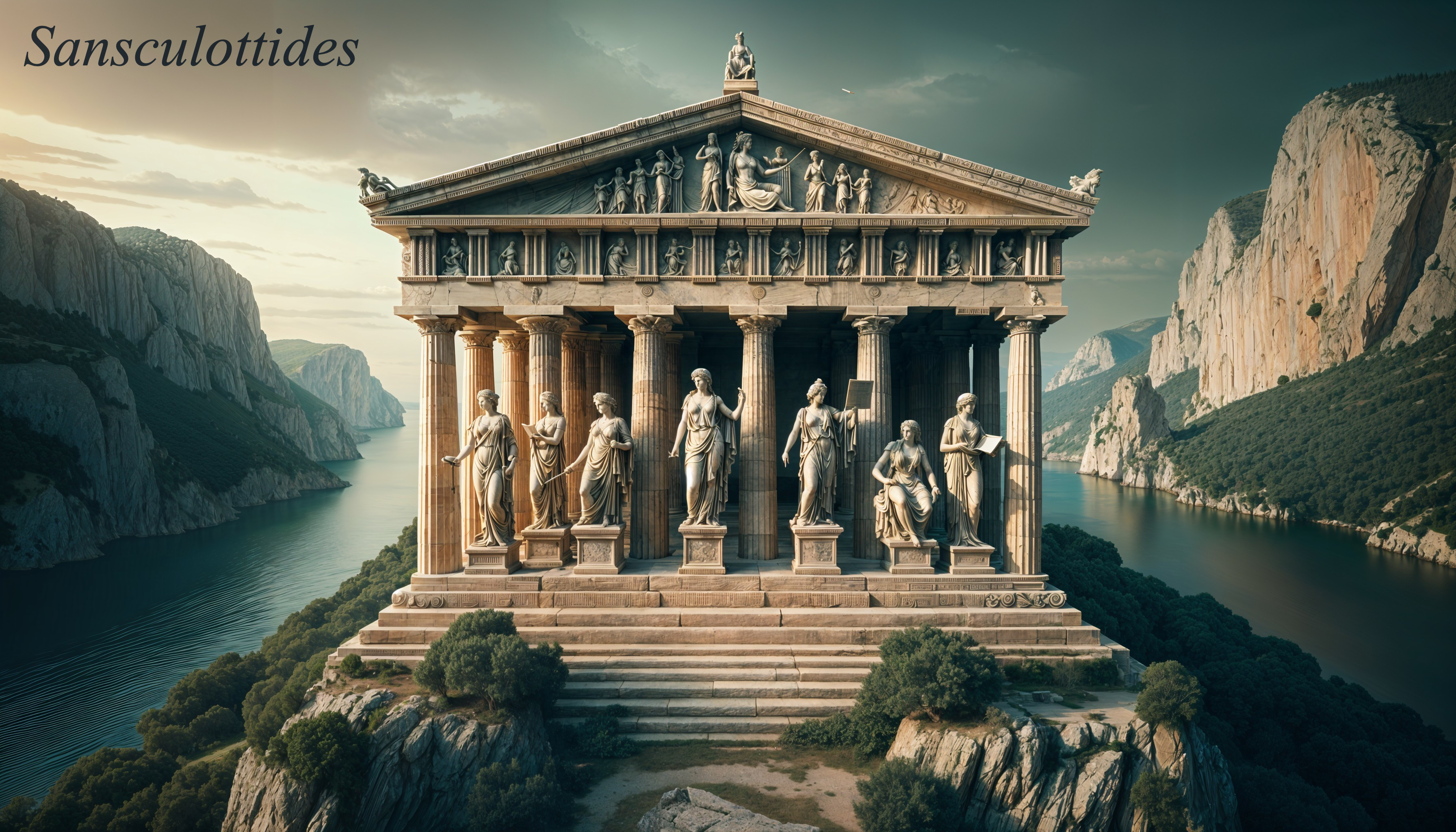
Front view of an ancient Greco Roman temple of fine marble sitting atop a promontory overlooking the Ionian Sea and surrounded by olive groves. The central portico is upheld by six tall statues of female figures acting as columns. One statue resembles a young maiden. The next statue appears to be young woman playing a flute. The third statue holds a mallet and chisel with muscular arms. The fourth statue depicts Athena reading aloud from a scroll. The fifth statue depicts an elderly woman cradling a baby in her arms. The sixth statue depicts the goddess Diana with a bow and arrow. The pediment of the portico is carved with a relief image of an all-seeing eye. Painted in the style of "Venice: The Dogana and San Giorgio Maggiore" by J. M. W. Turner.
The next installment in a series of images inspired by the French Republican Calendar. The Sanculottides were a New Year's celebration of 5-6 days occurring between the 12th month, Fructidor and first month, Vendémiaire, that served to reconcile the otherwise uniform structure of calendar with the realities of the solar year. Each day of the Sanculottides was a feast or celebration of a cardinal value of revolutionary society. It begins with the Feast of Virtue, (corresponding to September 17th or 18th depending on the year), followed by the feast days of talent, labor, conviction (or opinion) and achievement. During leap years the sixth day was to be a celebration of Revolution and national unity. The Sansculottides were part of the Revolutionaries' attempt to found an atheistic religion along lines of humanism and naturalism. Such attempts were among the most spectacular and grandiose failures of the upstart society (more even than the calendar itself). The blowback would ultimately help contribute to Robespierre's fall from power. Nevertheless, to capture the spirit of the Sansculottides I settled on a Greco-Roman temple in a splendid wilderness. The female statues in front of the portico represent the individual feasts while the relief carvings on the pediment depict the French people united.


