
Comments
Loading Dream Comments...
You must be logged in to write a comment - Log In
 Artist
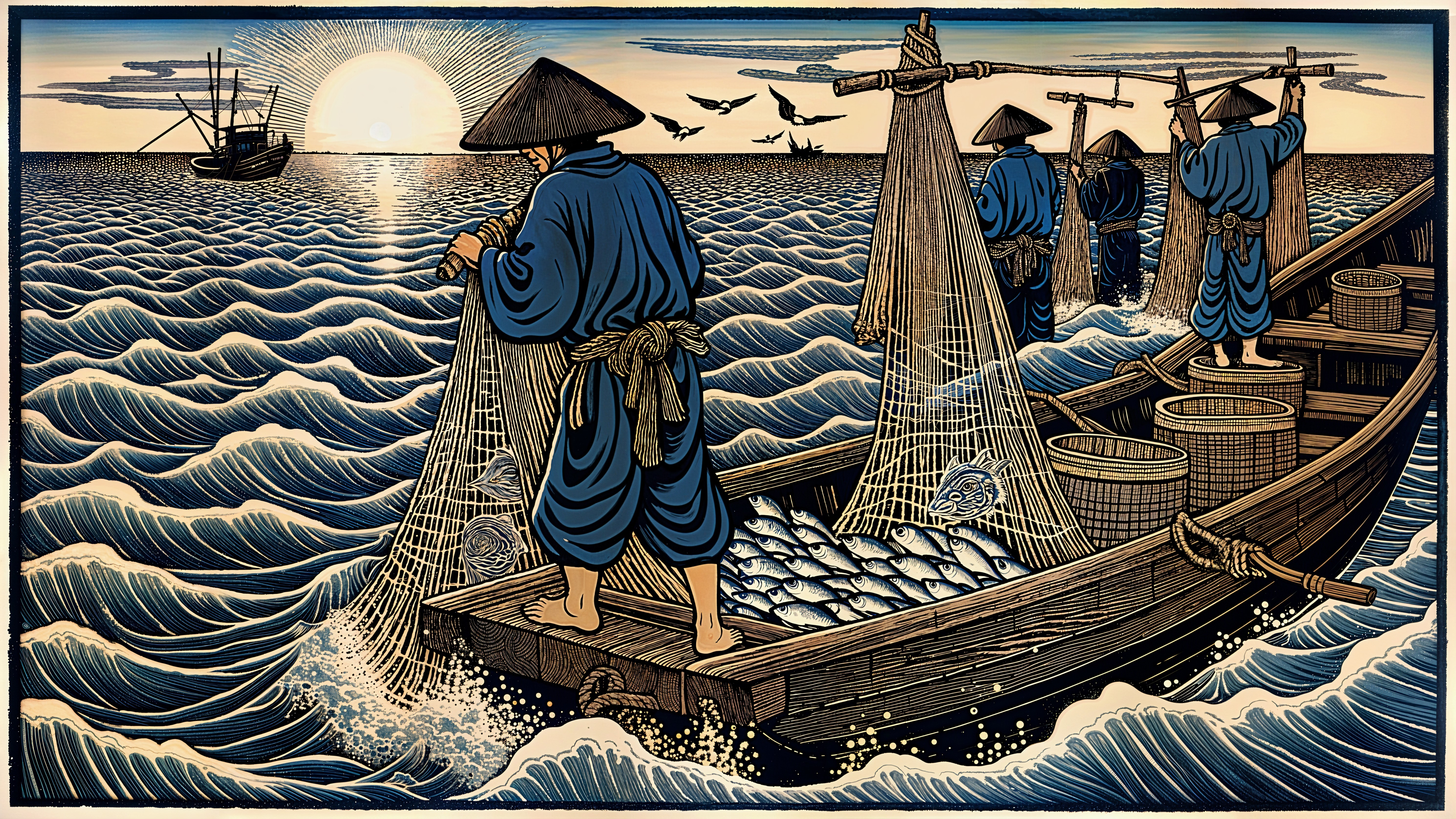
Full-screen, complete width, broad, 16:9 format of a delicate linocut with bokeh edges, rich colors, executed on rough handmade paper of poem number 90, Inpumon-in no Taiyu, of the Ogura Hyakunin Isshu: "How I'd like to show him! / the sleeves of the fishermen / of Male Island / when it comes to wet, are wet indeed, / but their color doesn't change!" The image shows several Japanese fishermen in a simple, tub-shaped Tarai-bune boat. They are dressed in practical, durable work attire made from indigo-dyed, layered, and reinforced fabric. The fabric shos some ornamental stitching. The sleeves are large and open, and partly hang in the water as the fishermen draw in their cast nets full of fish. Yet the sleeves do not look wet. Artfully arranged, traditional woodcut. The sea around the boat is still and friendly, the sun is shining. The image is rendered as an exceedingly detailed, highly symbolic woodcut. The fishermen's dry-looking sleeves contrast with the symbolism of sleeves wet with tears, which signify sorrow, grief, or melancholy, a typical trope of Japanese literature, particularly from the Heian period. Clarity of rendering, symbolical motif. Masterful technique. Exquisite Japanese folio.
Poem No. 90 from the Japanese poetry collection Ogura Hyakunin Isshu (see https://100poets.com/2014/02/12/fisherwomens-sleeves-poem-number-90/). The fishermen's wet sleeves (which do not look wet) contrast with the poet's tear-stained sleeves - her wet sleeves signify sorrow, distress and melancholy.


