An honest explanation of the recent changes to our content moderation system: compliance requirements from our payment provider left us with little choice but to tighten our filters, and some model-level restrictions (like GPT Image 2 blocking artists' names) are enforced by OpenAI and outside our control.
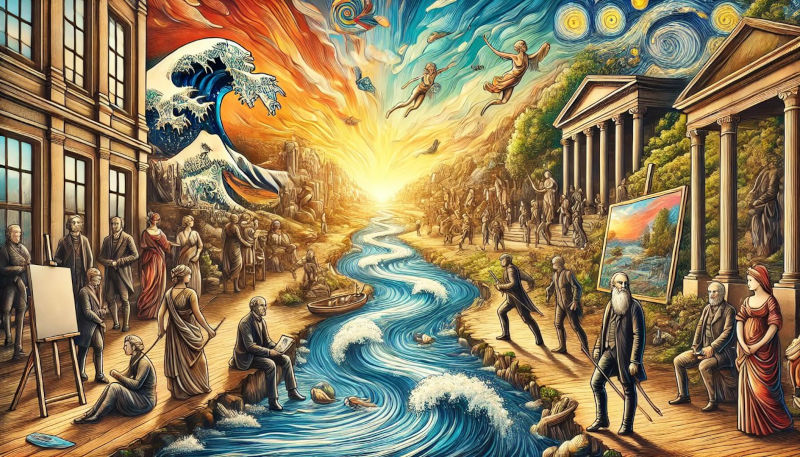
The complete history of AI art — from AARON and DeepDream to GANs, neural style transfer, diffusion models, DALL-E, Midjourney, Stable Diffusion, Flux, and the AI video revolution. How machines learned to create art.
We’ve heard your voices about wanting more artistic freedom, including requests to allow nude images. We’ve also received thoughtful feedback from both sides of the discussion, and we appreciate the passion and perspectives shared with us.
Explore how AI is reshaping art criticism by offering new perspectives, analyzing techniques, and democratizing the field for diverse voices. AI-driven insights enhance traditional critiques, making art evaluation more inclusive and data-driven.
Explore how AI-generated art is being used as a tool in personal therapy, enabling emotional expression, self-awareness, and healing. By integrating AI into art therapy, the process becomes more personalized, accessible, and interactive, helping individuals explore their emotions in new ways.
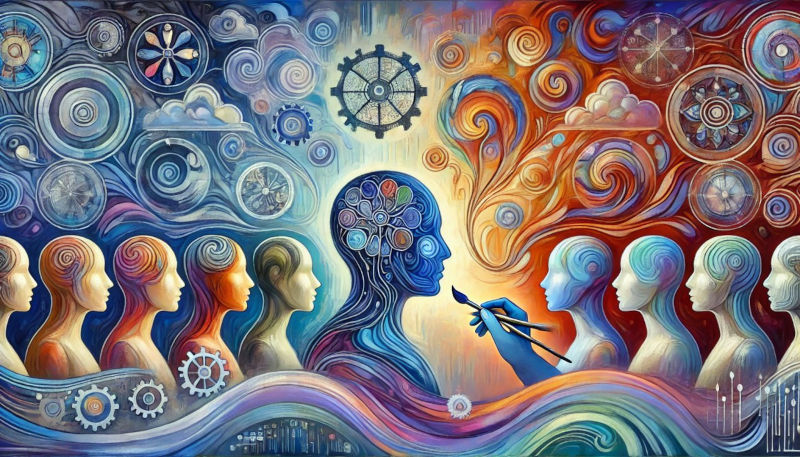
AI-generated art raises questions about originality and creativity. This post explores whether machines can truly create, or if they simply mimic and reassemble existing human inputs. It delves into the philosophical and aesthetic implications of AI in the art world, challenging traditional notions of artistic authorship.
Explore the intersection of AI-generated art and modern photography theory through the lens of Roland Barthes' ideas. This post examines how AI imagery can evoke emotional engagement, authenticity, and a sense of time, drawing on concepts like Studium, Punctum, and the 'that-has-been' essence of photography.
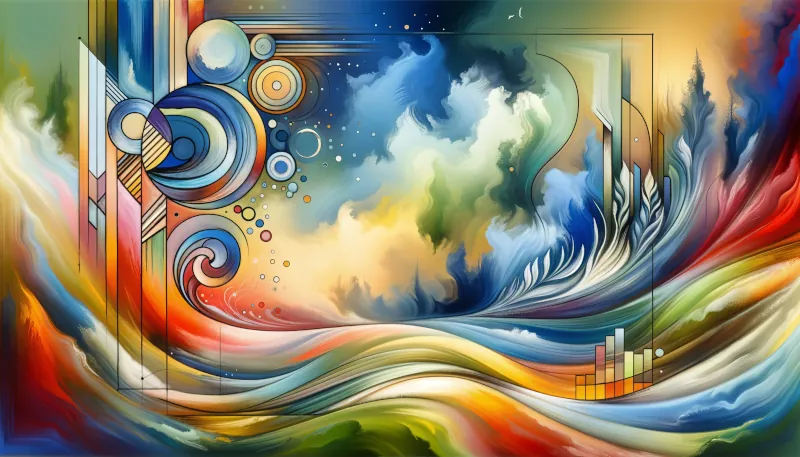
Explore how AI is revolutionizing abstract art by building on movements like Cubism, Futurism, and Suprematism. This post delves into AI's ability to generate, analyze, and enhance abstract forms, offering new ways for artists to explore emotion, motion, and geometric simplicity through technology.
Explore the role of color theory in AI-generated art, examining how AI leverages principles like the color wheel, harmony, and emotional impact to create visually compelling pieces. Learn how AI uses primary, secondary, and tertiary colors, as well as warm and cool tones, to evoke emotions and innovate artistic expression.
Generative Adversarial Networks (GANs) are powerful AI systems that use two neural networks—a generator and a discriminator—to create highly realistic images. The generator produces images, while the discriminator evaluates them, leading to continuous improvement through competition. GANs have transformed industries, from art and design to deepfakes, by generating innovative, photorealistic visuals.
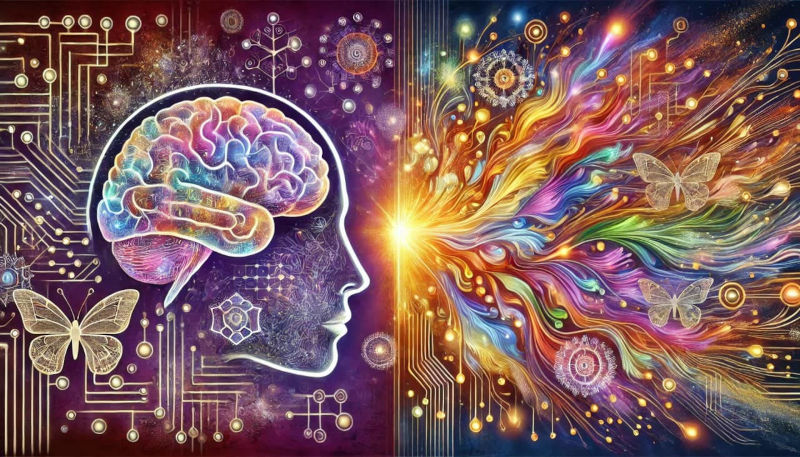
Explore the evolution of AI image generation technologies, including neural networks like GANs, VAEs, transformers, and diffusion models. Learn how these advanced algorithms and hardware innovations enable the creation of realistic, artistic images through iterative processes, transforming random noise into stunning visuals.
Explore how AI is reshaping our understanding of beauty in art, blending classical aesthetics with modern algorithms. This article delves into AI-generated art, style transfer, GANs, and the subjective and cultural interpretations of beauty. Discover how AI challenges traditional art forms and offers new ways to engage with aesthetics, creativity, and the evolving concept of beauty.
This article delves into the ethical concerns surrounding AI-generated art, exploring its impact on intellectual property, creative autonomy, privacy, misinformation, cultural bias, and environmental sustainability. It emphasizes the need for responsible use of AI, ensuring that human artists retain agency, privacy is respected, misinformation is curbed, and the environmental impact is mitigated. The post highlights both the benefits and challenges of integrating AI into the artistic world, advocating for a balanced and thoughtful approach to this evolving technology.
This article explores intermediate-level techniques for writing prompts that enhance the quality and complexity of AI-generated images. As you progress beyond basic prompts, it emphasizes the importance of detailed environmental descriptions, sensory and emotional language, synesthesia, dynamic elements, and modifiers for style and tone. These strategies enable the creation of more immersive, emotionally resonant, and visually rich artwork. Additionally, it introduces the use of compound sentences to structure complex instructions, ensuring that the AI prioritizes the most critical elements, allowing for the generation of more intricate and nuanced images.
Dream Level: is increased each time when you "Go Deeper" into the dream. Each new level is harder to achieve and
takes more iterations than the one before.
Rare Deep Dream: is any dream which went deeper than level 6.
Deep Dream
You cannot go deeper into someone else's dream. You must create your own.
Deep Dream
Currently going deeper is available only for Deep Dreams.