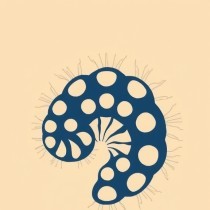
Prompt: Transform the source image into a masterful nineteenth-century watercolor painting, preserving the original composition while reinterpreting every detail with luminous transparent washes, subtle color transitions, expressive brushwork, and atmospheric depth. Blend the radiant light and ethereal atmosphere of J. M. W. Turner, the dramatic color harmonies and emotional energy of Eugène Delacroix, the elegant forms and refined painterly richness of Anthony van Dyck, the naturalistic outdoor light and confident watercolor technique of Winslow Homer, and the fluid, spontaneous brushwork and brilliant economy of John Singer Sargent. Delicate wet-on-wet passages merge with crisp dry-brush accents, soft edges dissolve into glowing light, while carefully placed sharp details guide the eye. Rich yet transparent pigments, layered glazing, luminous skies, reflected light, subtle tonal gradations, expressive textures, sophisticated color balance, and museum-quality craftsmanship. The result should feel like an authentic nineteenth-century watercolor painted by a master, never digital, never artificial, with graceful imperfections, natural paper texture, and exceptional artistic realism.
Prompt: Transform this image into a painting in the style of early Piet Mondrian (circa 1908–1911), inspired by works such as "Evolution" (1911), "Summer Night", "Night Landscape", and "Forest near Oele".
Emphasize a transition toward abstraction while retaining recognizable natural forms. Use a muted yet expressive color palette dominated by deep blues, violets, earthy browns, and soft greens, with subtle symbolic and spiritual undertones.
Apply visible brushstrokes and a slightly textured, painterly surface. Simplify shapes into rhythmic, vertical and horizontal structures, suggesting trees or organic forms becoming increasingly geometric.
Introduce a mystical, contemplative atmosphere with soft contrasts and a dreamlike quality. Maintain balance and harmony in composition, hinting at early modern abstraction but not fully geometric or grid-based.
Avoid strong primary colors or strict grid compositions from later De Stijl works. Focus instead on the transitional, symbolic, and semi-abstract phase of Mondrian’s evolution.
Prompt: oil on paper, lyonel feininger, orange house with blue windows in the middle of nowhere at sunset with a ghost in a window and a hat at the door.
Prompt: Transform the image into a delicate 19th-century watercolor sketch in the style of Eugène Delacroix's preparatory studies. Use loose yet expressive brushwork, transparent watercolor washes, spontaneous ink and graphite construction lines, subtle tonal variations, and an unfinished artistic appearance. Preserve the composition and proportions of the original image while simplifying unnecessary details. Emphasize elegant gestural strokes, soft edges, atmospheric light, and the vibrant energy of Romantic-era sketchbooks. The paper should have a natural fine-grain watercolor texture with visible pigment blooms and slight paper absorption. Avoid modern digital rendering, photorealism, sharp outlines, heavy saturation, or cartoon aesthetics. The result should resemble an authentic museum-quality watercolor study from the mid-19th century, expressive, refined, and intentionally incomplete.
Prompt: Transform the uploaded image into an authentic German Jugend magazine cover illustration inspired by the historic art magazine Jugend (Munich, 1896–1940). Preserve the original subject and recognizable composition while completely redesigning its visual language as a sophisticated early 20th-century printed illustration.
German Jugend, elegant Art Nouveau, highly stylized organic forms, flowing sinuous contours, decorative botanical motifs, elongated graceful shapes, simplified anatomy and rhythmic ornamental composition. Bold expressive black outlines combined with flat areas of muted color. Sophisticated decorative geometry, elegant silhouettes and carefully balanced negative space.
Traditional hand-drawn ink and lithographic appearance, fine pen lines, lithographic textures, subtle cross-hatching and selective stippling. Limited period palette: aged ivory, muted yellow, ochre, olive green, deep red, dusty blue and black. Slightly faded pigments printed onto textured cream paper.
The image should look like an actual surviving Jugend cover from the early 1900s: flat graphic composition, ornamental framing, imperfect lithographic registration, subtle paper wear, uneven ink density, slight printing imperfections and authentic historical texture.
Do not make it look like modern digital Art Nouveau. Avoid photorealism, glossy surfaces, 3D rendering, modern vector graphics, contemporary comic-book aesthetics, excessive gradients or cinematic lighting. Preserve the original image's essential subject and identity while giving it the unmistakable visual language of German Jugendstil.
Prompt: A colossal marble chamber inside the infinite House from Susanna Clarke’s "Piranesi" during a rising tide — powerful ocean waves surging through the lower colonnades, foaming water crashing against monumental statues, reflections of towering pillars fractured across the moving surface. Grand staircases emerge partially submerged, leading upward into shadowed galleries. The architecture appears both eternal and vulnerable against the force of the sea.
In the mid-ground, a solitary man in simple robes braces himself against a pillar, clutching a leather-bound journal, his hair swept by wind from the rushing tide. Seabirds wheel frantically above as mist rises from the churning water. The atmosphere is dramatic, elemental, and sublime.
Rendered as an 18th-century copperplate engraving in the style of Giovanni Battista Piranesi — dense cross-hatching, dramatic chiaroscuro, turbulent motion captured through etched linework, exaggerated perspective, monumental scale, Carceri d’Invenzione intensity, intricate architectural detailing, stark black and white contrast, high-resolution engraving texture, museum-grade print quality.
Wide cinematic composition, 16:9 aspect ratio, enhanced clarity, dynamic lighting, strong shadow contrast, atmospheric spray and mist rendered in fine etched lines.
Prompt: An 18th-century scientific illustration of a fantastical bird created by blending the anatomical features of all known bird species, both flying and flightless. The bird is perched on a twisted natural branch beside a carefully crafted nest containing several speckled eggs of varying sizes and colors, reflecting its diverse genetic origins. The creature's plumage is intricate and multicolored, inspired by peacocks, parrots, ostriches, and penguins. Its beak blends features of eagles, toucans, and flamingos; the strong legs resemble those of ostriches, with talons like those of raptors, gripping the branch near the nest. The wings are large and multi-layered, with feathers of many shapes and textures. The illustration is rendered in the style of historical ornithological plates, with detailed ink lines and watercolor washes. It is titled Avis Universalis Geneticum in elegant calligraphy, and surrounded by fine Latin annotations identifying anatomical parts and egg characteristics. Background is plain parchment with aged texture. The plate bears the signature “Dr. Thaddeus Wexley, Naturae Studiosus, 1763.” Vintage naturalist style, highly detailed.
Prompt: Fresco painting, tempera painting on panel, Giotto di Bondone style, XIV century art, gothic art, renaissance art, italian renaissance art, christian art, altarpiece.
Prompt: Dibujo a lápiz sobre papel de Alberto Giacometti en el cual se ve una ventana fractal en una pared blanca y dentro de la pared un paisaje boca abajo de un lago en el medio de un bosque de pinos y en medio del lago una isla con un dolmen neolítico.
Prompt: Etching illustration from the XVIII century of empty clay jars. Some jars are lying broken and there are flies flying over them. There is a window on the stone background wall. You can see an upside down forest with a lake in the middle through the window. The illustration is the 74th page of an ancient book about mythological objects illustrated by Giovanni Battista Piranesi in secrecy.
Dream Level: is increased each time when you "Go Deeper" into the dream. Each new level is harder to achieve and
takes more iterations than the one before.
Rare Deep Dream: is any dream which went deeper than level 6.
Deep Dream
You cannot go deeper into someone else's dream. You must create your own.
Deep Dream
Currently going deeper is available only for Deep Dreams.