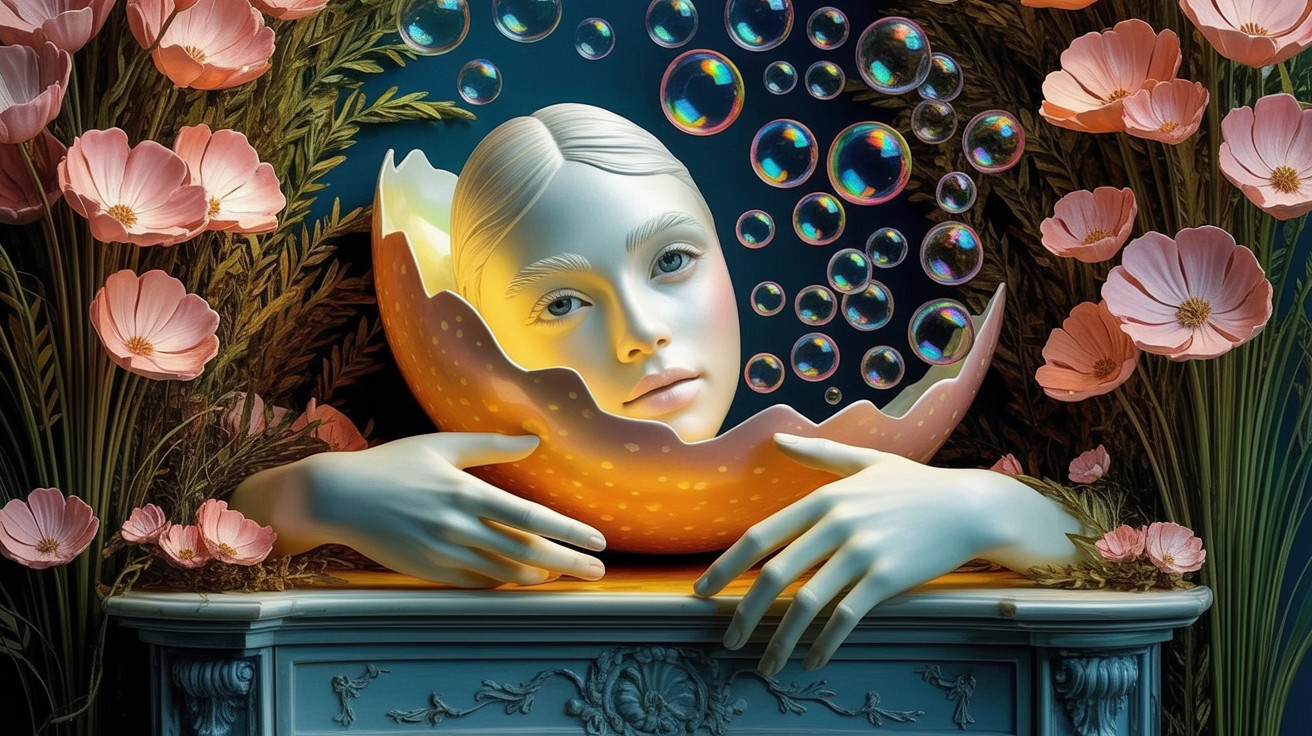
I support images that reflect my personal values. I am not an advocate of political human-rights activism, which I view as the responsibility of elected officials. While multiculturalism can function effectively at a local level, I believe it becomes destabilizing when advocacy groups pressure politicians to enforce it broadly. I contend that the erosion of established moral standards frequently leads to harmful consequences for both proponents and societies that adopt them. This is not a new phenomenon; similar movements have appeared throughout history and, when widely embraced, have contributed to the decline of civilizations. It appears that many enduring social norms emerged early in human societies because they tend to serve the greatest number of people.
I question mainstream historical narratives and uphold a Biblical view of our past. The cathedrals and ancient architectures were not constructed by us alone. There are no aliens; instead, demons are real, interdimensional beings — a testimony to what becomes of creation when it turns away from its Creator. The only path to true peace, love, and prosperity is to return to the One who made us. God is love.
Armageddon is the final conflict between God and those of His children who have forsaken Him in pursuit of independence. God owes no moral obligation to those who reject Him, because He sustains our very life; when we reject Him, we die. God perceives the full scope of reality while we see only fragments designed to test the condition of our hearts. Ultimately, God’s judgment is not based merely on our sins but on our choice regarding a personal relationship with Him.
-----------------------------------------------------
A Neurosurgeon’s Proof of an Immortal Soul | Dr. Michael Egnor
https://www.youtube.com/watch?v=BMnLl6M2Dio
Nora's musings:
Regarding the "Unity in diversity" racial, national or, gender, a few useful points to remember:
Unity requires a shared foundation, something universally recognized and accepted. Without a common point of agreement, diversity alone cannot hold a society together. In extreme circumstances—such as a global threat like an incoming asteroid—humanity might unite around a single, undeniable reality. But in everyday life, unity requires shared moral principles, not just abstract calls for love and respect. Respect itself depends on common values, such as the sanctity of life.
For a society to function, its members must agree on what constitutes serious wrongdoing—whether murder, negligent harm, or other acts that violate the basic right to life. When these principles are shared, laws can be enforced consistently, victims’ families can trust the justice system, and social order becomes possible.
The phrase “unity in diversity” contains an inherent tension. Unity implies oneness; diversity implies many differing ideas. Without a unifying thread, the two concepts can cancel each other out. Historical, cultural, and religious differences cannot be erased overnight, nor can people simply abandon the wisdom passed down by their ancestors. Multiculturalism can work in smaller groups that share overlapping values, but it becomes strained when imposed broadly without a common moral core.
Expecting entire nations to set aside deeply held beliefs in favor of a new, untested ideology risks repeating the mistakes that have brought past societies to collapse. No institution on Earth could enforce such a transformation without resorting to coercion or violence against those who dissent. Without a clear, logical foundation that all can accept, attempts to impose unity through diversity are likely to fail—and may lead to serious harm.
? Philosophical Foundations for my argument:
? 1. Aristotle — A Polis [metropolis/nation/wider community] Needs Shared Virtue
Aristotle believed that a community can only function if its members share a common conception of the good life.
A city-state is not just a marketplace; it is a moral community.
Without shared virtues, the polis dissolves into factions.
⚖️ 2. Thomas Hobbes — Unity Requires a Common Authority
Hobbes argued that humans differ so deeply in beliefs and desires that only a shared sovereign authority can prevent conflict.
Without a common power, “the life of man is solitary, poor, nasty, brutish, and short.”
Diversity of moral views leads to conflict unless there is a unifying structure.
?️ 3. Jean-Jacques Rousseau — A “General Will” Must Be Shared
Rousseau believed that a society must share a general will — a common moral direction.
If people follow only their private wills, society fragments.
Unity requires a shared moral core.
? 4. Alasdair MacIntyre — Moral Diversity Leads to Fragmentation
MacIntyre (a contemporary philosopher) argues that modern societies are morally fragmented because:
People no longer share a common moral tradition.
Without shared moral language, debates become endless and unresolvable.
?️ 5. Carl Schmitt — Politics Requires a Shared Friend/Enemy Distinction
Schmitt argued that political unity emerges only when a group shares:
A common identity
A common threat or enemy
? 6. Communitarian Philosophers — Shared Culture Is Essential
Thinkers like Charles Taylor and Michael Sandel argue:
Liberal multiculturalism overestimates how much diversity a society can absorb.
Communities need shared narratives, traditions, and moral commitments.


 9h
9h


 9h
9h

 1d
1d

 1d
1d

 1d
1d

 1d
1d

 1d
1d

 1d
1d

 1d
1d