Comments
Loading Dream Comments...
You must be logged in to write a comment - Log In
 Artist
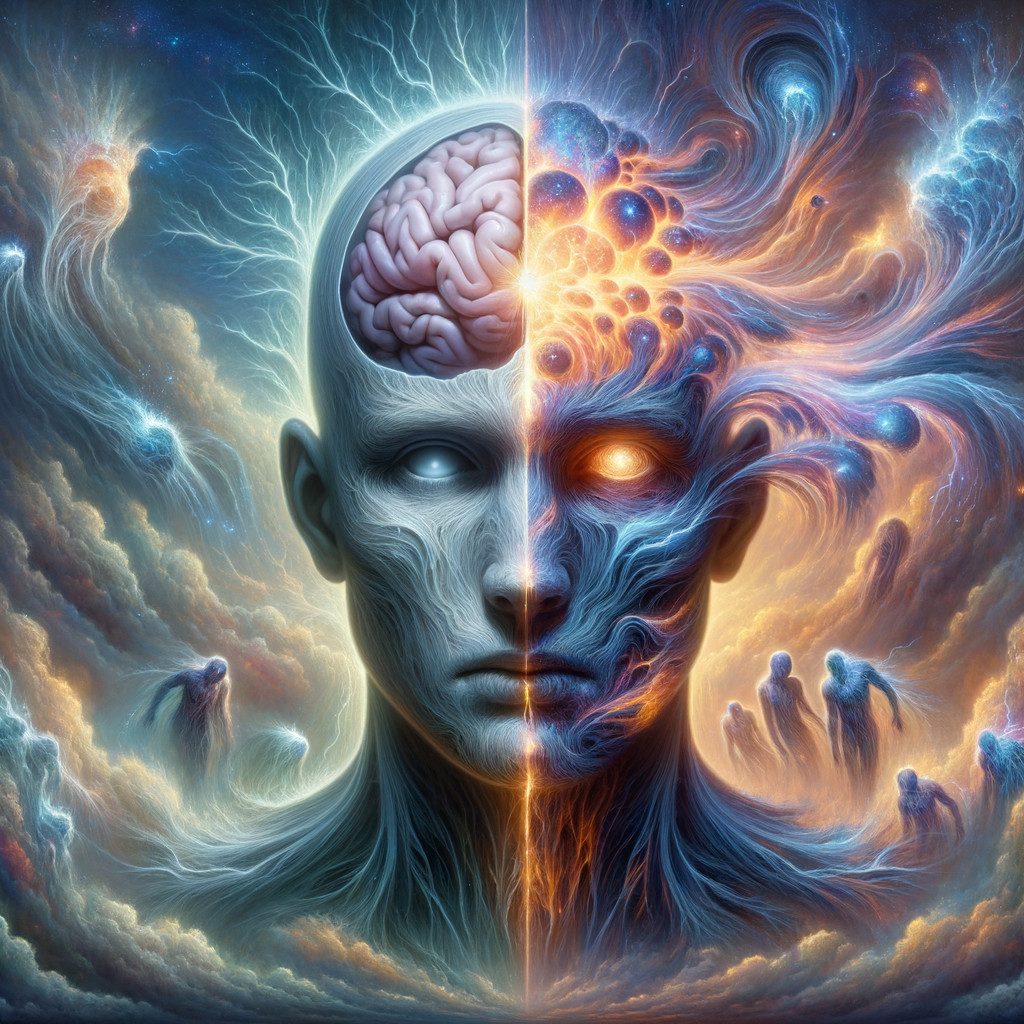
Create a powerful surreal artwork depicting a human figure split in two—one side showing a calm, noble face with a glowing heart and open hand, while the other side shows a shadowed, anxious expression with clenched fists and flickering neural sparks in the brain. The background should represent the inner workings of the body and mind: Include anatomical elements like the brain’s amygdala and prefrontal cortex glowing in tension or calm. A storm of hormones and neurotransmitters—dopamine, cortisol—swirling like spirits or chaotic winds. The figure should stand on a cracked mirror floor, reflecting both versions of themselves. Around them, symbolic figures representing society’s judgment, fear, and survival instinct whisper from the shadows or float like ghosts. Visual Style: Surrealism + anatomical illustration + emotional expressionism Medium Suggestions: Digital painting, oil on canvas, or mixed media collage. - ry
Physiological and Psychological Reasons for "Double Standards":
1. Cognitive Dissonance (Brain Conflict)
The brain dislikes holding two conflicting beliefs at once. When someone says one thing but does another, it creates internal stress (dissonance), and they may justify it or ignore the conflict instead of fixing it.
Example: Someone might believe lying is wrong, but lie to protect themselves — their brain creates a justification to reduce the discomfort.
2. Hormones and Stress
Under stress or fear, the brain switches to "survival mode", using the amygdala. This can cause people to act selfishly or irrationally.
Example: Someone who usually supports fairness might act unfairly if they're panicking about their own safety or reputation.
3. Self-Preservation Instinct
The human body has a built-in survival instinct, deeply rooted in physiology.
This instinct can override moral or social standards, especially in competitive, threatening, or emotionally intense situations.
4. Social and Evolutionary Behavior
Humans evolved in tribes. It was often beneficial to protect your group and distrust outsiders, even if it meant being unfair — this is still reflected in "in-group vs out-group" bias.
This can make someone act one way with friends, and another with strangers.
5. Brain’s Reward System
The dopamine system reinforces behaviors that feel good or bring rewards — even if they go against values.
If someone gets attention, money, or power from acting differently in different situations, the brain encourages it.
People may appear to have "double standards" because their brain and body are responding to internal conflicts, emotional states, social pressures, or survival instincts — even if they don’t realize it consciously.
Concept art By - Rojitha Yasaswin