
Comments
Loading Dream Comments...
You must be logged in to write a comment - Log In
 Artist
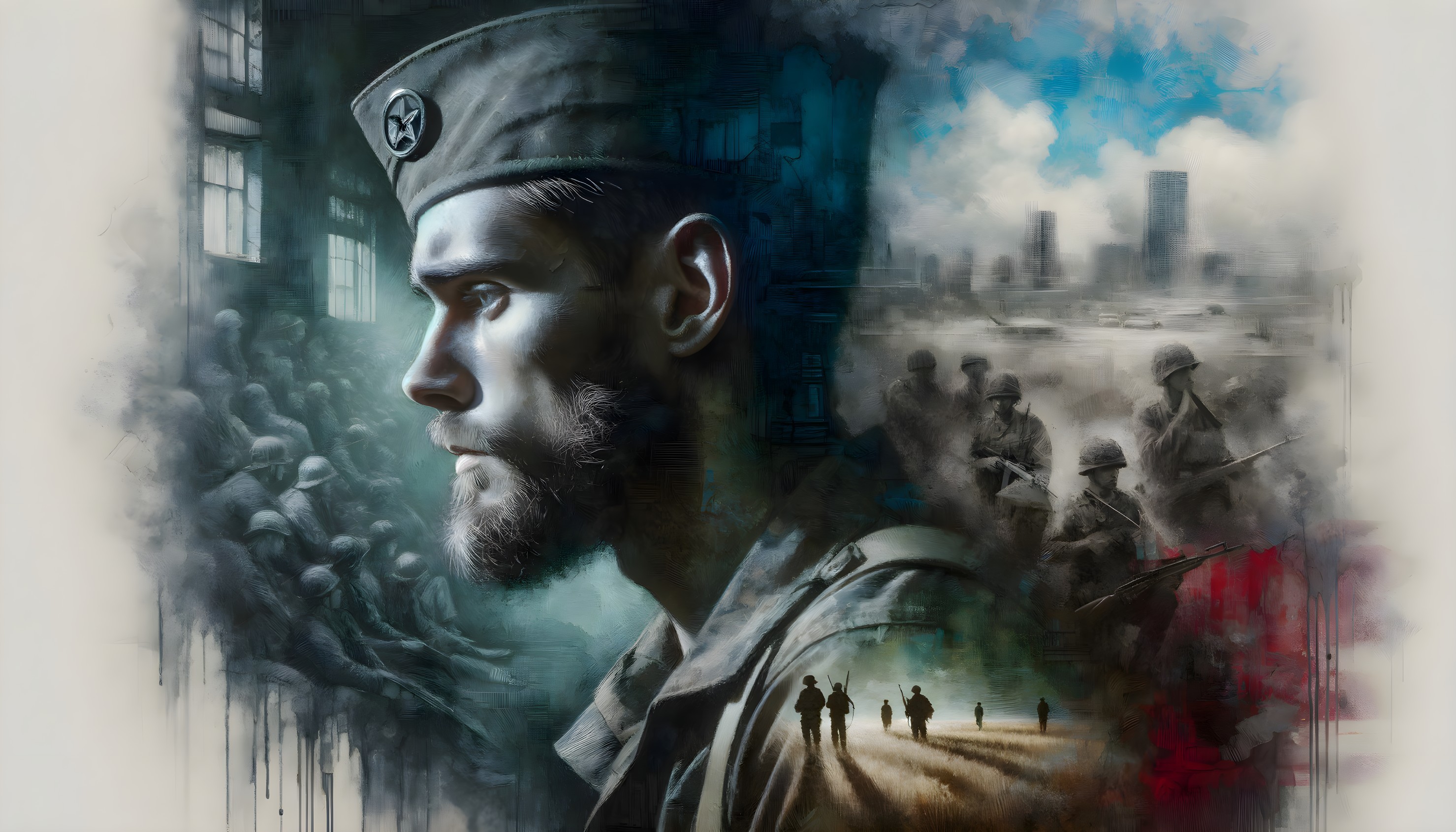
Veteran’s Portrait: Central to the image is the war veteran. His face and posture should reflect a mix of strength and vulnerability, with traces of his past experiences and the inner turmoil they have caused. The veteran's expression is contemplative, perhaps gazing into the distance or looking downwards in introspection. Artist's Influence: Choose an artist known for their ability to capture deep emotional states and complex inner worlds. This could be someone like Vincent van Gogh, whose use of color and texture could bring out the veteran's emotional landscape, or Edvard Munch, known for his expressive portrayals of psychological themes. Symbolic Background: Behind the veteran, include a background that symbolically represents the battlefield or war scenes, but rendered in a way that blends with the veteran's current environment. This could be a cityscape that subtly transitions into a war-torn landscape, illustrating how the memories of war are interwoven with his present life. Echoes of Conflict: Integrate subtle visual cues that reflect the veteran’s experiences – shadows that resemble soldiers, faint echoes of military insignia in the surroundings, or a distant and almost ghostly battlefield vista. Juxtaposition of Peace and War: Contrast the peaceful setting of the veteran’s current life with the chaotic elements of war, using the artist's style to bridge these two worlds. This could be through a stark contrast in colors, a blend of brushstrokes, or the interplay of light and shadow. Emotional Palette: Use a color palette that reflects the veteran's inner conflict – muted, somber tones for his struggle, with occasional hints of brighter colors symbolizing hope and resilience. This image should be a profound visual exploration of a war veteran’s inner conflict, merging the emotional depth of the chosen artist’s style with the complex layers of a soldier’s experiences and memories


