
Comments
Loading Dream Comments...
You must be logged in to write a comment - Log In
 Artist
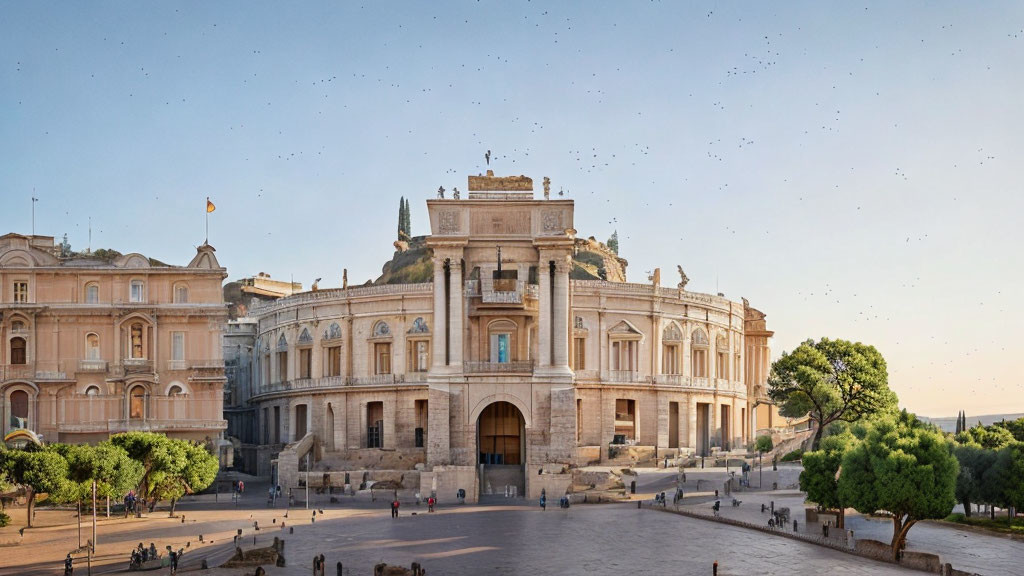
The initial nucleus of the city evolved from a fortified Roman settlement dating from the 3rd and 2nd centuries BCE. The Romans built on the top of the hill where the Ducal Palace now stands and until the 11th century, the city remained within these limits. At the end of that century, its urban expansion required the construction of a new system of defensive walls. In the mid 15th century, Federico da Montefeltro undertook a radical rebuilding campaign within these original walls without disturbing the overall urban structure. The city was later further expanded to a second hill lying to the north, giving the area, now enclosed by the Renaissance walls an elongated outline. Urbino is a small city in the hills that experienced an astonishing cultural flowering in the 15th century. During this period, it attracted artists and scholars from all over Italy and beyond which, in turn, influenced cultural developments elsewhere in Europe. Between 1444 and 1482, Federico da Montefeltro ruled in Urbino and his court brought together some of the era’s leaders: foremost humanists of the time such as Leone Battista Alberti, Marsilio Ficino, and Giovanni Bessarione.


