
Comments
Loading Dream Comments...
You must be logged in to write a comment - Log In
 Artist
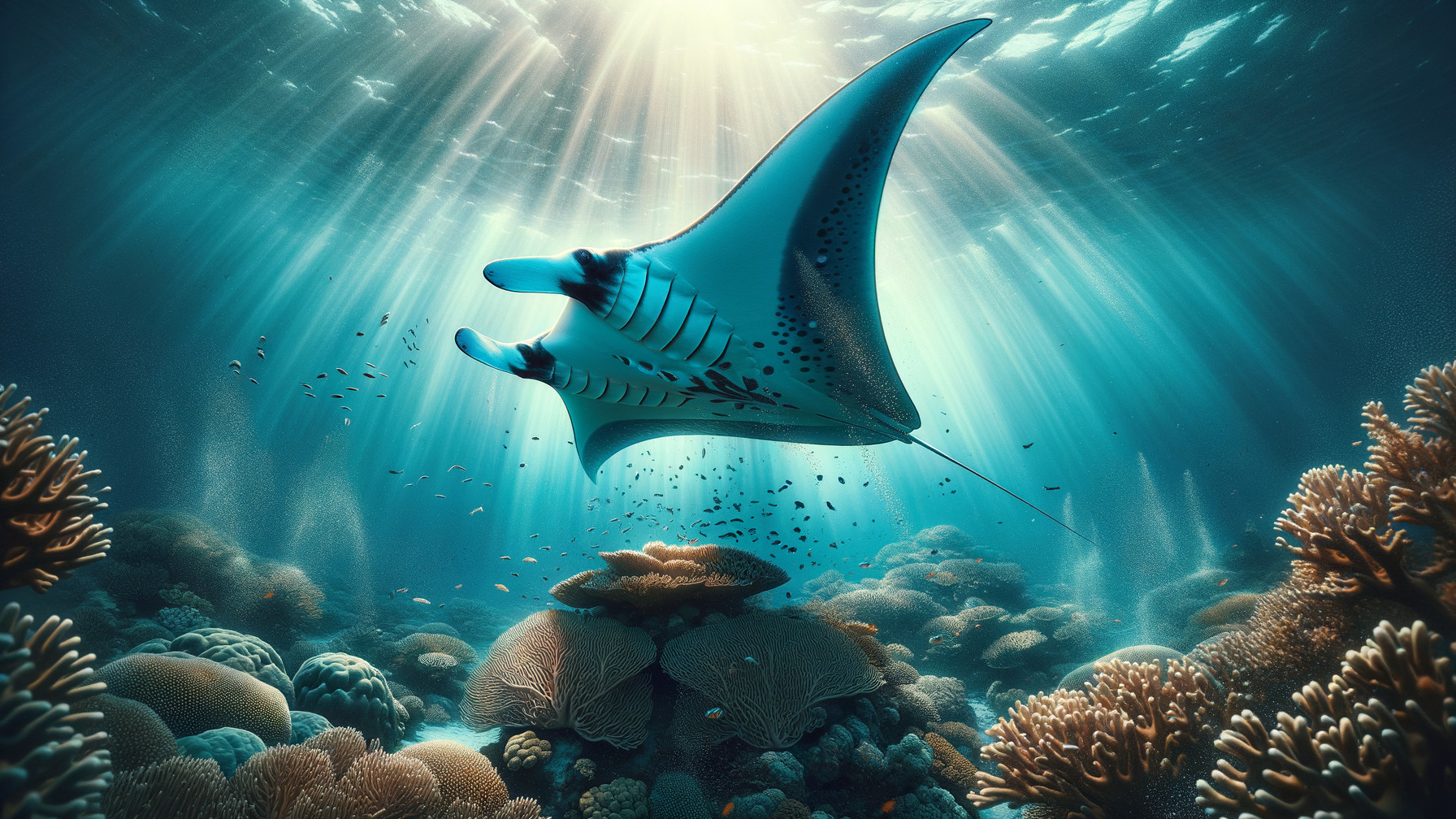
Render a graceful, large-scale underwater ballet of a giant manta ray gliding above a coral cleaning station, small cleaner fish orbiting its ventral surface. Composition: wide panoramic view emphasizing wingspan, soft rippling caustics overhead, shafts of light. Lighting: volumetric sunbeams with gentle particulate scattering and caustic patterns on the manta’s back. Texture: sleek skin, ventral spot pattern detail, subtle barnacle scars, water particulates. Palette: ocean teal, deep cobalt, pale underbelly cream, sunlight gold. Depth & 3D: strong midplane manta with foreground coral and background reef depth; gentle parallax motion. Style options: combine Chagall-like dream color and floating composition with photorealism in manta anatomy; or a Klimt-inspired ornamental pattern worked into water ripples. Camera: wide 24–35mm aquatic lens feel; output for large mural or exhibition print. Variations: night-time plankton bioluminescence, close-up of mouth filtering, aerial surface silhouette. Mood: serene, otherworldly, majestic. ry
**Manta Ray (Giant Oceanic)
Scientific name: Mobula birostris (formerly Manta birostris)
Typical lifespan: 20-50 years (estimates vary).
Gestation: Ovoviviparous vivipary; gestation ~12–13 months, typically 1 pup.
Diet: Planktivore - filter-feeds on zooplankton and small fish.
Role in nature: Open-ocean plankton regulators; important in pelagic nutrient flows and ecotourism.
Range / countries: Tropical to subtropical oceans worldwide - cleaning-station
sites in Indonesia, Maldives, Mexico, etc.
Size / wingspan: Wingspan up to 4-7 m depending on species.
Weight: Hundreds of kg (varies greatly).
Bite force: Not applicable - filter feeders.
Vision / hearing: Good vision for large-scale navigation; sensory systems for flow detection.
Abilities: Graceful gliding, barrel rolls for feeding, long migrations, highly social at cleaning stations.
Conservation: Vulnerable in many areas to bycatch and targeted fishing.
Extra: Often exhibit distinct ventral spot patterns used for ID by researchers.
2025 september 12


