
Comments
Loading Dream Comments...
You must be logged in to write a comment - Log In
 Artist
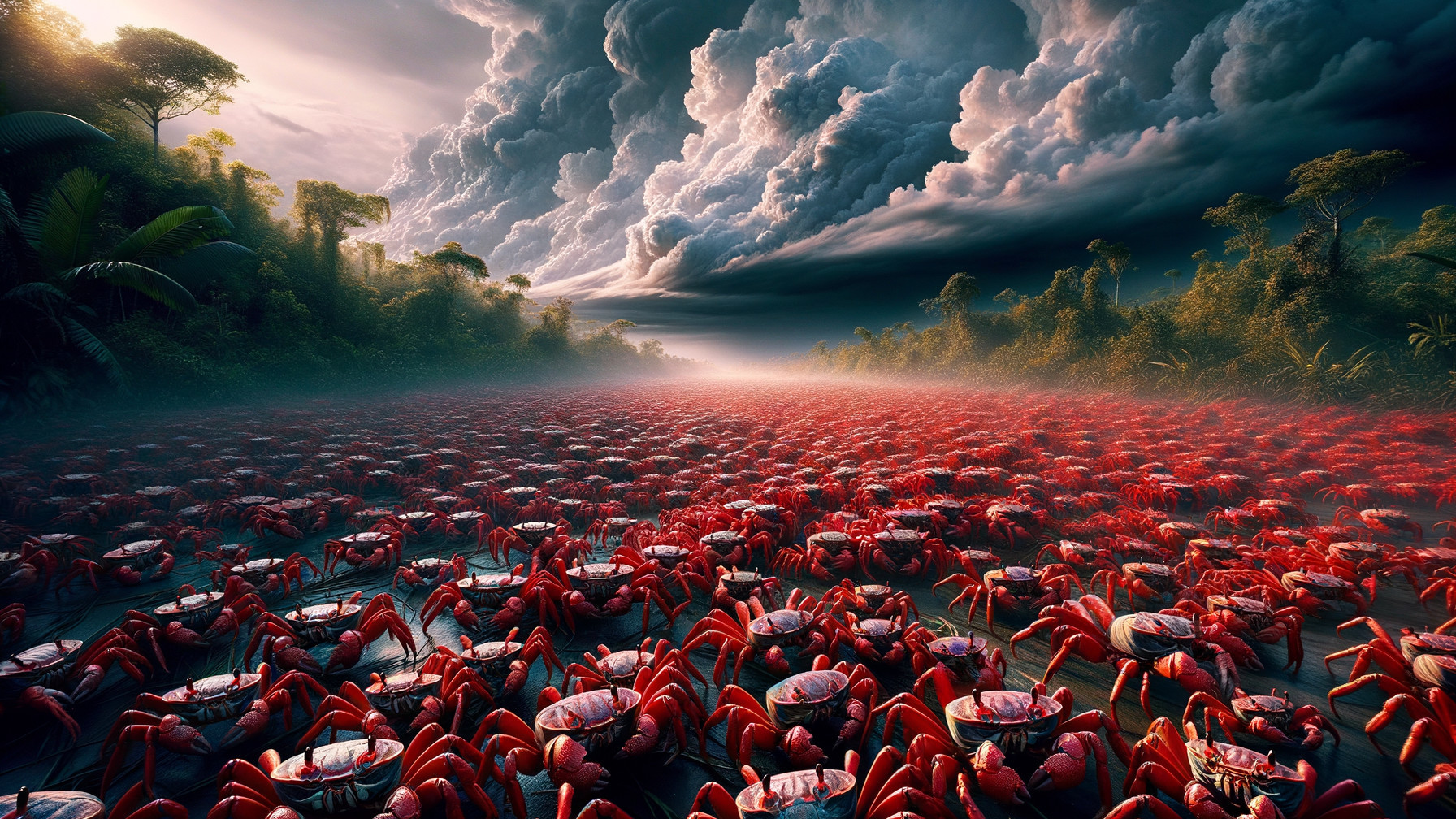
Mass migration moment of red crabs on a rainforest floor beneath a stormy tropical sky; rhythmic motion and vivid red color show scale. Composition: wide horizontal with migration leading into jungle gap. Lighting: storm-diffused light with saturated reds. Artist-mix: documentary spectacle , painterly rhythm.
**Christmas Island Red Crab - Gecarcoidea natalis
Range: Christmas Island, Indian Ocean (Australian Territory)
Status: Near Threatened (locally impacted populations)
Estimated Population: Once over 120 million, now significantly reduced in some regions
Description & Behavior:
The Christmas Island Red Crab is an extraordinary terrestrial crustacean famous for its mass annual migration from forest to sea - a dazzling red tide of life that transforms roads, cliffs, and beaches into living rivers of crimson.
These crabs are bright scarlet to deep orange, with a smooth, domed carapace about 12 cm wide, and strong claws suited for both defense and burrowing.
They spend most of their lives in moist rainforest floors, sheltering in burrows to avoid dehydration. During the rainy season (usually October-December), millions emerge simultaneously, making their way to the coast to breed and release their eggs into the sea - one of the most synchronized reproductive events in nature.
The phenomenon is so vast that entire sections of roads are closed during migration to prevent crabs from being crushed by vehicles.
Ecological Role:
Christmas Island Red Crabs are ecosystem engineers.
They control forest undergrowth by consuming fallen leaves, seedlings, and carrion, keeping the rainforest clean and regulating plant growth.
Their digging aerates the soil, improving nutrient cycling.
In short - without these crabs, the island’s entire forest ecology would collapse.
They are also a crucial link between land and sea: the larvae feed plankton in the ocean, and returning juveniles bring nutrients back inland, connecting two ecosystems in a perfect cycle.
Threats:
Despite their vast numbers, the red crab population has been heavily impacted by invasive species and disease in recent decades.
Yellow Crazy Ants (Anoplolepis gracilipes): Accidentally introduced to the island, these ants form supercolonies that spray formic acid, killing tens of millions of crabs and disrupting migration routes.
Habitat degradation: Road construction, pollution, and coastal development interfere with traditional breeding paths.
☠ Climate change: Shifting rainfall patterns affect migration timing and larval survival in the ocean.
Human interference: Vehicle traffic and urban lighting near coasts can confuse or kill migrating crabs.


