


Comments
Loading Dream Comments...
You must be logged in to write a comment - Log In
 Artist
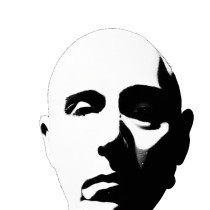
Rahuloka is not merely darkness. It is the condition created during eclipse—the moment when certainty loses authority.
In ordinary daylight, objects appear fixed and obedient. In Rahuloka, things reveal their hidden aspect. Towers seem ancient and futuristic simultaneously. Memory behaves like architecture. Time folds inward. Travelers often report that distances change while walking, and that cities seem built from accumulated dreams rather than stone.
The inhabitants of Rahuloka are said to value reflection over possession. Metals are dull but resonant. Mirrors are treated carefully. Libraries contain books written in disappearing inks. Maps alter according to celestial alignments. Some stories say the entire realm only becomes fully visible during eclipses, while at other times it survives as a thin shadow beside ordinary reality.
In astrological language, Rahu governs appetite without completion. Thus Rahuloka is filled with seekers, collectors, exiles, mystics, failed kings, astronomers, counterfeit saints, wandering engineers, and people who abandoned one world without fully entering another.
The light there is peculiar. Not night, not day. Bronze-colored skies. Long shadows. A feeling that revelation is approaching but never entirely arrives.
Buddhist interpretations sometimes treat Rahu differently—not purely demonic, but as a being trapped by hunger and grasping. From that perspective, Rahuloka becomes a psychological realm: the inner territory where fascination and fear merge together. One enters it whenever one becomes captivated by an image, an idea, a symbol, or a destiny larger than oneself.
In occult traditions, eclipses were often considered dangerous because boundaries weakened. Rahuloka exists precisely within that weakened boundary.
It is the kingdom of thresholds.
The place where the sun is interrupted,
and the interruption begins to speak.


