

Comments
Loading Dream Comments...
You must be logged in to write a comment - Log In
 Artist
 Inspired by
Baroque Lunar garden grows with silver ferns and moonlit roses under a cratered sky mixed-media portrait on a large white canvas. Broad flat areas of muted grey, ochre, burnt orange against bright vermilion red, saturated deep blue and charcoal black. Detailed silhouettes of architectural classic buildings. Large overlapping circles and geometric forms dominate the composition. Very little detail. Strong empty white areas. Uneven hand-painted edges. Dry, slightly worn pigment. Scraped paint. Faint stains. A few natural drips. Imperfect coverage. Slightly distressed screen-print quality combined with raw acrylic and oil paint on canvas. The composition should look handmade, physical and imperfect, with the character of an original contemporary painting. Flat visual depth, restrained forms, strong negative space, limited color palette, simple silhouettes, subtle material texture. Avoid digital illustration aesthetics. Avoid realism, CGI, 3D, glossy rendering, photographic texture, excessive brushwork, micro-details, ornate architecture, complex surfaces, sharp digital edges and unnecessary visual information.
The Architecture of Dominion and the Geometry of Time
I once had a dream in which a voice told me, quite matter-of-factly, “If you don’t remember the whole dream, just make the rest up.”
This struck me as excellent advice, particularly since waking life seems to operate on precisely the same principle.
Now I’m looking at Bee’s image. Doesn’t “Bee’s” sound suspiciously like Bes, the ancient Egyptian household god? And there, emerging from the geometry, I see the United States Capitol Building.
Not because I believe everybody in the world should become American. Quite the contrary. I think we ought to get rid of all borders, all nation-states, and the imaginary lines that people have been brainwashed into believing separate them from whoever happens to be standing on the other side. My particular mythology, however, is rooted in Californication, a peculiar condition acquired by being born in California before the interstate highways came along and reorganized not only the landscape but the very way people imagined the world around them.
Before Interstate 5, there was Highway 99, a two-lane ribbon running through the hearts of little towns in the Central Valley. Every journey was an expedition through somebody else’s hometown.
We would drive through Sacramento, past the magnificent old Alhambra Theatre, one of those extravagant California movie palaces where the architecture suggested that watching a film was a religious experience.
As children, we thought the Alhambra was the State Capitol. It certainly looked grand enough to be the seat of government. But turn your head in the opposite direction, and somewhere down the street, perhaps fifteen or twenty blocks away, stood the actual California State Capitol, with its enormous dome and imposing architecture. Apparently, Sacramento had two capitols, and we had mistaken the more entertaining one for the seat of political power.
But when I finally figured out which building was the real California State Capitol, I was astonished. To my childhood eyes, it looked exactly like the United States Capitol in Washington, D.C., as though someone had simply built another one in Sacramento.
This was profoundly confusing.
Why were there two of them?
The dome, of course, is an architectural declaration of dominion. Government raises a great hemisphere over the population and announces, through geometry, that somebody is in charge.
Being of an anarchist disposition, I find dominion a particularly unpleasant word. It suggests ownership, subordination, and the peculiar human obsession with placing one person above another.
But architecture has another language, older than government.
On September 4, at one o’clock in the afternoon, I stood inside the Pantheon in Rome, watching sunlight descend through the oculus and approach alignment with the great doorway.
The building became a sphere around me. The dome formed one hemisphere, while the imagined continuation of its curvature completed the globe beneath my feet.
I stood at the centre of an invisible world.
The geometry was overwhelming. Space ceased being merely space. It became an instrument for cutting through time.
I began chanting a bīja mantra to Ganesha, invoking the removal of obstacles and the empowerment of a great yantra, an architecture of consciousness in which the ordinary divisions between past, present, and future might briefly disappear.
Centuries later, Brunelleschi studied the ancient architectural inheritance of Rome before creating the extraordinary dome of Florence Cathedral.
I visited his tomb beneath the cathedral, down in the archaeological crypt, not far from the modern machinery of tourism and its inevitable gift shop.
There lay the man who solved one of the great architectural problems of the Renaissance, yet left no complete explanation of his methods.
He had taken something of the dome’s secret to his grave.
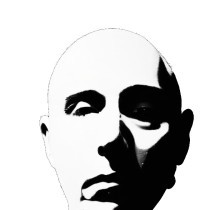
And now Bee’s image returns me to that childhood confusion: a woman suspended among circles, rectangles, flowers, and architectural fragments.
Perhaps the Capitol was never really a Capitol.
Perhaps the Pantheon was never merely a temple.
Perhaps the dome is not a symbol of dominion at all, but the upper half of a dream whose missing hemisphere we are expected to invent.
After all, the voice already explained what to do.
If you cannot remember the rest, make it up.


