


Comments
Loading Dream Comments...
You must be logged in to write a comment - Log In
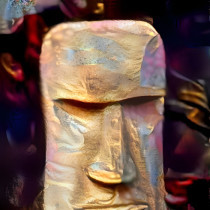
Mona Lisa. Impasto. Stippling.
This piece demonstrates a sophisticated understanding of how classical portraiture can be deconstructed and rebuilt through contemporary textural techniques. The artist has taken Leonardo's most recognizable subject and rendered it in warm, earthy tones—golds and creams—that strip away the painting's original atmospheric mystery in favor of tactile immediacy. The use of stippling creates a paradoxical effect: what should feel cold and distant becomes intimate and almost vulnerable, as if the viewer is examining the work through a magnifying glass that reveals the mechanical process of its creation. The face itself maintains da Vinci's serene proportions and that famously enigmatic gaze, but the texture transforms it into something contemporary and almost sculptural.
The impasto-like treatment of the hair is particularly effective, with linear patterns suggesting both individual strands and decorative patterning simultaneously. This creates a visual rhythm that moves the eye across the composition while preventing the work from reading as a simple portrait study. The decision to render the hair and background in a darker, finer texture than the face creates strong volumetric separation—the subject emerges from shadow with considerable presence. Where the piece truly excels is in this dialogue between precision and texture; the stippling doesn't obscure form but rather emphasizes it, making the subtle modeling of the face's planes feel even more refined by contrast.
The introduction of the magentas and rose-tinted fabric at the composition's lower edge feels somewhat disconnected from the work's overall aesthetic philosophy. While it adds chromatic interest and breaks the monochromatic restraint, it reads as ornamental rather than integral to the piece's conceptual framework. The work walks a fine line between homage and critique of its source material—whether this is intentionally ironic or simply decorative remains ambiguous. Nevertheless, the technical execution is undeniable; this is a work that respects its predecessor while confidently establishing its own visual language through process and texture.


