
Comments
Loading Dream Comments...
You must be logged in to write a comment - Log In
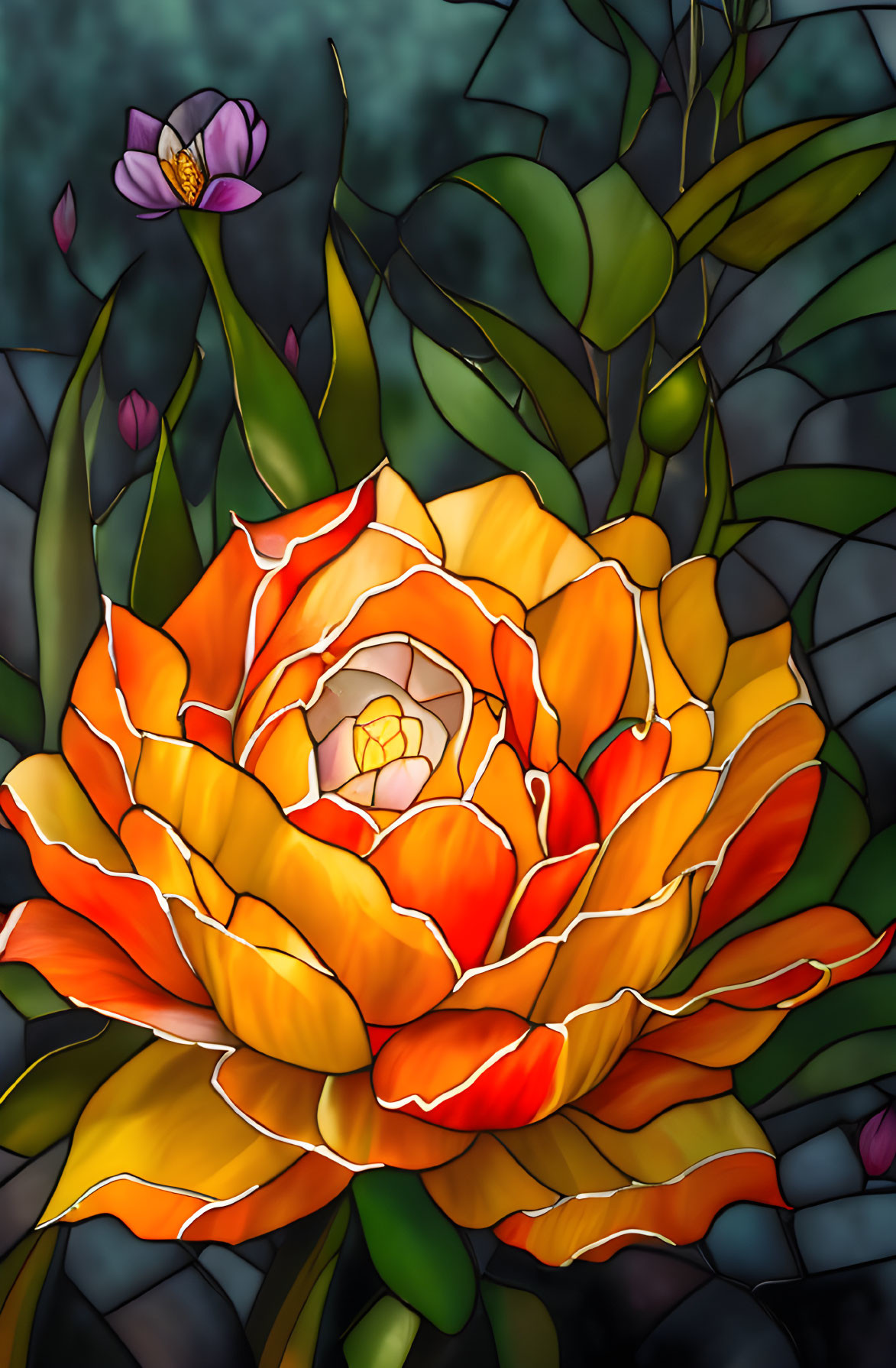
Stain glass flower. ArtStation. DeviantART.
This stained glass interpretation of a blooming flower demonstrates exceptional understanding of the medium's inherent strengths and limitations. The artist has embraced the bold, defining characteristic of stained glass—the white lead lines that separate color fields—and made them a compositional asset rather than a constraint. The central orange-red rose commands immediate visual dominance through a carefully orchestrated gradient from deep crimson at the outer petals to warm golden-yellow tones toward the center, creating remarkable depth and dimensionality within a fundamentally flat medium. The complementary purples and greens of the background foliage establish a sophisticated color harmony that enhances the warmth of the primary subject without competing for attention.
The technical execution reveals meticulous planning in how each petal is segmented and shaded to suggest three-dimensional form and delicate curvature. Rather than rendering petals as flat shapes, the artist has employed subtle color variations within individual segments—oranges bleeding into reds, yellows into pale creams—to imply shadow, highlight, and organic texture. The background treatment is particularly skillful; the deep teal-green and slate-gray tones recede appropriately, and the mosaic-like fragmentation of these areas creates visual interest without undermining the focal point. The smaller blossoms in the background, rendered in muted purples and softer pinks, demonstrate restraint and proper hierarchical composition.
What elevates this beyond competent technical work is the artist's understanding of light and translucency inherent to the medium. The piece reads as though imagined specifically for backlighting, with the color saturation and tonal relationships designed to sing when illuminated from behind. However, as a digital artwork presented flat on a screen, it somewhat loses that essential characteristic that would make a physical stained glass piece transcendent. The work is beautifully executed and would translate excellently to actual glass, yet in its current format, it functions more as a meticulous digital illustration mimicking the stained glass aesthetic rather than capturing the luminous magic the medium promises.


