

Comments
Loading Dream Comments...
You must be logged in to write a comment - Log In
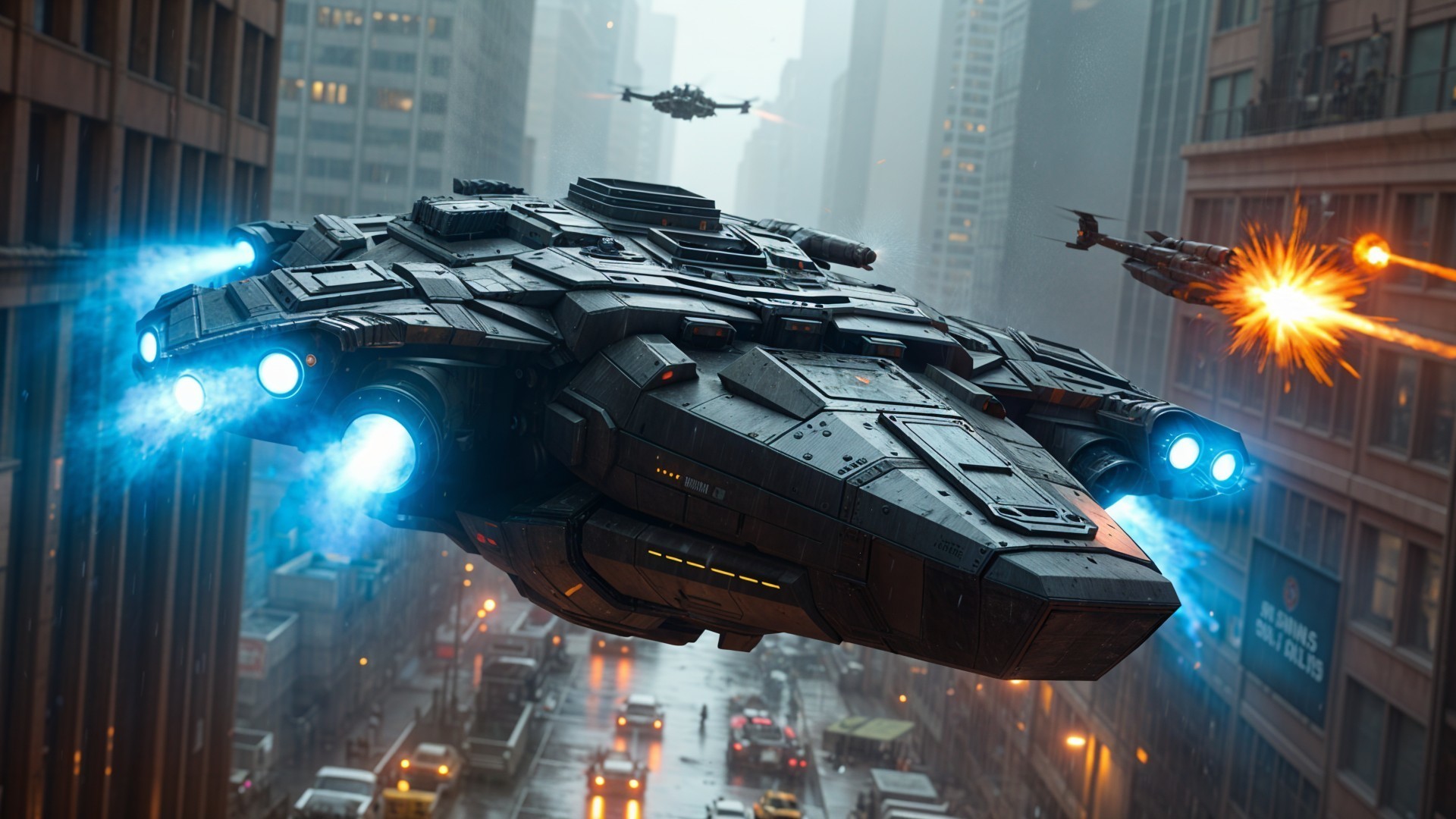
In the opening battles of World War III, the Hammer’s Slammers could only dream of such a machine. This Syd Mead–inspired hover‑assault platform glides two meters above a rain‑slick megacity street, an apex predator of futuristic warfare. The hull is low, wide, and armored in beveled composite plating, each panel inset with maintenance ports and glowing status strips. Four massive grav‑thruster nacelles, mounted in pairs on either side, vent roaring blue‑white plasma, their downwash scattering debris, bending banners, and hurling water spray into the air in a shimmering ring. The effect throws sharp shadows beneath the hull, light passing cleanly through the air gap to emphasize its height. The vehicle banks in a controlled hover‑drift, nose slightly pitched, while launching a missile swarm from recessed bays and firing its dorsal coilgun toward a pursuing strike drone. Around it, skyscraper canyons burn — tracer fire streaks between towers, shells burst in the distance, and rain falls through the orange‑blue firelight of a city caught in the first terrible minutes of the war to end all wars. --mod syd mead style, --mod hammer's slammers inspired, --mod futuristic hover-assault platform, --mod anti-gravity propulsion, --mod grav-thruster nacelles, --mod downwash effects, --mod debris scatter, --mod water spray, --mod dust plumes, --mod beveled composite armor, --mod glowing status strips, --mod dynamic cinematic lighting, --mod high contrast orange and blue, --mod rain-slick streets, --mod skyscraper canyon, --mod heroic scale, --mod hyperrealism, --mod ultra detail, --mod tracer fire, --mod missile launch, --mod plasma glow, --mod heat distortion, --mod two meters above ground, --mod clear shadow separation, --mod futuristic military hardware
GRAVEMARK
(Designation: A-9 Skyframe Strategic Ordinance Platform)
[Rain against metal. Engines spooling in the distance.]
“They called it Gravemark because every city it passed over remembered where it stopped.”
The A-9 wasn’t built; it was assembled in orbit, drawn from the carcasses of fleets that no longer needed names.
Its skin remembers the ships it was forged from, their registry marks still ghosting beneath layers of armor.
Powered by triplex graviton cyclers, it can hover for weeks—its exhaust turning rain to steam before it ever touches ground.
Each deployment is logged directly into its flight memory: impact vectors, casualty tallies, radioed last words.
The engineers call that telemetry.
The crews call it confession.
Command insists the A-9 is merely a platform.
The veterans disagree.
They say it won’t descend over new ground—that it only returns to where it has already spoken.
When the city lights fail and the storm reflects only blue fire, that’s when you know it’s above you.
Gravemark doesn’t strike targets.
It completes their elegies—then leaves the silence signed.
[Static builds, then cuts to silence—one final tone, low and absolute.]


