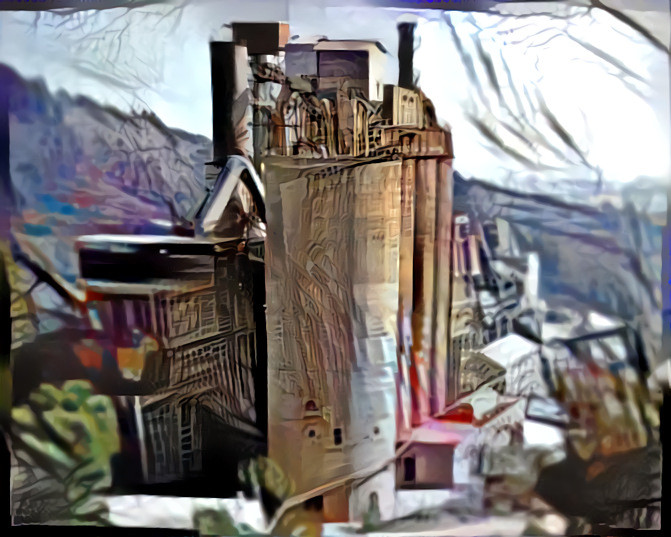
Prompt: The bridge unearths the cartographer. The image captures a moment of emergence in which a long-forgotten cartographer rises from beneath an old bridge, as though drawn upward by the structure itself. The bridge arches overhead with quiet authority, its form suggesting passage, connection, and accumulated history. The cartographer appears weathered but alert, clutching partially revealed maps whose edges curl and fade, as if rediscovered rather than newly made. Their expression conveys recognition rather than surprise, implying that this unearthing is a return to purpose rather than a rescue.
The entire environment rests on graph paper, which forms the ground plane, sky, and negative space. Faint grids extend beneath the bridge and through the background, intersecting with stone, shadow, and figure. Some lines are crisp, others smudged or erased, reinforcing the tension between measured knowledge and lived terrain. The cartographer’s maps echo these grids, blurring the boundary between representation and reality.
The visual treatment uses muted browns and charcoal-like textures layered densely across the scene. Surfaces feel rubbed, erased, and reworked, creating a sense of excavation and revision. The overall mood is restrained and introspective, emphasizing discovery as a slow, deliberate uncovering rather than a dramatic reveal.
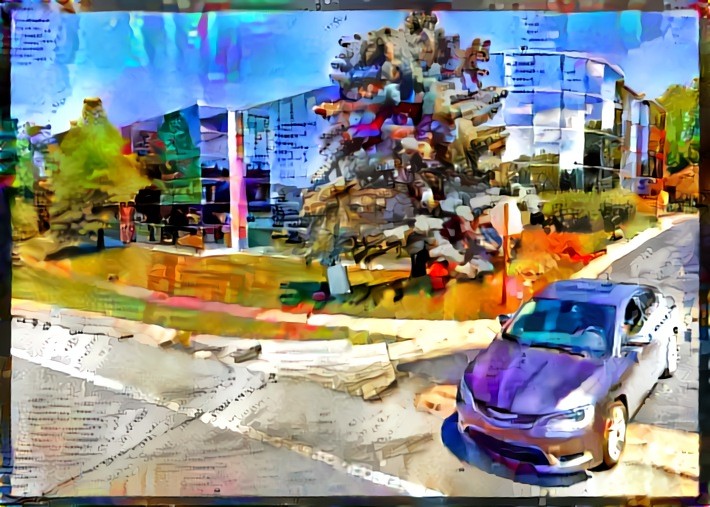
Prompt: An elephant and a content moderator polarize across a branching binary tree inside a vast academic lecture hall, chalk dust and charcoal smears drifting over tiered seating as a glowing monitor at the podium actively erases segments of a projected timeline. The scene is staged under theatrical lighting—sharp spotlights and plunging shadows—combining a mug shot palette and harsh flash with high-contrast graphic interruption, as if scholarship, authority, and judgment have been transformed into a tense, performative spectacle.
Prompt: The vase liberates the pack mule. The image depicts a moment of quiet transformation in which an ordinary ceramic vase becomes an agent of release. The pack mule stands burdened by invisible weight, its posture lowered and tense, as if shaped by years of obligation and repetitive labor. The vase, placed before it, appears fractured yet deliberate, opening along precise seams. From within the vessel emerges not contents but space itself, suggesting that freedom comes not from addition, but from removal. The mule’s harness loosens subtly, straps falling away without force, guided by the vase’s calm presence rather than any visible action.
The setting is built entirely from concrete, forming walls, ground, and distant architectural planes. The concrete surface is smooth in some areas and rough in others, reinforcing the idea of endurance and human-made constraint. Fine cracks and expansion lines trace quiet histories of pressure and time.
The image follows a Mondrian-influenced grid abstraction, with strict vertical and horizontal divisions shaping the composition. Muted primary accents punctuate the scene, balancing order and release, control and grace, structure and mercy.
Prompt: The windmill interrogates the unicorn. The image opens on a vast, dimly lit landscape where an old windmill looms like a patient, mechanical witness. Its wooden arms are frozen mid-rotation, angled inward as if focusing attention, while the unicorn stands beneath it, alert and exposed. The interrogation is not violent or theatrical, but psychological: a confrontation between ancient myth and grinding human industry. The unicorn’s posture conveys tension and dignity, its gaze steady, its horn catching faint light as if absorbing unspoken questions. The windmill’s structure feels purposeful and watchful, suggesting judgment, memory, and endurance rather than motion.
The entire scene is grounded in obsidian, which forms the terrain and background plane. The black volcanic surface reflects distorted silhouettes of both figures, creating subtle mirrors beneath their feet and amplifying the sense of moral weight and stillness. Fine cracks in the obsidian catch highlights, echoing fractures in certainty and belief.
Rendered in a Rembrandt-influenced chiaroscuro style, the image relies on deep shadows, warm highlights, and dramatic contrast. Darkness dominates the composition, with light carefully sculpting forms, textures, and expressions, creating an atmosphere of gravity, intimacy, and quiet confrontation.
Prompt: The funnel entangles the astronomer. The image presents a contemplative yet unsettling scene in which an astronomer is caught within the widening spiral of a massive funnel, not physically trapped but conceptually absorbed. The funnel narrows and expands simultaneously, suggesting competing forces of focus and confusion. The astronomer’s instruments—charts, lenses, and notebooks—hover nearby, partially drawn inward, as if the pursuit of cosmic knowledge itself has become a constricting mechanism. The astronomer’s expression is intent rather than fearful, conveying fascination, surrender, and intellectual vulnerability. The entanglement feels cerebral, as though curiosity has crossed into obsession.
The entire environment is infused with mercury, which pools across the ground and rises into the background. Its reflective surface mirrors distorted stars, diagrams, and fragments of the astronomer’s form, creating shimmering doubles that destabilize orientation. Ripples in the mercury suggest motion without wind, reinforcing a sense of quiet unease and fluid logic.
Rendered in a Leonardo da Vinci drawing style, the image emphasizes precise line work, anatomical study, and observational rigor. Soft sepia tones, cross-hatching, and delicate shading lend the scene a Renaissance quality, blending scientific inquiry with philosophical introspection.
Prompt: An archivist in dust-softened tweed and a translucent, bioluminescent jellyfish orbit one another inside a vast aquarium constructed like a cathedral, its soaring glass walls and ribbed arches filled with water and light, as they dissect a glowing fractal card catalog whose drawers release constellations, diagrams, and handwritten annotations that drift upward and merge into a slow-turning galaxy. Illuminated from above with the cool, sacred glow of aquarium lighting, layers of transparency—index cards, star fields, curved glass, and pulsing tendrils—float in reverent suspension, while outside the tank greedy, spoiled children press their faces to the glass, fingers smearing the surface as they peer in at a world of infinite knowledge they cannot touch.
Prompt: A chameleon and a line cook fuse at the center of a widening spiral, scales and apron threads unraveling into viscous black ink as a carved mask hovers above a simmering pan of paella, releasing steam that pulses in time like a slow, syncopated rhythm. The entire scene swarms with color and movement, infused with an unheard but palpable music—brassy carnival melodies and distant drums—rendered in gouache and layered screenprint textures using nautical map colors, so the image vibrates like a poster torn from a waterfront festival and brought vividly to life.
Prompt: A firefly and a vault manager snare one another at a distant vanishing point inside a warped, cavernous vault where wavy mirrored brass surfaces bend space and reflection, catching the firefly’s fragile glow and scattering it into ripples of light as a massive vault door and hovering lens distort and multiply across the curves. The scene abandons sterile control for surgical minimalism under chaos, lit by an unpredictable mix of colored spotlights, blinking LEDs, candle flames, and stray reflections, so austere authority fractures into a shimmering, unstable environment where precision struggles to contain flicker, warmth, and chance.
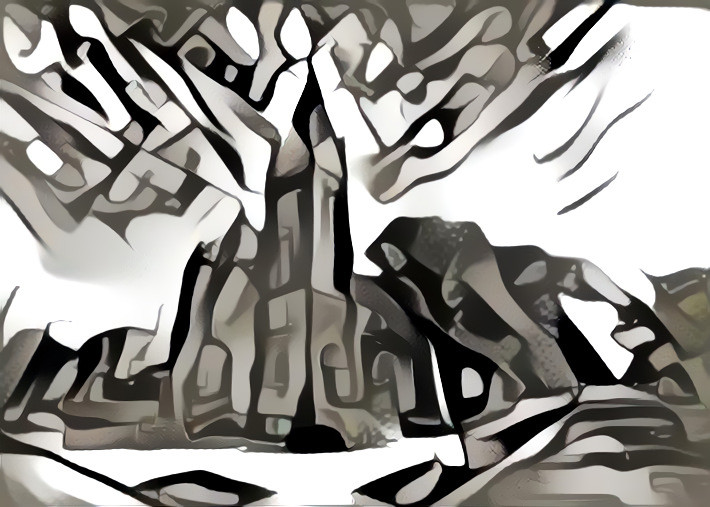
Prompt: A surreal, highly detailed scene dominated by a large geometric dodecahedron and an astronomer, both shown performing multiple overlapping actions at once.
The dodecahedron illuminates, baffles, orbits, extracts, and melts, while the astronomer illuminates, baffles, orbits, extracts, and melts in parallel—each action visually distinct but integrated into one coherent image.
The environment is structured around a clearly visible fractal geometry: repeating self-similar patterns forming the background, ground, and spatial depth, with fractal shapes echoing the facets of the dodecahedron and the astronomer’s instruments.
Style: Reflective metal; austere authority — polished metallic surfaces, mirrored highlights, cold precision, disciplined composition, restrained palette. Surfaces appear authoritative, architectural, and exacting, with reflective metal textures throughout (dodecahedron faces, tools, floor planes, cosmic apparatus).
The astronomer appears calm, controlled, and methodical, wearing minimal, structured clothing with metallic accents. The dodecahedron dominates the scene as an imposing, precise form, partially reflective, partially dissolving, partially radiant.
Lighting is sharp and directional, emphasizing clarity, hierarchy, and control. The image should feel intelligent, formal, and slightly intimidating—order imposed on complexity—while the fractal presence subtly destabilizes the scene through infinite repetition.
No text. No symbols. No borders.
Prompt: The manuscript rotates the author. The image depicts an intimate yet disorienting moment in which an open manuscript slowly turns the author’s body and perspective, as if written knowledge itself is reorienting its creator. The author appears suspended in midair, calm but alert, arms slightly extended as pages drift and pivot around them. Lines of text blur into motion, no longer meant to be read but to be felt, suggesting that authorship is not control but submission to ideas once released. The rotation feels deliberate and steady, implying reflection rather than chaos, as if the author is being gently turned toward a new understanding.
The setting is contained within a vast dome that encloses the entire scene. The curved surface rises overhead, creating a sense of enclosure, focus, and resonance. Light travels along the dome’s interior, reinforcing circular movement and echoing the manuscript’s rotation. The architecture suggests a place of contemplation, like a reading room expanded to cosmic scale.
The visual treatment uses soft watercolor tones with translucent washes and softened edges. Colors blend subtly into one another, emphasizing fluid motion and introspection. The overall mood is quiet, thoughtful, and inward, presenting creation as an act that reshapes its maker.
Prompt: The traffic pylon pickles the narwhal. The image shows a surreal, procedural ritual taking place in a stark, controlled space where the ordinary becomes strangely official. A single traffic pylon stands upright like an authority figure, its surface clean and reflective, while a narwhal is positioned nearby as if calmly submitting to an inexplicable process. The “pickling” is visualized as preservation rather than harm: translucent layers seal around the narwhal in thin, glasslike membranes, suggesting containment, documentation, and long-term keeping. The narwhal’s expression remains serene, almost compliant, while the pylon appears unwavering and formal, as though executing a rule it did not invent.
The environment is built from a fractal structure that repeats across walls, floor, and air: branching, recursive patterns form corridors and chambers that imply endless bureaucracy and infinite replication. These repeating forms create depth and disorientation while maintaining strict internal logic.
The palette is institutional blue, with a tension between expressive brushlike marks and regulated, diagrammatic precision. The scene feels both emotionally charged and administratively constrained, balancing softness with control, and wonder with procedure.
Prompt: A vast, quiet scene set in indigo space, sparse and expansive, with deep cosmic emptiness surrounding the figures. A large fractal structure dominates the environment—repeating chalk-like geometries unfolding infinitely into darkness.
At the center, chalk and an author appear as parallel forces. The chalk illuminates, erases, analyzes, creates, dissolves, and directs, while the author illuminates, erases, analyzes, creates, dissolves, and directs in synchronized visual layers. Each action is shown simultaneously through overlapping ghost-images, traces, and residual marks.
The chalk appears oversized, luminous, and abstract—sometimes solid, sometimes dissolving into dust-like light. The author is calm, solitary, and contemplative, seated or standing within the fractal field, interacting with invisible surfaces.
The fractal geometry echoes chalk marks, handwriting loops, and erased diagrams, repeating outward into indigo darkness. The overall feeling is minimal, cosmic, and restrained—quiet intelligence suspended in space.
No text. No symbols. No borders.
Prompt: The topiary analyzes the notary public. The image presents a composed yet subtly unsettling scene in which a meticulously trimmed topiary stands opposite a notary public, as though conducting a quiet examination. The topiary’s sculpted branches curve inward like attentive gestures, their precision suggesting logic, scrutiny, and cultivated judgment. The notary public sits or stands calmly, documents held neatly, posture formal and restrained. Their expression is neutral but alert, conveying awareness of being assessed not legally, but structurally—measured against standards they themselves uphold. The analysis feels slow and procedural, unfolding through observation rather than interrogation.
The entire environment is organized around a Venn diagram that forms the spatial logic of the scene. Overlapping circular zones define the floor, background, and negative space, subtly positioning both figures within shared and separate domains. These intersections suggest jurisdiction, agreement, and ambiguity, reinforcing the theme of evaluation and overlap between natural form and institutional role.
The visual tone is orderly and calm, resembling a carefully maintained ledger. Colors are subdued, lines are clean, and textures are restrained. The composition emphasizes balance, clarity, and quiet tension, evoking assessment as a methodical, almost botanical process.
Dream Level: is increased each time when you "Go Deeper" into the dream. Each new level is harder to achieve and
takes more iterations than the one before.
Rare Deep Dream: is any dream which went deeper than level 6.
Deep Dream
You cannot go deeper into someone else's dream. You must create your own.
Deep Dream
Currently going deeper is available only for Deep Dreams.



 363w
363w
 363w
363w