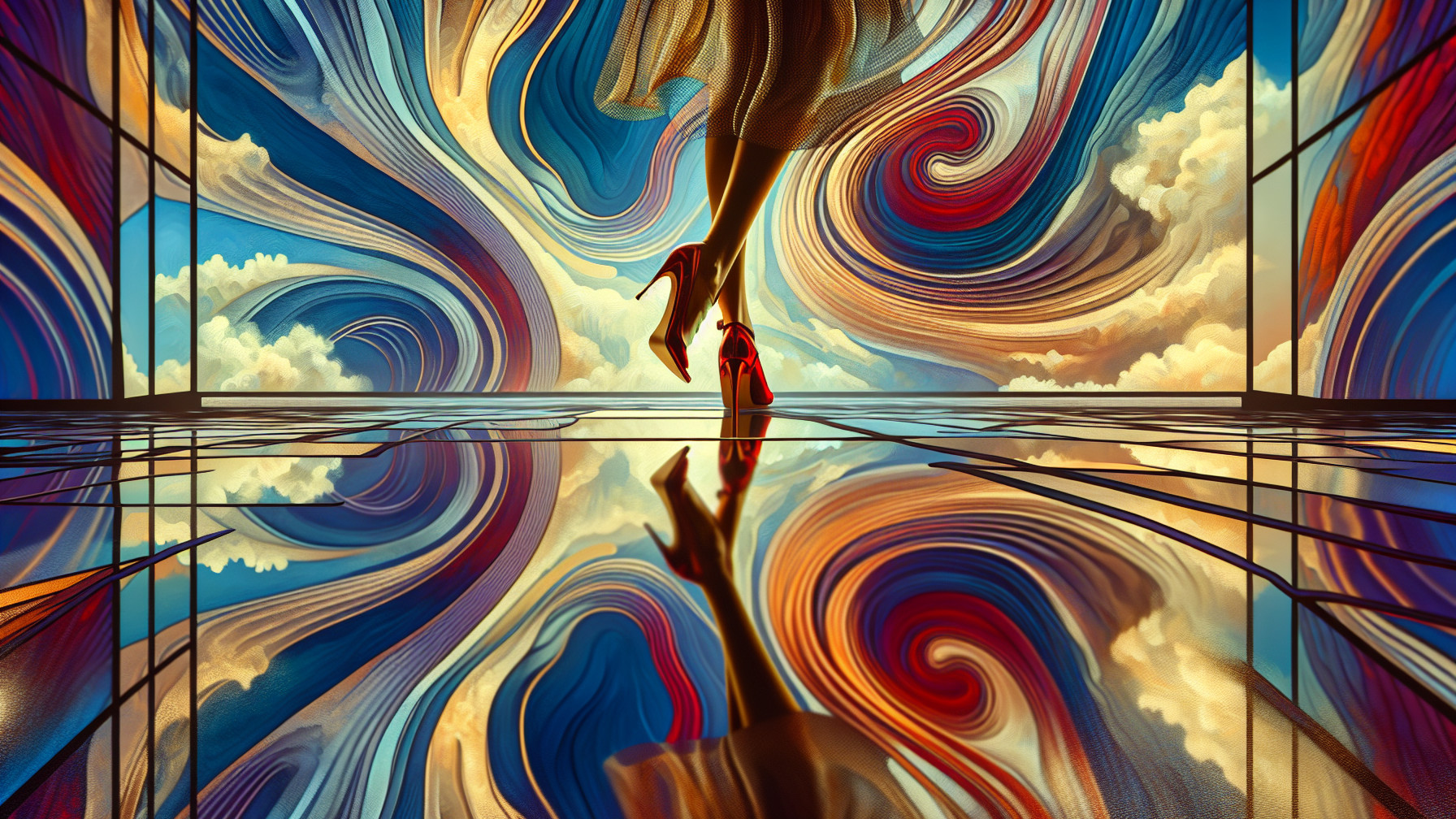
Prompt: Create an image in mixed styles: figurative abstraction and a highly artistic minimalist style: fast, energetic brushstrokes, dynamic sketches, loose, semi‑transparent watercolor fills that slightly extend beyond the outlines; make the background not purely white, but rather adapt it to a city landscape and add textures; if appropriate, leave the white. Preserve the sense of rhythm and movement through the contrast of sharp strokes and blurred spots: a moment of absolute happiness: a girl on a skateboard is rushing forward, and a dog is flying alongside — her body is stretched out in the run, her muscles are tense, and the speed is felt in every movement. The girl is smiling, her eyes are full of delight. The dog is full of excitement, her gaze is full of energy. Her silhouette, consisting of smooth lines, conveys the sense of speed and balance. The composition is asymmetrical, with a diagonal vector of movement. Use a contrasting color palette: dark blue, purple, neon orange, emerald green, magenta, acid yellow, and crimson. Add blurred outlines. The style is modern abstraction with the energy of street art, detailed accents, and a free, painterly manner.
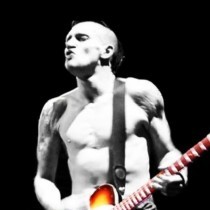
Prompt: An abstract digital illustration inspired by Nirvana concerts: stylized to resemble distorted photographic film. The main subject is Kurt Cobain, left‑handed, in a recognizable concert pose: his left hand is confidently resting on the guitar neck, his right hand is playing the strum/riff, and the guitar body is at an angle that emphasizes dynamism. The clothing reflects Kurt’s classic look: a flannel shirt and worn jeans; the fabric texture is carefully rendered. The microphone on a tilted stand is a compact accent next to Kurt. The background and surroundings are abstract layers: semi‑transparent color fields, swirling color flows, soft gradients, and sharp pixel artifacts. Motion blur is concentrated around the hands and the guitar body, creating a sense of speed. Grain and a light vignette give the image an “archival” look. The color scheme is dark and grunge‑like: charcoal gray, dusty blue, rusty orange, with occasional bright splashes.
Prompt: Draw a visual: a dog playing on the beach before the rain — catching a wave, sniffing the sand, looking around as if sensing an impending change in the weather; its movements are natural, without a staged pose, convey a lively behavioral impulse. The semantic center of the composition is the dog itself; thin lines radiate gently from it, like vibrations of the air before a thunderstorm — not rigid, but translucent, like a pen sketch. The style is a hybrid of watercolor and graphics: watercolor fills with blurring, on top — light contour strokes and dotted texture, like pen and ink. The technique is a collage in a mixed manner: layers of different transparency, overlapping brushstrokes, fragments resembling cut—out pieces of paper. Add the effects of "illuminated film" — light white spots, vignettes, barely noticeable scratches and grain. Silhouette hints (birds, a distant human silhouette, a snag) — only in outlines, without detail, as if seen through a haze. The atmosphere is a quiet innuendo: not drama, but a premonition, a pause before an event. Palette: soft gradients with translucent layers. Use combinations of sand and ochre for sand; terracotta and dark red for warm shadows; blue—purple and amber for the sky and glare; neon green as a subtle accent (for example, on the edge of a wave or in a spot of light). Sunny yellow — delicately, in the form of a diffused glow. The background is pure white with a soft gradient, without sharp transitions; the lighting is soft, diffused, as if through a thin cloth.
Prompt: A highly detailed pencil sketch-style illustration, mid-frame composition, rule of thirds.
An art installation: life breaking through concrete and brick — pure, vibrant life emerging from urban structure.
A group of figures in energetic, varied poses, leaping across brick steps that form a dynamic stairway through the wall; motion is clear and full of momentum, mysterious yet uplifting.
The wall is light grey and off-white, not dark — emphasizing texture: rough concrete, exposed brickwork, mortar lines, tiny chips and pores, visible grain. Bricks are arranged as irregular steps, creating a sense of ascent and movement.
Style: hand-drawn pencil rendering with heavy hatching, cross-hatching, smudged shading, and dramatic pencil shadows; layered line work, visible graphite grain, subtle smears. Figurative abstraction meets street art. Grunge aesthetic with halftone dots, scratches, scuffs, vignette, light glitch distortion.
Color treatment: muted base with pulsating neon accents — muted gold, emerald green, electric magenta, acid yellow, amber, neon orange, blue-violet, terracotta; the colors glow against the pale wall, creating strong contrast without making the image dark.
Lighting: sharp chiaroscuro, deep pencil-style shadows under leaping figures and between bricks; backlight and rim light to highlight movement and give a subtle 3D effect. Atmospheric haze, film grain, 35mm lens feel.
Highly textured, layered, tactile look — you can almost feel the paper grain and pencil strokes. Mixed media vibe: pencil drawing with faint watercolor washes and halftone overlay.
Prompt: An image in a mixed style: figurative abstraction and high‑art minimalism. The scene depicts bears fishing in the rapids of a mountain river. The asymmetry and diagonal direction of movement make the composition lively and dynamic. Work with quick, energetic brushstrokes; add dynamic sketches of foliage and rocks on the shore to enhance the rhythm of the scene. Let loose, semi‑transparent watercolor fills slightly extend beyond the outlines — this will create a sense of spontaneity and airiness. Blurred edges of the shapes support the abstract nature, but keep the key accents (the bears’ eyes, water splashes, the fish’s silhouette) detailed. Contrasting palette: dark blue, purple, neon orange, emerald green, magenta, yellow, dark gray, crimson. Style — modern abstraction with painterly freedom and expressive color drama.
Prompt: In conditions of thick fog, the young athlete demonstrates a high degree of physical fitness and tactical skill, overcoming a difficult route. Using new sneakers with spikes allows her to move efficiently over rough terrain, jumping over broken branches and adapting to constantly changing conditions.
The lighting, represented by the rays of the sun breaking through the fog, creates unique visual effects and helps to change the perception of space and time for the athlete. This element of the natural landscape plays an important role in shaping the participant's psychological state and their ability to make quick and informed decisions.
Prompt: An ideogram-style watercolor illustration: in the foreground, a conductor in a classic tailcoat stands in an expressive pose, as if conducting a flock of starlings. He holds a thin conductor's baton in his hand, his gaze устремленный upward, and his face expressive of focus and inspiration. The flock of starlings in the sky forms an intricate abstract shape, resembling an uneven ball, as it emerges from the half of the rising sun on the horizon, as if performing a "musical dance" under the conductor's command. The sky is painted in soft shades, from a delicate pink and peach at the horizon to a pale blue at the top; the sun's rays fan out, illuminating the edges of the birds' figures. The colors blend seamlessly into each other, thanks to the translucent layers, light watercolor strokes, and subtle paper texture. The outlines of the birds and the conductor are slightly blurred to create a sense of airiness, but the conductor's pose remains clear. The artwork is presented in a 16:9 format, emphasizing the artistic and poetic nature of the scene rather than its photorealistic qualities.
The moment by the campfire: between reality and sleep..
Model:
ChatGPT 2
(Pro)
Size:
2592 X 1456
(3.77 MP)
Used settings:
Prompt: Draw a scene on a steep sandy shore: three pine trees with exposed roots on the cliff, a rickety hut, a rocking chair, a table, and smoldering embers in the foreground. Children are playing ball, and there’s a dog nearby. The sun is a large light spot with rays. The style is pure abstraction with recognizable shapes and energetic brushstrokes. The technique is mixed: pencil strokes, wax crayons, scuffs, and blurring, as if on textured paper. Layers of translucent fills create depth and volume. The composition is asymmetrical, with tension and a certain “air.” The color palette is contrasting: ochre‑sand, brown‑gray, amber‑orange, emerald‑green, ash‑blue. The background has texture and smooth gradients, like sand under slanting rays. The atmosphere is lively, with a sense of the moment.
Prompt: A minimalist artistic sketch. A highly artistic minimalist style: quick, energetic brushstrokes, dynamic sketches of foliage, loose, semi‑transparent watercolor fills that slightly extend beyond the outlines, on a clean white background. Preserve the sense of rhythm and movement through the contrast of sharp brushstrokes and blurred spots. Here, the cat is depicted as a light silhouette‑sketch: the outline is made with an energetic stroke, and inside there is a watercolor fill with translucent layers; it seems that it “grows” out of the strokes depicting the foliage. It gives the impression that the cat has just jumped or slipped past — due to the elongated, dynamic pose and the small strokes scattered around. Combine abstraction techniques: layering semi‑transparent layers, colored swirls, watercolor strokes, and soft gradients — with clear pixel artifacts and glitch effects, from detail to noise. The color code is blue‑violet, amber, neon green, dark red — let them resonate with each other, but the rhythm of the composition is pulsating: alternating clear lines and blurred transitions guides the viewer’s gaze. Add subtle visual “connections” — common lines, color patches, or repeating motifs.
Prompt: An impressionist painting: the feeling of summer in soap bubbles. Blurred brushstrokes, a play of light and color. In the foreground, a child blowing bubbles; in the background, a blurred landscape: a meadow, trees, and a blue sky. The bubbles shimmer with all the colors of the rainbow, creating a shimmering effect. Visible brushstrokes, warm summer tones, and an atmosphere of lightness.
Prompt: Draw an abstract portrait of a beautiful face in a monochrome scheme with a chaotic hairstyle. Style — figurative abstraction with elements of street art: add sketchy ink strokes and watercolor blurs, scuffs, scratches, film grain, raster effects, light glitches, pixel artifacts, and noise.
Composition according to the rule of thirds: the face is in one of the thirds, and in the background — fragments of a city landscape with textured surfaces. Lighting — backlighting, plus a neon glow around the silhouette.
Color palette: magenta, amber, sunny yellow, crimson, violet, neon orange, muted golden, emerald green, poison green, acid yellow, electric magenta, soft blue, soft white, warm cream. At the same time, preserve the feeling of mystery, tranquility, and ephemerality; make the image otherworldly.
Prompt: Draw a cheerful, energetic dance scene: two figures are spinning and moving with joy, their poses are full of emotions — as if they are completely surrendering to the rhythm. The style is pencil sketches with expressive strokes, but the forms are clear and beautiful; the whimsical geometry looks harmonious, and the asymmetry adds dynamism rather than tension. Add semi‑transparent white layers — as if a thin layer of matte film or an airy veil had been laid over the drawing: they soften the sharp edges, diffuse the contrasts, and make the composition lighter without losing the vibrancy of the colors. Let these white layers be applied unevenly — sometimes more transparent, sometimes denser, creating the effect of a light haze and volume. The background is an urban wall: concrete with protruding bricks, and the foreground features bright, cheerful graffiti. The textures have a slight “patchwork” quality: scuffs, scratches, splashes of paint, barely noticeable glitch and pixelated noise — but all of this contributes to an atmosphere of creative disorder rather than anxiety. The colors are saturated but not overwhelming: toxic green, electric purple, neon orange, acid yellow, plus warm amber and crimson accents. Thanks to the white layering, the palette remains bright, but becomes more airy and friendly. The chiaroscuro is sharp, but it emphasizes volume and movement: one dancer is in a beam of light, the second — in a soft shadow, the transitions are smooth. The composition is shifted from the center for dynamism, but remains balanced: the eye easily glides across the scene and returns to the dancers. The mood is unrestrained joy, freedom, celebration, a touch of boldness, without any hint of horror or paranoia.
Prompt: The northern lights above Lake Lama, the Putorana Plateau: the sky “dances” — green, purple, turquoise, and crimson streams of light bend as if they are alive, with a realistic structure of the aurora borealis — vertical beam‑columns, ragged edges of arcs, gradient transitions from a rich emerald near the horizon to deep ultraviolet at the zenith, and in between — flashes of pink and warm gold at the boundaries of the streams. The aurora has volume, depth of layers, and an internal glow, like a real corona of polar light. The reflection in the lake mirrors the movement, but with a slight shift and distortion — the water slightly “lags behind” the sky, creating a double rhythm effect.
In the foreground, there are yurts and reindeer; their outlines gently dissolve into the icy air. All around, there’s a mirage effect, but not a digital one — a painterly one: the space “floats” like a watercolor painting applied to damp paper. The edges of the objects blur, the colors blend into each other in wet streaks, and semi‑transparent streaks and smudges appear, as if ice and air had mixed together in a single moisture. In some places, the watercolor lightness gives way to sharp strokes of a dry brush — the texture of the snow, the frost on the stones, and the reindeer’s fur comes through in harsh, rough brushstrokes. Individual details are worked out with fine ink lines — the outlines of yurts, reindeer antlers, thin streams of smoke from chimneys.
In some places, there are pencil outlines: thin graphite lines outline the ridges of the snow‑covered mountains, enhancing the sense of their height and scale; light pencil strokes along the perspective lines near the shore emphasize the depth of the frame; separate sketchy outlines around the yurts and silhouettes of the reindeer, as if the drawing is showing through the painting. The pencil is just accents, creating the feeling that the sketch and the watercolour coexist in the same space. The warm amber light from the yurts spreads across the snow in watercolour patches, contrasting with the cold, multi‑layered palette of the sky. Style: mixed media — photorealistic northern lights, watercolor washes, dry brush strokes, pencil outlines, and smudged lines; dynamism is maintained through the movement of the lights, a “lagging” reflection, and a floating watercolor space.
Prompt: "Depict a figure whose body seems to dissolve or transcend its own boundaries: clouds of smoke pour from his chest, and swirls of lines and abstract shapes emerge from his head. Fragments of memories float around him: scraps of photographs, a clock, and letters. The background is abstract, with muted gray-purple tones interspersed with bright reds. The style is surrealist, reminiscent of Salvador Dalí, with expressive brushwork, deep attention to detail, and a mystical atmosphere."
Prompt: A giant cat is crossing an old stone bridge over a city canal — its massive paws step confidently, and its fur ripples in the wind. As it takes a step, it carelessly catches a passing boat with its paw, as if it were a toy: the boat freezes in the curve of its claws, the water spreads out in circles and turns into colorful swirls. Realistic children are sitting on the cat’s neck — their poses are natural: some are holding on tightly to the fur, others are looking down at the water in awe. The faces are meticulously detailed, the emotions are a mix of delight and slight anxiety, the clothing is fluttering slightly. Around them — layers of translucent layers, watercolor strokes along the edges of the frame, soft gradients from dark blue to golden, and along the outlines — sharp pixel artifacts and glitch effects, as if reality is glitching for a second. The palette — deep indigo, neon yellow, dusty pink. The composition is dynamic: the diagonal movement of the cat sets the rhythm, the boat and the swirls of water enhance the sense of the moment. The style is a digital collage, a hybrid of 3D and 2D, cinematic presentation, 4K, high detail in the textures of wool, fabric, and water, with an emphasis on the contrast between the living and the digital.
Prompt: A magical old guitar hangs idle on the wall, and it suffers: it cries with drops of varnish, crumbles with sawdust, and screams with notes that no one can hear. A subtle aura surrounds it, with ghostly images of musicians and dancing couples. Depict it in the style of fantasy illustration: soft, magical light, detailed textures, and pastel and golden tones. The atmosphere is both sad and enchanting. The guitar is in the center of the composition.
Prompt: Create a cinematic shot in a grunge style with elements of figurative abstraction and street art: a girl in a medium shot is gathering her wavy hair into a bun at the back of her head; she has a hairpin clutched in her lips — show this fragment in a close‑up, focusing on the texture and details. In the background — a city courtyard‑well with an everyday domestic scene: clotheslines, old shutters, worn brickwork. Several frightened pigeons take flight in the frame — emphasize their movement with dynamism and slight blurring. Use a contrasting street palette with a pulsating range: combine purple, amber, and neon orange as accent colors; add crimson, terracotta, and ochre for depth; use sunny yellow and emerald green for flashes of light; and use magenta and blue‑violet for shadows. Introduce muted tones: muted golden, soft white, soft blue, sandy, muted green — they will soften the sharp transitions. Use red sparingly as a visual signal. Add film grain, raster printing effects, slight scuffs and scratches across the entire surface of the frame. Combine the contrast of sketch and volume: make some elements (for example, silhouettes in the background) flat, almost graphic, while the key objects (the girl, the hair clip, the pigeons) should have pronounced three‑dimensionality. Place the silhouette‑hints without detail along the edges of the frame — they should blend with the background, creating a sense of incompleteness. The lighting is cinematic: there is a sharp contrast between light and shadow, deep shadows and bright highlights that emphasize the architecture of the courtyard. The composition follows the rule of thirds: the girl is positioned on one of the vertical lines, with key accents (the hairpin, the flying doves) placed at the intersections. The frame may include hints of a group of people in various poses — but only as silhouettes and fragments, without detailed depiction of faces and details, in order to preserve the unsettling atmosphere and quiet understatement. The cityscape should be textured: brickwork, peeling paint, metal grilles, and uneven facade lines.
Prompt: Draw the scene: flamingos are flying over the lake — a flock in a smooth, flowing motion, their wings slightly spread, their silhouettes graceful. The angle is slightly above the water level, so that both the surface of the lake and the birds are in the frame; in the water, there are their reflections, slightly distorted due to the gentle ripples. The style is an artistic figurative abstraction with an emphasis on hand‑drawn graphics: pencil hatching of varying density, light pencil outlines that do not obscure the form but gently suggest it. Add semi‑transparent layers — like watercolor fills that sometimes extend beyond the outlines and blend. Make the edges of the shapes soft, without a sharp outline. Palette: the main background — shades of emerald (water, distant shore), the accent — pearl‑soft pink (flamingo feathers). Add muted gray‑blue and cream tones for depth and airiness.Lighting — diffused daylight, without harsh shadows or contrasting highlights; let the light fall softly, emphasizing the volume of the feathers and the ripples on the water. Mood — contemplative, calm, slightly dreamy. Details: slight grain or texture imitating paper; barely noticeable strokes, as if from a soft pencil, in the depth zones and at the boundary between the water and the sky.
Prompt: Create an abstract composition titled “A Café on a Rainy Day” in a highly artistic, minimalist style. Use soft gradients and layering of semi‑transparent layers — they should create depth and a sense of space. Add natural streaks and droplets on the windows; make the rain behind the glass not too dense — let it emphasize the atmosphere rather than overpower the scene.
Place a musical instrument (for example, a grand piano or a double bass) in the corner — it should look like the semantic anchor of the composition. From it emanate subtle lines and barely noticeable contours: a faint hint of the singer’s face, the outlines of a saxophone and a cello — without detailed depiction, only silhouettes, to preserve the understatement and the musical mystery.
At separate tables, couples in love are seated: next to them are flowers and candles, but without excessive sentimentality; let these details be read as quiet accents. The composition should be asymmetrical and energetic, as if it were a frame from a slightly distorted broadcast: preserve the rhythm of the layers and the contrast between the soft watercolor aesthetic and the digital noise.
Introduce a cat into the scene: let it sit on the windowsill by the window, slightly turning its head towards the audience — calm, observant, and seamlessly integrated into the composition; convey the fur through a combination of semi‑transparent watercolor fills and clear outline strokes so that it doesn’t stand out from the work’s stylistic framework.
Use quick, energetic brushstrokes and dynamic sketches of foliage — they should be free, sometimes going beyond the outlines of the lines. Use semi‑transparent watercolor fills that spread softly and blend with the background. Leave the white background clean, but use it as part of the rhythm: the white areas should work in balance with the saturated sections.
Color palette: rich blue‑violet and warm amber tones as the base; вкрапления of neon green for accents; one bright accent color — dark red (for example, on a candle, a flower, or a fragment of clothing belonging to one of the characters).
Lighting — natural, without harsh shadows; the light should fall softly, emphasizing the texture of the brushstrokes and layers. Detail — high, 8K; lines — sharp where form is needed, and blurred where atmosphere is important. The overall effect is a combination of the lightness of watercolor, graphic energy, and digital texture.
Prompt: "Create a watercolor illustration using the wet technique to visualize S. Yesenin's poem "I do not regret, I do not call, I do not cry...". In the center is a lone silhouette of a man in a long coat: he stands on the edge of a country road and looks into the distance. The road smoothly disappears into a light haze and disappears into space. There is an autumnal landscape on the sides: maple trees drop copper and gold leaves, birch trees are almost bare, their white trunks contrast with the ochre foliage. The sky is multi-layered: at the top, there are cold gray-blue tones, and at the horizon, there are warm peach-pink reflections of the sunset. Add a subtle silhouette of a pink horse that seems to be melting into the haze, reminiscent of the line "as if I were riding a pink horse in the early spring." Emphasize the effect of watercolor smudges and the texture of the paper, allowing the grain, light streaks, and translucency of the layers to be visible. Make the background as blurry as possible, and the foreground a little denser, but without harsh black outlines. Use a palette of ocher, copper, amber, and muted blues, greys, and ashes. Create a mood of light sadness and memories, as if the image is about to melt away. Focus on atmosphere, cinematic composition, emotions, and the fleeting nature of the moment."
Prompt: The quintessence as a moment of absolute focus: a human figure in motion freezes at the climax of a turn, surrounded by a whirlwind of fine luminous particles that form transparent geometric shapes. The particles resemble pollen or sparks flying along trajectories that emphasize the dynamism. The background is blurred, with a sense of speed, but the figure in the center is crystal clear. The feeling is that this moment encapsulates the very essence of movement. Style: dynamic digital illustration, expressive brushstrokes, bright light accents, high contrast.
Prompt: Create a visual on the theme of “self‑verification” — a close‑up shot following the rule of thirds: the semantic emphasis should be in the right or left third of the frame, while leaving the other two‑thirds light and “airy” so that the viewer immediately gets the sense of discovery and recognition. In the light zone, show the “light features” that the character verifies in themselves: these could be semi‑transparent silhouettes, subtle symbols (for example, lines forming a recognizable gesture, or facial fragments), or barely noticeable word inscriptions that seem to emerge from the background. Let them look like found, carefully revealed details — not like dark shadows, but like highlights, glints, and subtle contours. The style is figurative abstraction plus street art, a collage in mixed media: pencil strokes — light, not oppressive; patches of wax crayons — warm and translucent; 3D render — with a soft glow, without heavy shadow. Add pixelated artifacts, noise, and glitch effects — but make them look like “light ripples” on the surface, not like darkening: as if the screen is flickering slightly, revealing new facets. The color scheme is pulsating but light: pure white as the base and a paper texture for the background; on top, accents of blue‑violet, amber, emerald green, dark red (only as thin lines or small spots), terracotta, crimson, muted green, and warm brown. Let the colors work like flashes of light: amber and terracotta — like a warm inner light, blue‑violet — like a cool, clarifying shade. Avoid dense dark fills: even use deep tones transparently, in layers. Add recurring motifs (rhythmic lines, micro‑symbols, barely noticeable silhouettes) that lead the eye to the hero’s bright “features” — as if they were clues helping the hero to recognize themselves. The mood is whimsical, melancholic, but without heaviness: in the slight sadness, there’s a moment of joy from the fact that “I found this in myself.” The composition balances between the freedom of street art and the clarity of abstraction: there are sharp strokes, but they don’t block the light; the textures of scuffs and scratches are light, as if the paper has aged slightly from touch, not from time. The film glare is bright, but not dazzling: They single out precisely those fragments where the hero “verifies” his positive traits.
Prompt: Create an artistic collage in a grunge style with an urban theme. The composition features silhouettes of city buildings of varying heights, a water tower, billboards, staircases, and steps, up which three lone human figures are climbing; these are located in different parts of the composition. On the left, there are large clocks with Roman numerals. Add the inscriptions “happiness is there” and “it can’t help but be there” to the billboards in the form of vintage typographic elements. Use a muted palette: ocher, mustard, sand, muted green, brown, black; add contrasting accents of orange and dark green. The background should have an aged texture with scuffs, graininess, semi‑transparent newspaper stripes, and small text. Add geometric shapes (circles, arcs, vertical stripes), small details (dots, dotted lines), uneven edges of elements, and light shadows to create volume. The overall effect is a multi‑layered paper collage with a vintage touch and a philosophical undertone.
Prompt: Create an abstract composition titled “A Café on a Rainy Day” in a highly artistic, minimalist style. Use soft gradients and layering of semi‑transparent layers — they should create depth and a sense of space. Add natural streaks and droplets on the windows; make the rain behind the glass not too dense — let it emphasize the atmosphere rather than overpower the scene.
Place a musical instrument (for example, a grand piano or a double bass) in the corner — it should look like the semantic anchor of the composition. From it emanate subtle lines and barely noticeable contours: a faint hint of the singer’s face, the outlines of a saxophone and a cello — without detailed depiction, only silhouettes, to preserve the understatement and the musical mystery.
At separate tables, couples in love are seated: next to them are flowers and candles, but without excessive sentimentality; let these details be read as quiet accents. The composition should be asymmetrical and energetic, as if it were a frame from a slightly distorted broadcast: preserve the rhythm of the layers and the contrast between the soft watercolor aesthetic and the digital noise.
Introduce a cat into the scene: let it sit on the windowsill by the window, slightly turning its head towards the audience — calm, observant, and seamlessly integrated into the composition; convey the fur through a combination of semi‑transparent watercolor fills and clear outline strokes so that it doesn’t stand out from the work’s stylistic framework.
Use quick, energetic brushstrokes and dynamic sketches of foliage — they should be free, sometimes going beyond the outlines of the lines. Use semi‑transparent watercolor fills that spread softly and blend with the background. Leave the white background clean, but use it as part of the rhythm: the white areas should work in balance with the saturated sections.
Color palette: rich blue‑violet and warm amber tones as the base; вкрапления of neon green for accents; one bright accent color — dark red (for example, on a candle, a flower, or a fragment of clothing belonging to one of the characters).
Lighting — natural, without harsh shadows; the light should fall softly, emphasizing the texture of the brushstrokes and layers. Detail — high, 8K; lines — sharp where form is needed, and blurred where atmosphere is important. The overall effect is a combination of the lightness of watercolor, graphic energy, and digital texture.
Prompt: Draw a half‑ruined building in the style of an old gallery or palace: savanna plants — tall grasses, thorny shrubs, vines, and individual trees with spreading canopies — are pushing through the openings and cracks. Savanna animals move freely among the ruins: graceful antelopes, zebras, a couple of lions in the distance, and birds perched on the remnants of cornices. Inside, one can still discern the former decor: fragments of stucco work, pieces of columns, remnants of parquet flooring, and on the surviving walls — paintings in heavy frames; some of the canvases are covered in dust and cobwebs, while others bear the marks of time — scuffs and cracks in the paint layer. The style is grunge with elements of figurative abstraction and street art: add film grain, raster printing effects, slight wear and tear, scratches, drips and streaks of paint, thin lines, dots, strokes, pixel artifacts and noise — but in such a way that nature and ruins remain recognizable. Lighting — a sharp contrast of light and shadow: dense backlighting outlines the silhouettes of animals and the contours of ruins, while bright spots of sunlight appear in the openings. Add a neon glow in muted tones as a subtle artistic accent: amber, purple, emerald green, soft blue, muted golden — to create a pulsating range on a monochrome base. Medium shot, follow the rule of thirds: ruins, plants, and animals are distributed across the frames in such a way that the composition remains dynamic but not overloaded. The atmosphere is a frozen time, where nature gradually regains its space, and the echoes of past art are still preserved in the details.
Prompt: Draw a line sketch in a naive style: a boy and a girl are sitting on a wide windowsill, playing chess and looking out at the street. Next to them on the windowsill — a bouquet of flowers in a vase. In front of the boy — a dog standing on its hind legs: it seems to be reaching out to him or to the window. Outside the window — silhouettes of trees and an airplane flying high in the sky.
Use lines of varying thickness, with some broken lines and a slight carelessness — this should emphasize the naivety of the drawing. Add grunge effects: barely noticeable scuffs, graininess, light scratches and streaks, as if the image was made on aged paper.
The color scheme is a muted brown‑beige: warm shades of beige, sandy, dusty brown, and grayish‑ochre. No bright accents — just a soft, “dull” palette. Make the composition simple and expressive, leave a bit of “air” around the edges — to enhance the feeling of lightness and spontaneity.
Prompt: Children playing hide and seek at a playground, mid-shot composition. One child as the seeker stands with eyes closed, counting against a tree, while a small group of kids in various dynamic poses scatter — some crouching behind bushes, one hiding behind a slide, another near swings mid-motion. Minimalist watercolor sketch combined with graphic line work — a hybrid of soft watercolor washes and crisp outlines. Pixelated artifacts and grain texture overlay. Thin lines, dots, hatching, film light leaks. Pulsating color palette: pure white background, blue-violet, amber, emerald green, dark crimson, neon orange, electric magenta. Energetic, full of movement, yet clean and uncluttered. Medium detail, balanced negative space, expressive brush strokes.
Prompt: the moment dissolves into the chaos of the subconscious melody: the background changes in waves from the center of the glowing blue flame guitar : through the strings, the arms, the body, the air around.
Prompt: Draw a subway car in a semi‑realistic style with a pronounced atmosphere of detachment. The passengers are sitting each in their own personal space — but without rigid outlines and “cabins”: instead, surround them with translucent abstract clouds, as if they were clumps of digital fog. These clouds blend smoothly into the background, dissolving into the air — they are not outlined, but seem to grow out of the person’s very state: for some, the cloud is dense and dark, for others — light, with shimmering inclusions.
Inside each such cloud, show the essence of the activity not as an interface, but as an abstract metaphor: for one — a whirlwind of bright pixels and flashes (a game), for another — thin glowing threads intertwining into lines of text (a conversation), for the third — shimmering silhouettes of objects and golden shopping cart icons (shopping). Let these images look like dreams or fragments of thoughts: not like screens, but like an internal experience of the action.
Leave the passengers’ faces calm, slightly blurred, as if slightly out of focus: they should convey detachment, introspection, and a lack of connection with those around them. The poses should be relaxed; the bodies seem to “sink” into the seats, merging with the space of the carriage.
In the aisle — three children (a boy and two girls) who are playing tag. They are the only source of living energy: emphasize their movements with dynamic strokes, trails, and light lines of speed. Unlike the “clouds” of adults, around children there is clean air, no abstractions: only joy, the wind in their hair, and their clothes fluttering. Their emotions are bright and open, and they contrast with the muted, “dissolved” atmosphere of the passengers.
Leave the details of the carriage (handrails, seats, advertisements, line diagrams) recognizable, but make them slightly muted, as if covered with a light haze. The lighting is cold, typical of a subway, but with warm accents in the children’s clothing and in the glowing elements of the abstract clouds.
The style is a modern digital illustration with elements of soft abstraction: a balance between reality and metaphor, without excessive detail, but with a expressive atmosphere. Depth of field: the children are in sharp focus, while the passengers and their “clouds” are softer, with a slightly blurred background. The resolution is high, the textures are neat, with a light, painterly texture.
Dream Level: is increased each time when you "Go Deeper" into the dream. Each new level is harder to achieve and
takes more iterations than the one before.
Rare Deep Dream: is any dream which went deeper than level 6.
Deep Dream
You cannot go deeper into someone else's dream. You must create your own.
Deep Dream
Currently going deeper is available only for Deep Dreams.