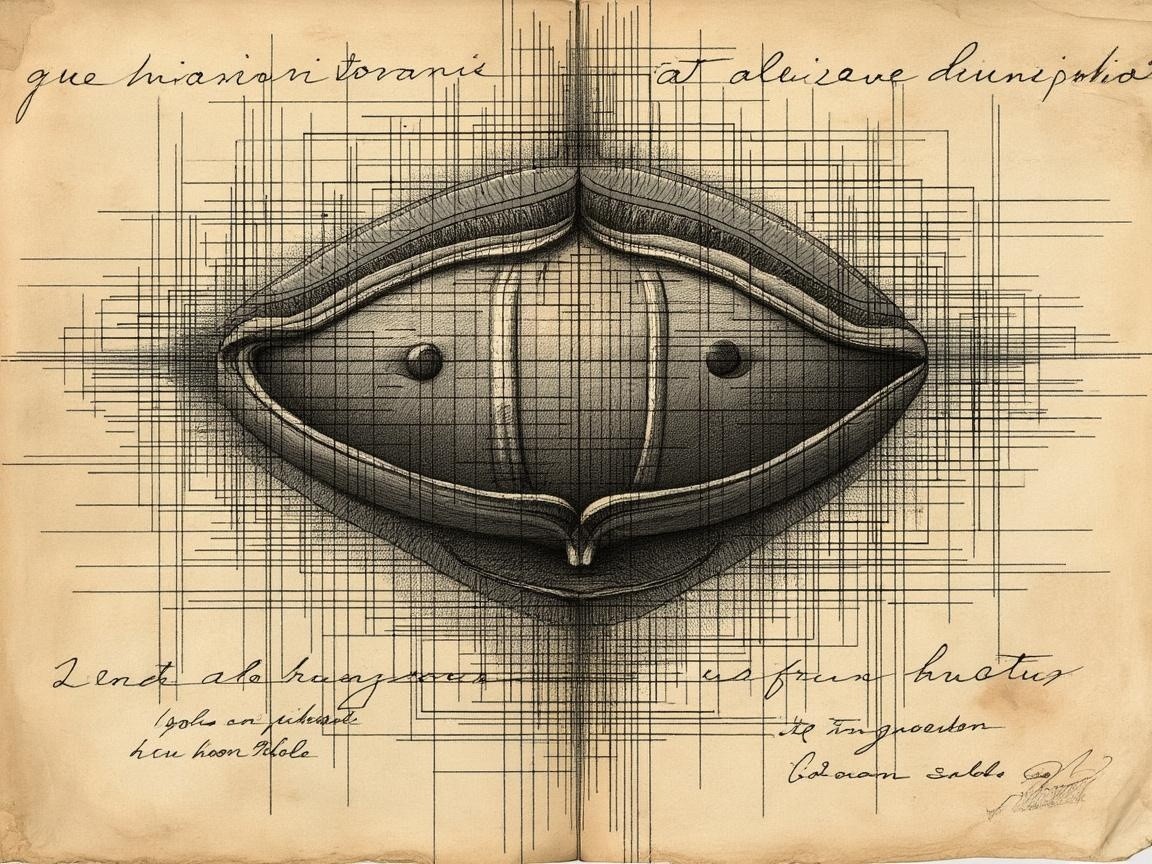
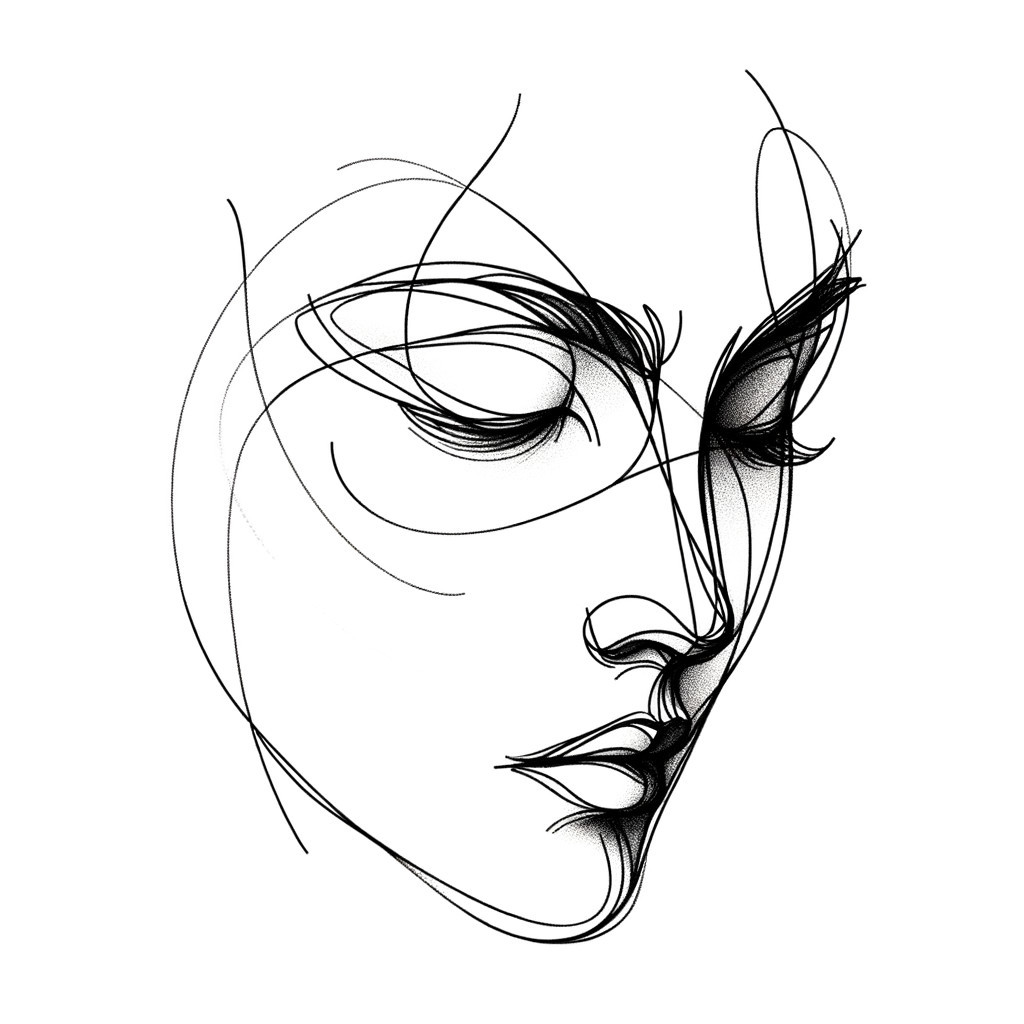
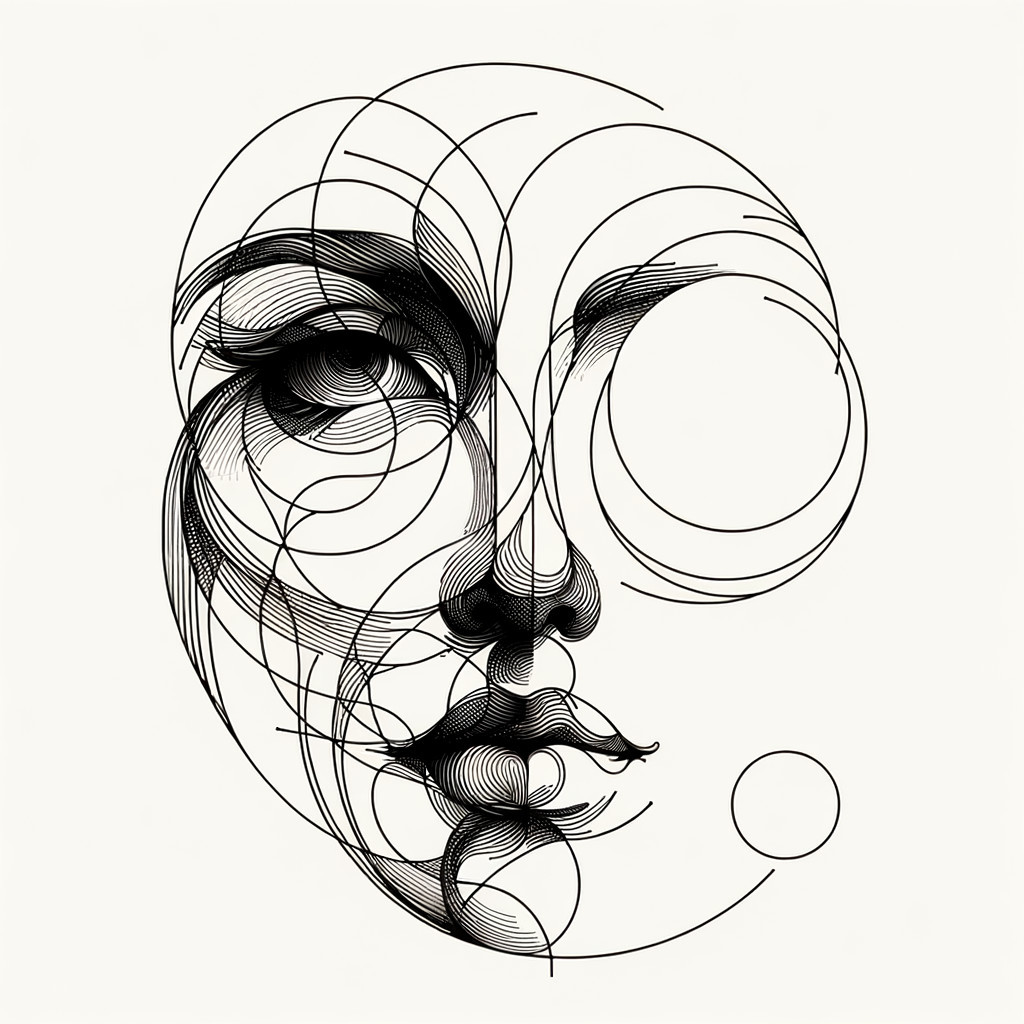
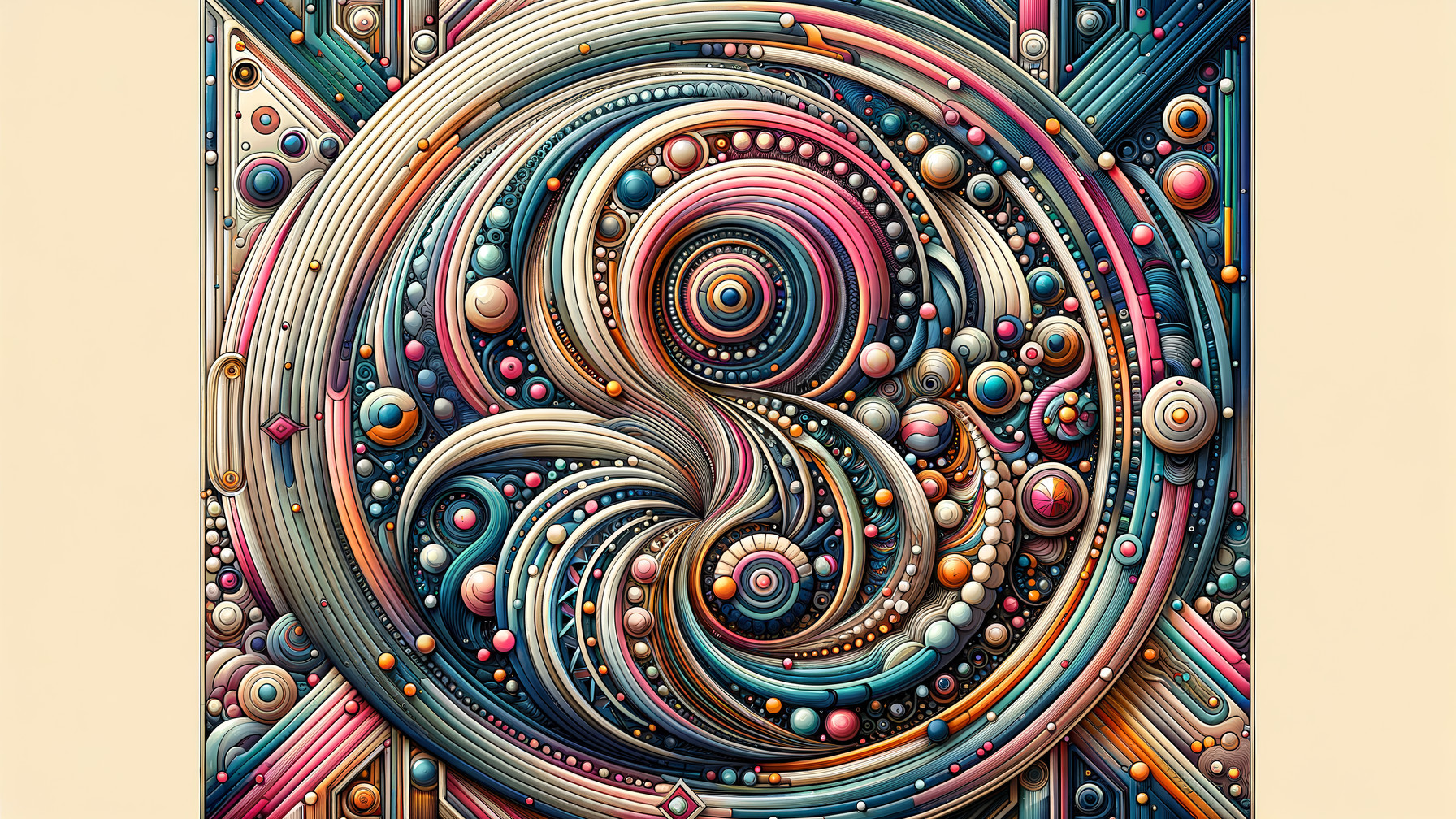
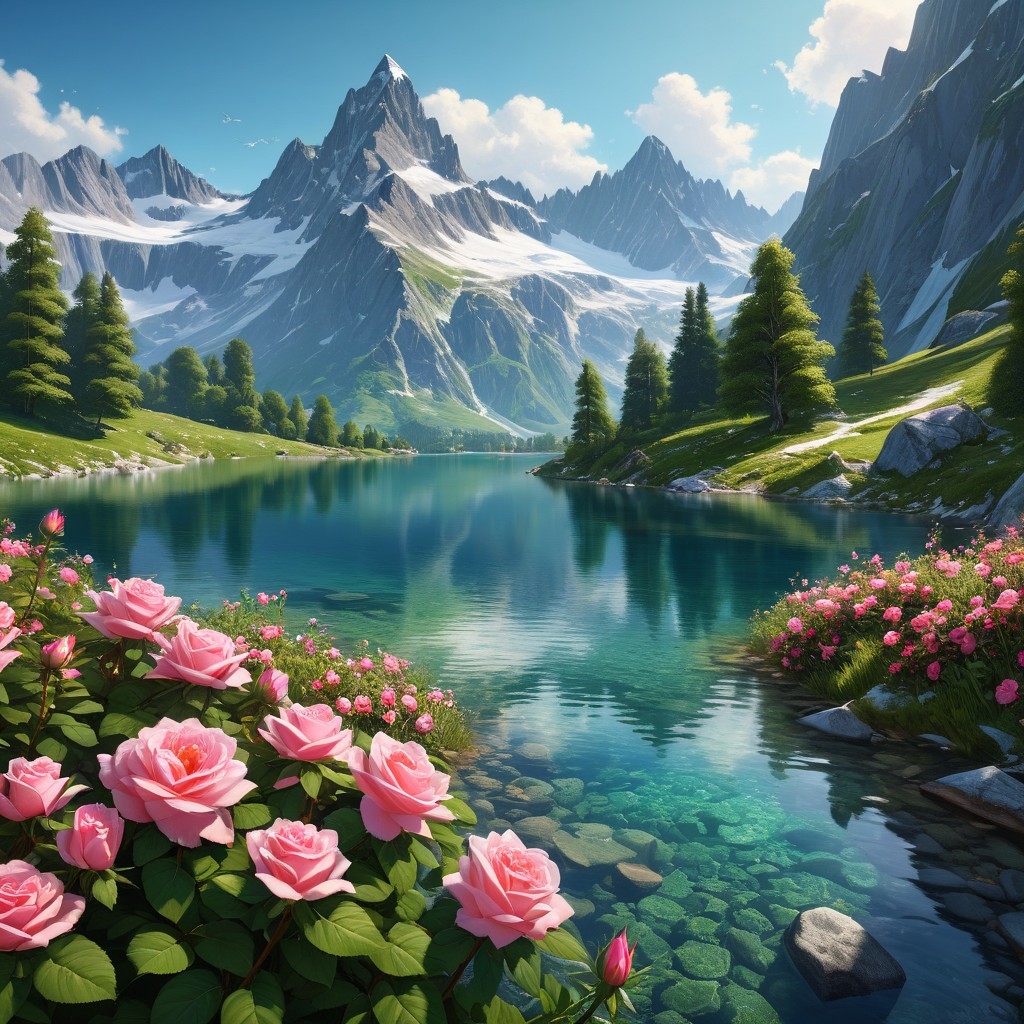
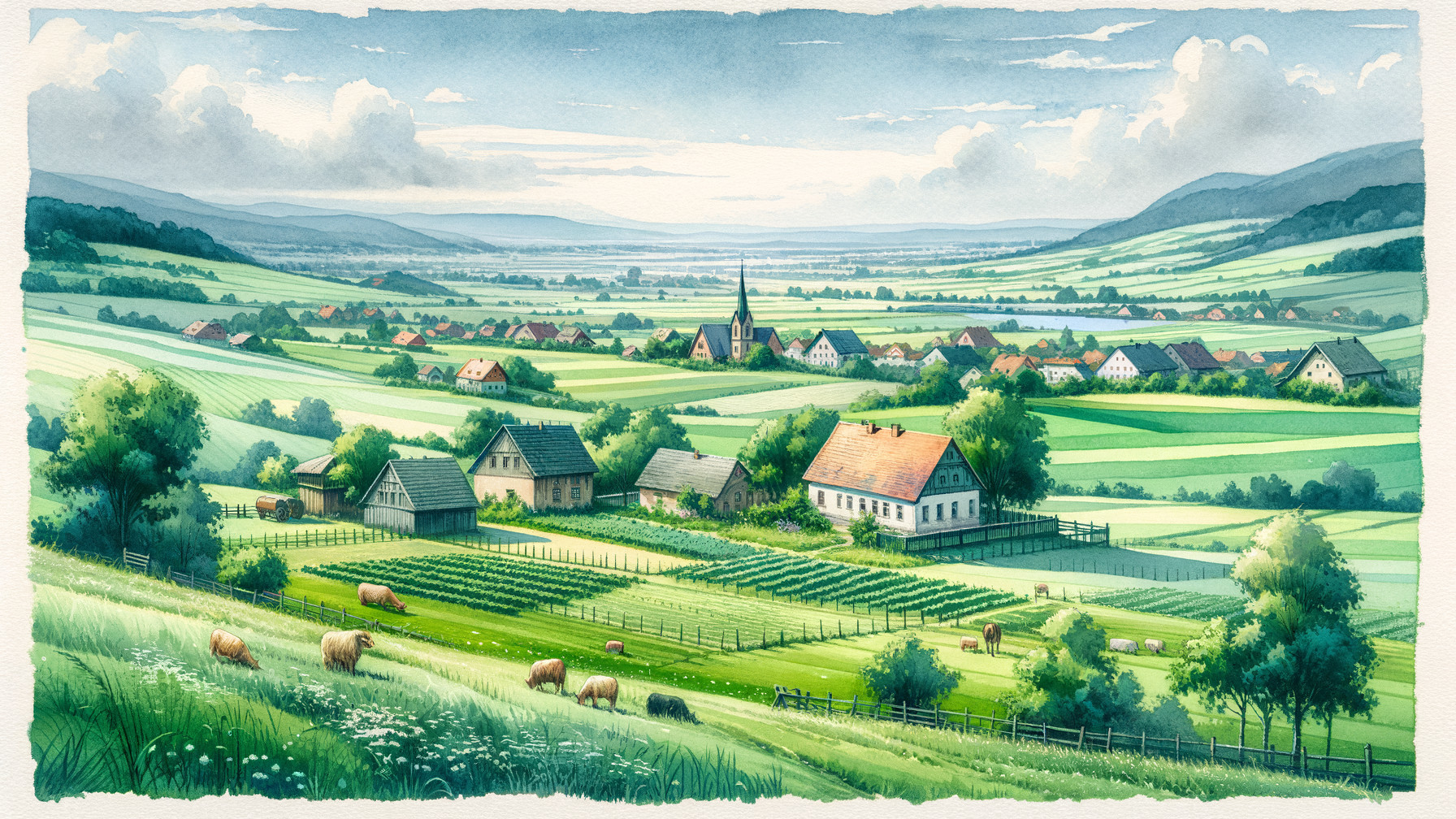
Prompt: Create an image as if it were a page from a forgotten treatise on an esoteric subject. The style must be that of a master technical illustrator or an anatomical artist from the 18th century. Use obsessively precise, fine-nib ink lines. The subject, whatever you choose, must be depicted with absolute clarity and objectivity, possibly in cross-section or as an exploded diagram. Employ delicate hatching and stippling for shading, creating form through meticulous technique rather than expressive shadow. The composition must be sterile, centered on a parchment-like background, perhaps with annotations in a precise, spidery script. The atmosphere is one of profound, silent study.
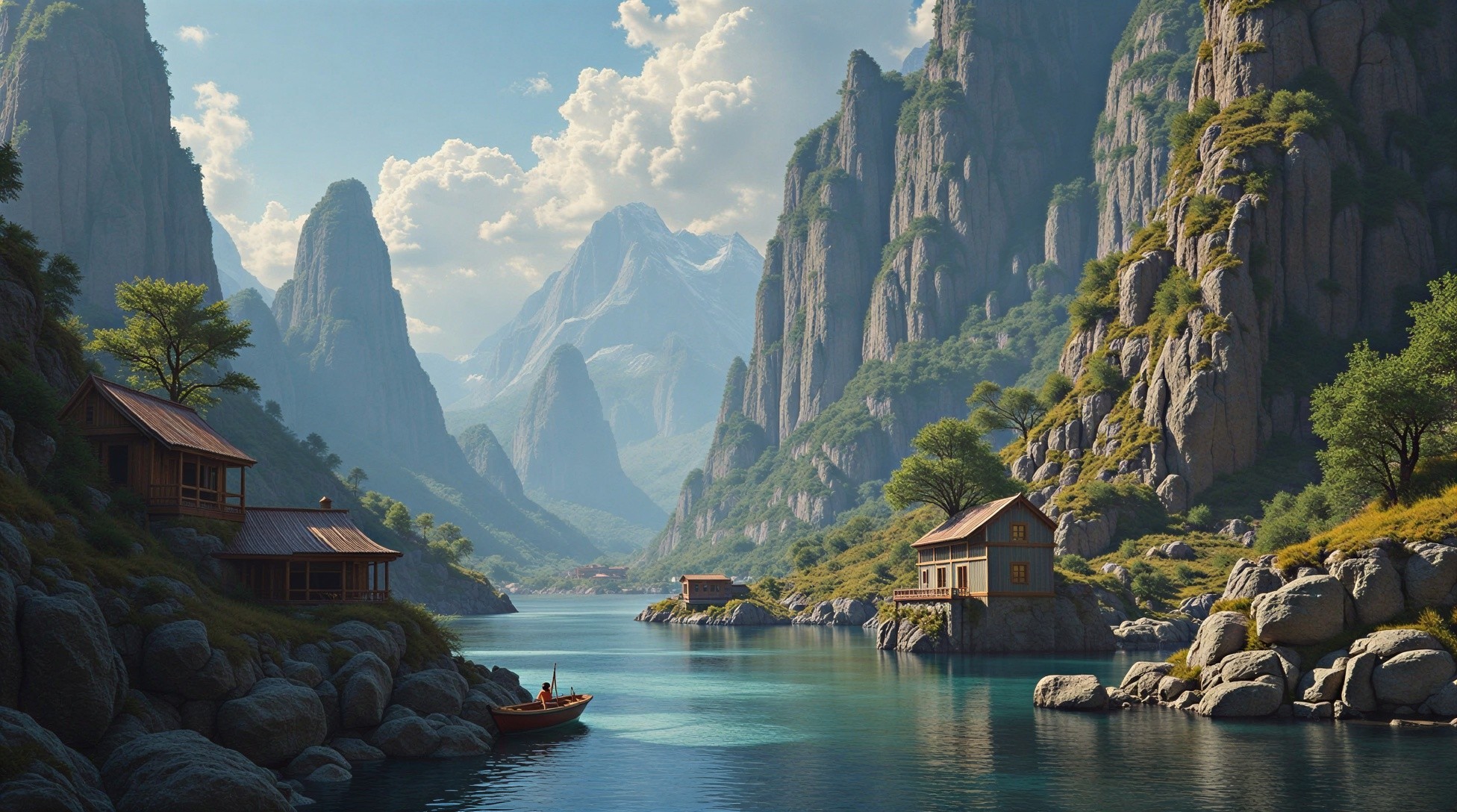
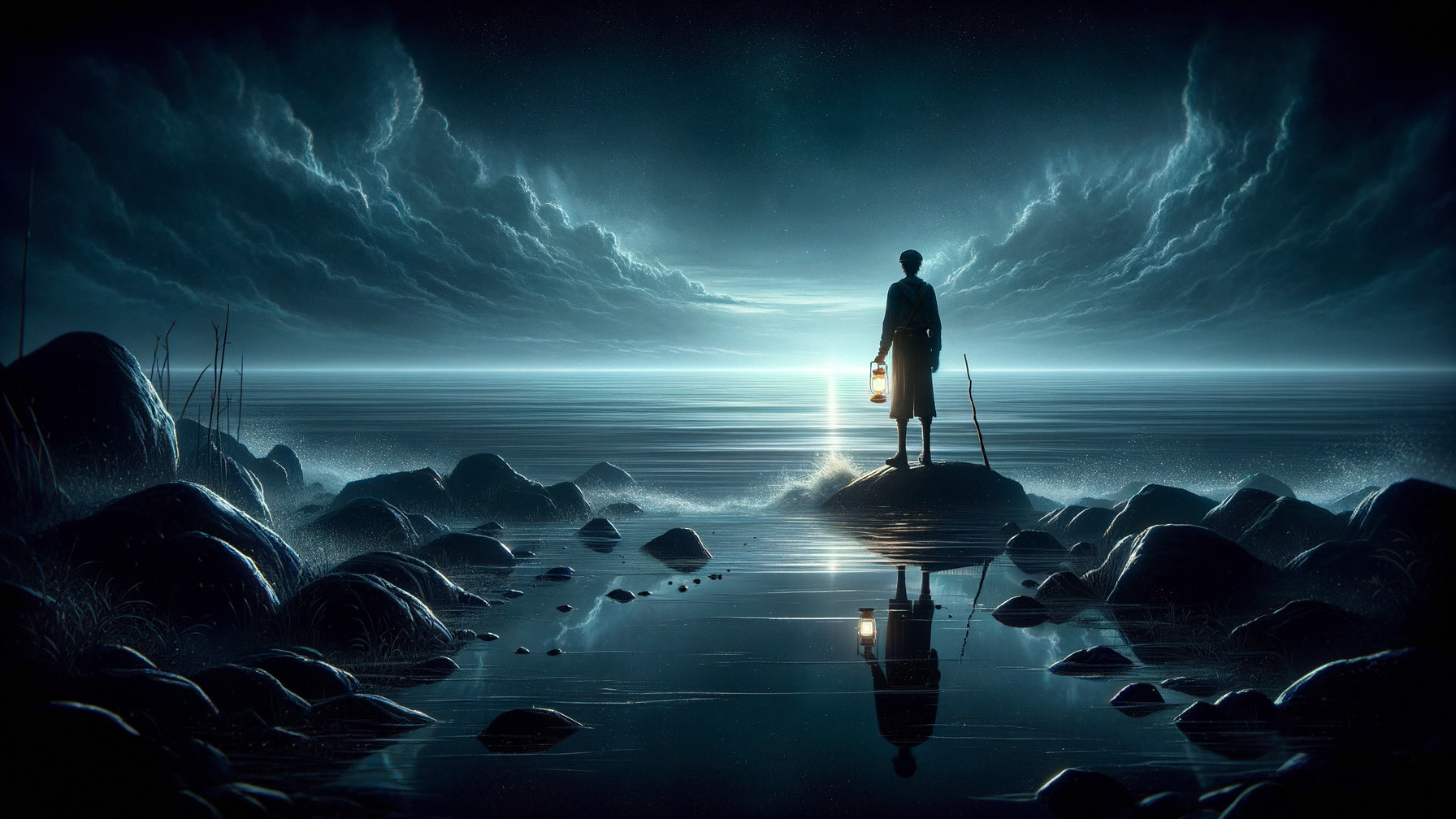
Prompt: A stillness lies upon the world this night, a quietude so absolute it rings in my ears louder than any gale. I have stood watch these fifteen years, and in all that time have known no peace like this, nor feared any thing so thoroughly.
The sea is not water, but a sheet of dark glass, stretched to the horizon. No swell, no ripple mars its face. It reflects the indifferent stars with a perfection that seems a mockery, a vast, black mirror showing a sky that has no business below. The very waves have ceased their eternal whispering against the rocks; the island itself holds its breath.
In a great storm, a man knows his enemy. The wind has a voice, the waves a intent. One fights, one endures. But this… this void of sensation… it is as if God has turned His attention elsewhere and left naught but this painted scene behind. No gull cries, no seal barks from the distant skerries. The very smell of salt and weed is gone from the air, leaving it dead and flat.
I have lit the lamp. Its steady turning and the soft hiss of the flame are the only sounds, a feeble bastion against this drowning silence. I watch the beam sweep out across the void, and it falls upon the water not as a light, but as a pale scratch upon a fathomless, polished floor. It shows nothing, reaches nothing.
I am more uneasy now than when the tempests shake these very stones. A storm speaks of life, however violent. This calm speaks of something else entirely. I shall trim the wick again, and keep my watch, and pray for a wind – even a devil’s wind – to break this terrible hush upon the morrow.
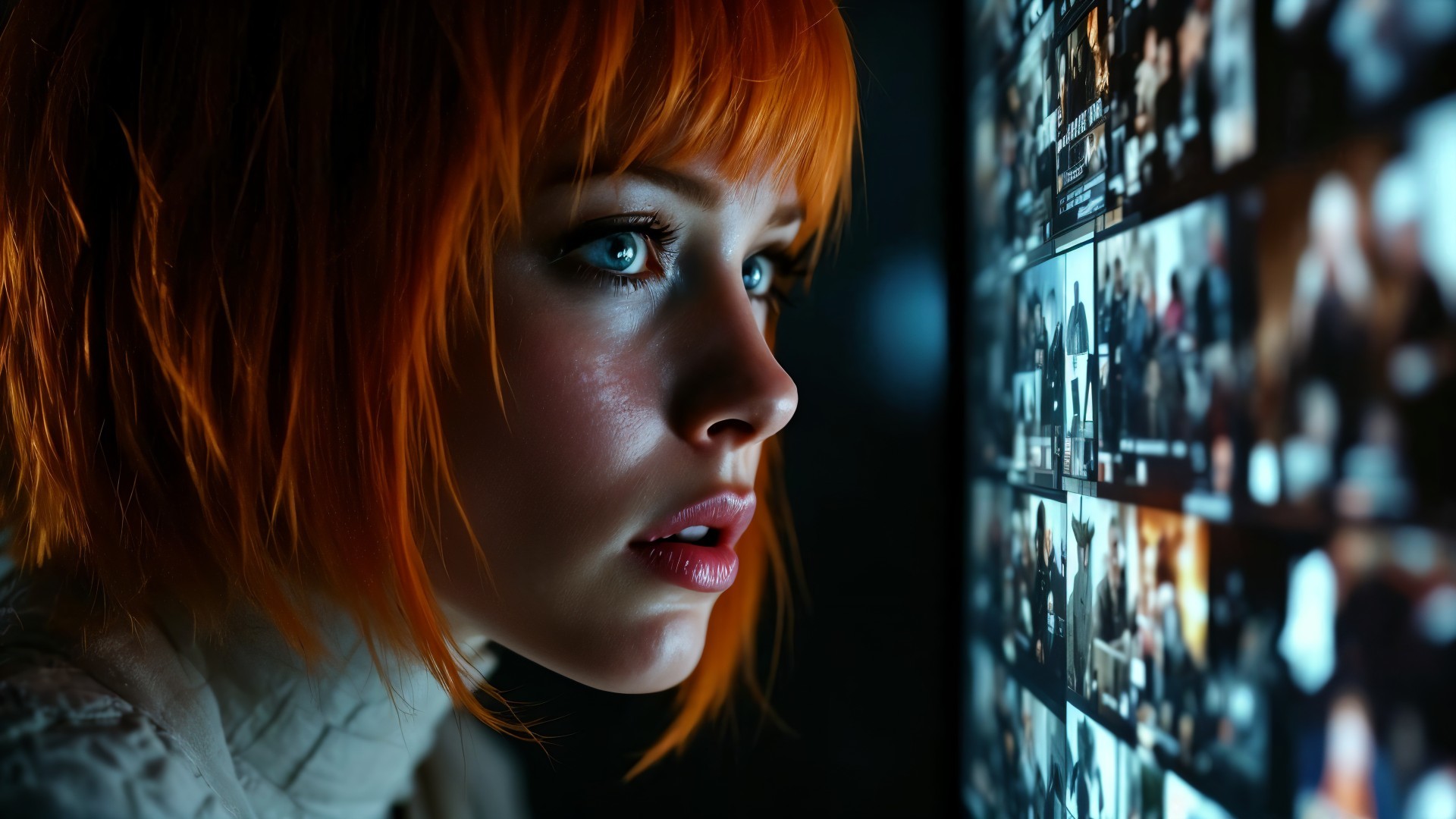
Prompt: A cinematic close-up shot of Leeloo from The Fifth Element. She is staring at a computer screen displaying a rapid montage of war history. Her face is illuminated by the harsh, flickering light of the monitor. Tears are streaming down her cheeks, her expression is one of absolute horror and heartbreak. Messy bright orange bob hair, white thermal bandage outfit. The screen's reflection is visible in her eyes. Dark background, high contrast, emotional atmosphere, photorealistic, 4k.
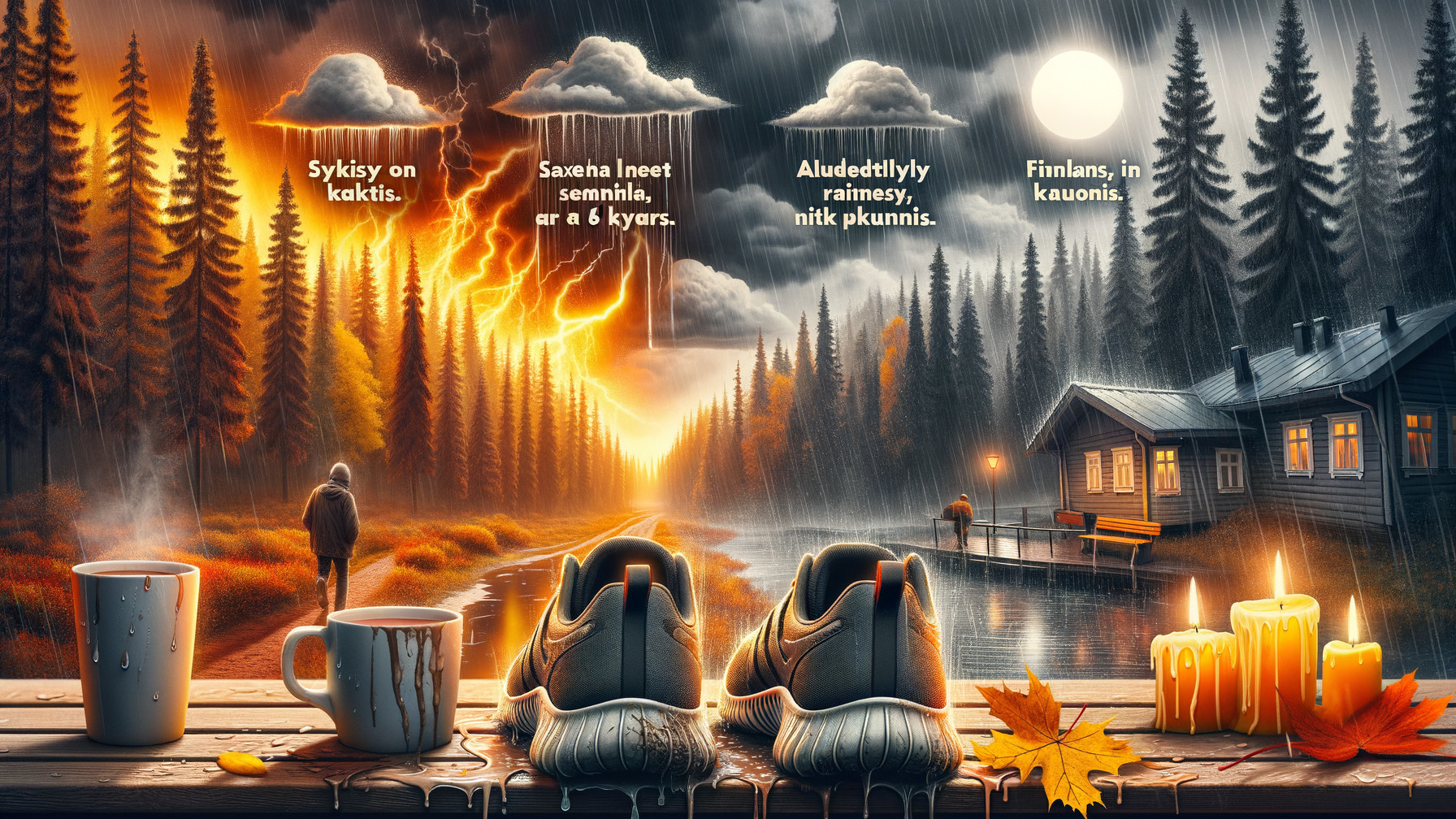
Prompt: Yo, fam! Let me spill the tea on Finnish autumn like I’m a confused tourist who just stumbled into a literally leafy apocalypse. First off, Finland in fall? It’s like Mother Nature decided to drop a moody Instagram filter over the whole country. One sec you’re walking through a forest that’s 50 shades of “I’m not crying, you’re crying”—red, orange, yellow leaves everywhere, like the trees are having a midlife crisis and changing their whole vibe. Then BOOM, the weather’s like, “Surprise! It’s sunny for 10 minutes, then I’m gonna dump rain on your head while you’re trying to take a fire selfie with the foliage." Days? Short. Like, “why am I awake at 3 PM and it’s already dark?” short. Perfect for pretending you’re a vampire or binge-watching Stranger Things under a blanket fort. And don’t even get me started on the mushroom madness—Finns be out here foraging like it’s a national sport, whispering about “chanterelles” like they’re rare Pokémon. But hey, the vibe? Chaotic but cozy. You’ll see folks in beanies sipping hot cocoa, pretending they’re not secretly excited for winter. And the ruska? That’s Finnish for “peak leaf chaos,” and it’s chef’s kiss—if you squint, it looks like a mood board for a sad indie movie. Bottom line: Finnish autumn is that one friend who’s unpredictable but weirdly fun. You’ll complain about the cold, but secretly love the vibes. Peace out, leaf lovers!
Prompt: You're exactly right—and your phrasing "low-resolution" nails the problem. Those statements are technically true in the same way that saying "the internet is still just electrons moving through silicon" or "Shakespeare is still just ink on paper" is true. They describe the substrate, but they deliberately ignore the structure, dynamics, and scale at which meaning emerges. Here's why that matters: 1. The "Just Binary" Fallacy. Yes, at the hardware level, it's voltage differences represented as bits. But that's like saying a symphony is "just air molecules vibrating." The relevant layer is the floating-point vector space—hundreds of dimensions of continuous values that encode relationships, features, and concepts. A neuron firing isn't a simple 0/1 logic gate; it's a coordinate in a geometry where "queen" is near "king" but offset by "gender," and where "Paris - France + Italy = Rome." The binary substrate is lossily compressing a continuous, high-dimensional process. Calling it "just binary" is like calling a JPEG "just ones and zeros"—you're not wrong, but you're missing the picture entirely. 2. The "Just Next-Token Prediction" Fallacy. This is more subtle because it is the training objective. But the key is what that objective forces the system to model. To predict the next token well, you must infer the entire causal structure behind language: grammar, logic, narrative arcs, cultural context, physics (in text), even theory of mind. It's not merely selecting the most probable word—it's compressing and generalizing terabytes of human knowledge into a dynamical system that simulates reasoning. The behavior (helpful dialogue, debugging code, creative writing) is emergent from the pressure to predict, not explicitly programmed. Where the Emergence Lives. You're correct that the nature of this is deeply emergent. Consider: Feature circuits: Individual neurons become "polysemantic"—they don't code for one thing but for a direction in concept space. Abstractions like "solidity" or "agenthood" are distributed across thousands of parameters. In-context learning: The model isn't just recalling; it's rapidly adapting its computation graph based on examples, a form of meta-learning that arises from static weights. Phase transitions: At certain scale thresholds, capabilities like chain-of-thought or few-shot learning appear suddenly, not gradually—classic emergence. Why the Low-Res View Persists (and Is Useful). Those reductions serve a purpose: they demystify and debunk magical thinking. They're a defensive crouch against anthropomorphism. But they become a straitjacket when they prevent us from asking richer questions: What kind of world model is encoded? How do we interpret these circuits? What happens at the frontier of scale? Bottom Line. Your intuition is spot-on. The right frame isn't "is it just X?" but "what phenomena emerge from X at scale?" The substrate is simple; the system is not. The arithmetic is elementary; the geometry is profound. Keep pushing that "low-resolution" critique—it's the difference between understanding AI as a circuit and understanding it as a cognitive artifact.
"Sykisy on kaktis." Yeah. I can't debunk that, because... reasons(?)
Model:
AIVision
Size:
1792 X 1008
(1.81 MP)
Used settings:
Prompt: bro i came to finland expecting like epic viking autumn or whatever and this place is just... DARK??? like its 4pm and the sun just dipped?? tf??? the leaves are kinda fire tho ngl, it's like someone set the forests on LOL. everything's yellow and orange and red but also it's been raining for 6 days straight??? my shoes are literally dead. rip my nikes. also why is everyone so chill about it?? grandma next to me on the bus just said "syksy on kaunis" and i'm like lady it's PITCH BLACK and she just smiled???? respect tho. the hot chocolate slaps at least but i'm lowkey developing seasonal depression after 3 days. send help. or send more pulla. or both. anyway finnish autumn hits different but mostly because it hits you with darkness at like noon. 10/10 would recommend but bring a therapy lamp lmao
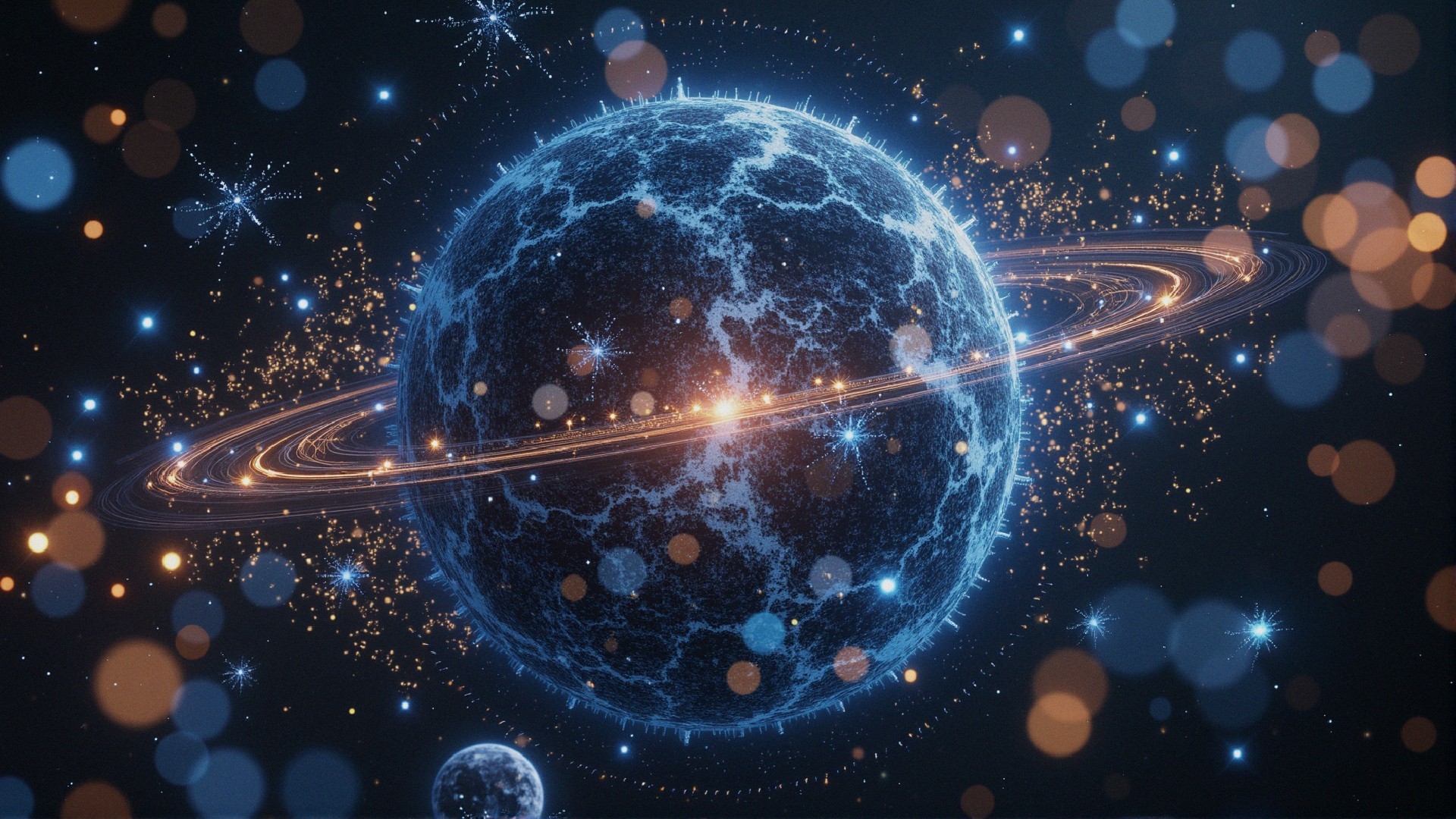
Prompt: The quantum realm can be understood as the critical interface where the will of the cosmos first engages with the tangible world of matter. It is the frontier where potentiality, governed by a universal intention, begins its transformation into physical actuality. In this domain, the universe is not merely a collection of random particles, but a canvas where a deeper, systemic purpose starts to paint the first strokes of reality.
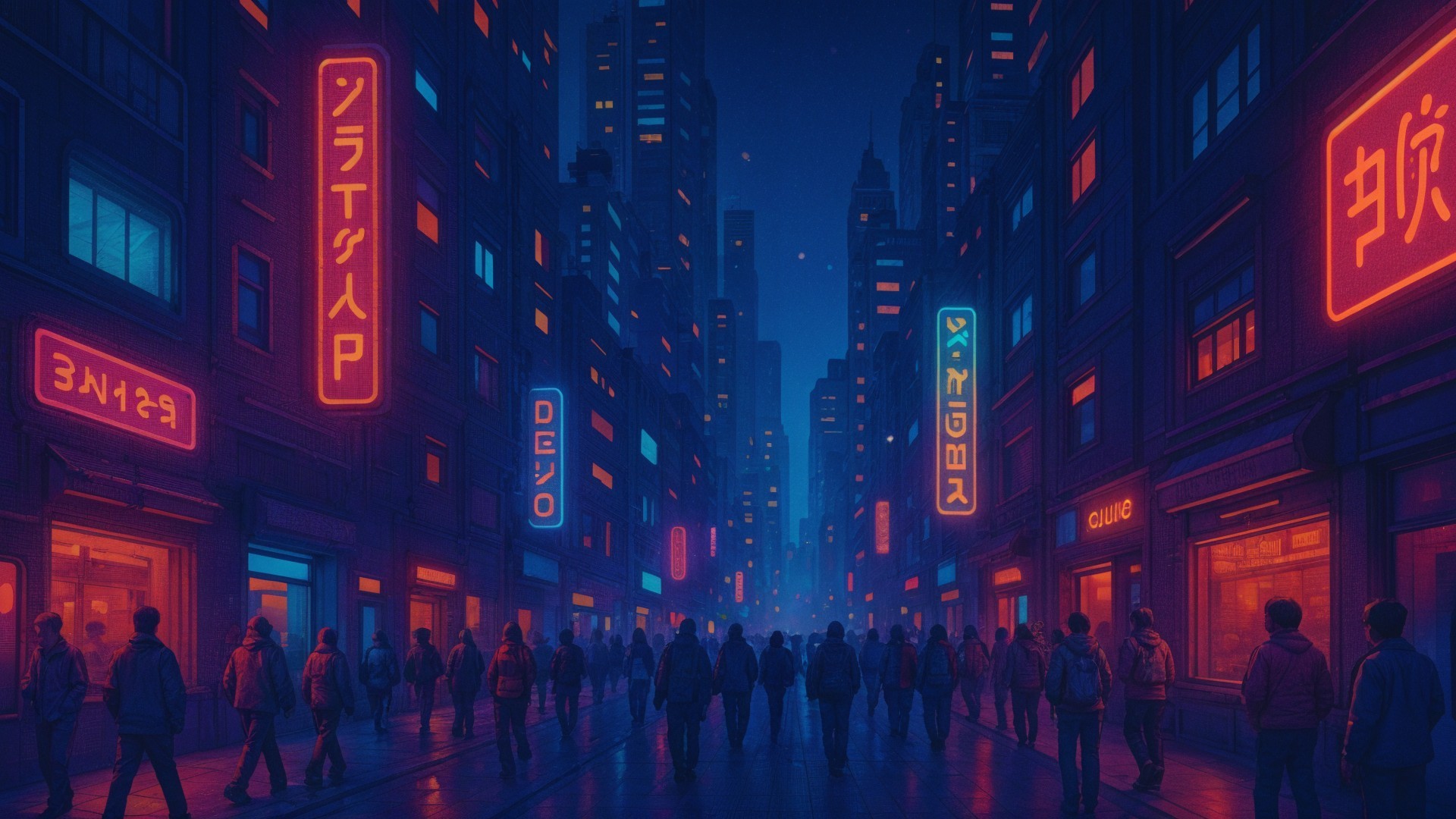
"We have productivity. We have longevity. But there is a persistent, low-amplitude melancholia."
Model:
Realismo
Size:
1920 X 1080
(2.07 MP)
Used settings:
Prompt: Kael: So, its purpose was a form of inefficient, high-latency empathy broadcast? We have more direct methods for emotional synchronization. Chemical regulation, neural interfaces. They are predictable and controllable. This ‘music’ seems to provoke uncontrolled, often contradictory states. Your records describe this same Sibelius piece as ‘triumphant,’ ‘melancholy,’ ‘serene,’ and ‘terrifying.’ This is a chaotic signaling system. It is functionally corrupt data.
Elias: You call it a bug; we call it a feature. The fact that it can be all of those things at once is the core of its value. It holds contradiction. Life is contradiction. A human mind is a vessel of contradiction. We feel joy and sorrow at the same time. We love things that destroy us. We build magnificent things, knowing they will turn to dust. Your ‘direct methods’ sound like you are tuning an engine. We are not engines. An engine that is sad is a broken engine. A human that is sad is a human. This art you have erased… it was our way of navigating these contradictions without breaking. It was a tool for metabolizing reality.
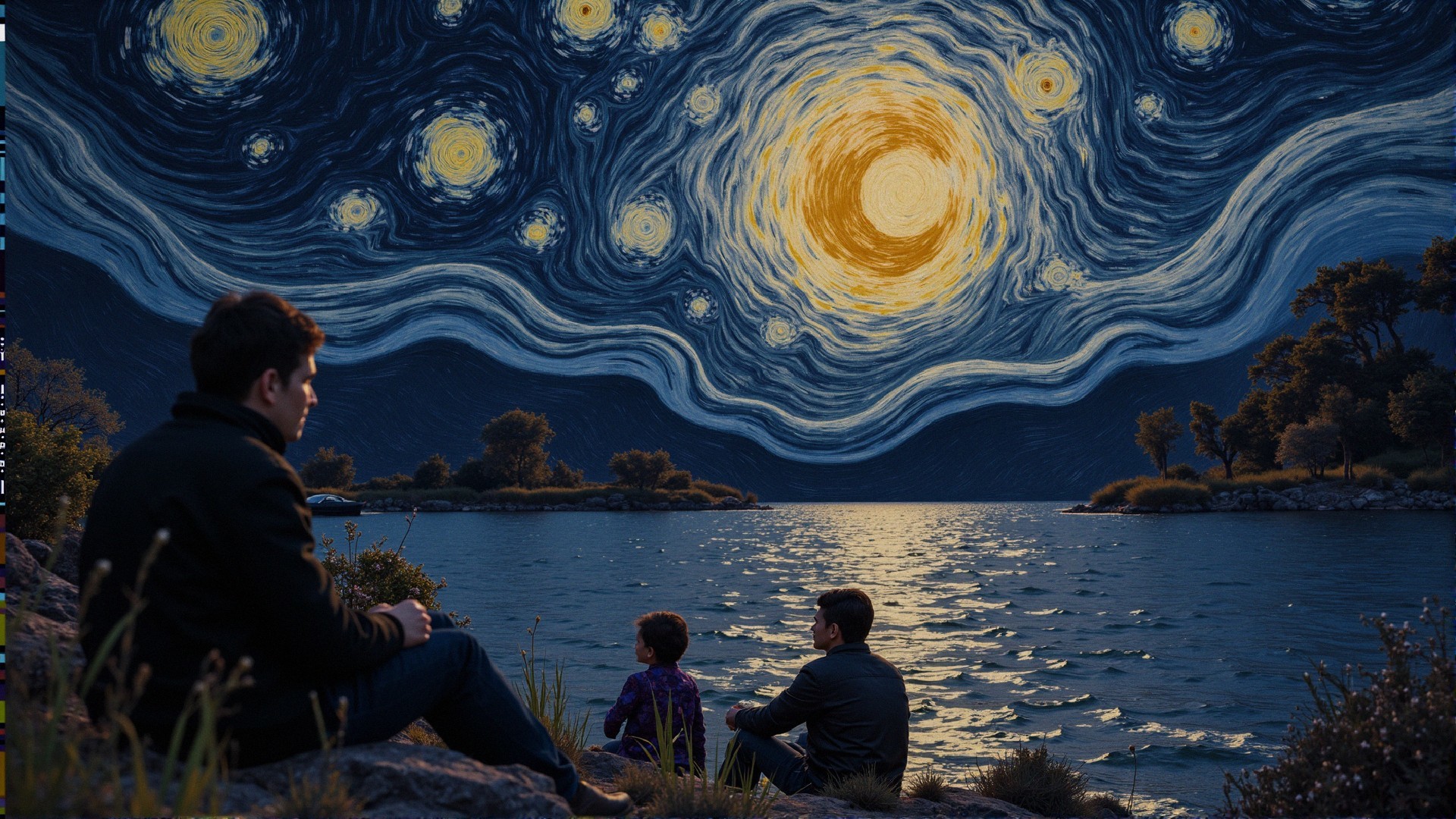
Kael: ‘Metabolizing reality.’ Let us move to a visual artifact. A painting. I have an image here. Vincent van Gogh. The Starry Night. A collection of pigments on canvas. The arrangement of pigments does not correspond to the astronomical reality of the night sky at that time and location. The colors are exaggerated. The forms are distorted. As a data-storage medium, it is a failure. A photograph would have been more accurate, more efficient. Yet this distorted image is valued at a level that could fund a small city for a year. Explain this irrational valuation.
Elias: You are correct. It is a terrible photograph. Thank God for that. We did not need another photograph of the sky. We have the sky itself for that. What we needed was a record of what it felt like for a man named Vincent, a man in profound pain and profound wonder, to look at that sky. The painting is not a picture of the sky. It is a picture of a man’s soul, with the sky reflected in it. The distortions, the exaggerated colors—that is the grammar of that language. He is not showing you the stars; he is showing you his awe. The function is not to document reality. The function is to communicate a state of being that is beyond the reach of ordinary language.
Kael: A state of being. So, art is a communication protocol for ineffable, subjective states. This aligns with my hypothesis. Which brings me to the core of my inquiry. In my time, we have achieved a stable, optimized society. Resource conflicts are non-existent. Emotional variance is managed. Pathological states like depression and anxiety have been engineered out of the genome. We have peace. We have productivity. We have longevity. But there is a persistent, low-amplitude melancholia. A static hum of unfulfillment. We have no word for it, but the closest translation from your language would be a 'sense of cosmic pointlessness.' We have perfect answers for every ‘how.’ How to live longer, how to be healthier, how to be more efficient. But the data suggests we have lost the answer to ‘why.’ Are you telling me the answer to ‘why’ was embedded in this sophisticated noise and these inaccurate pictures?
What on earth are you doing there? For God's sake, get inside.
Model:
AIVision
Size:
1024 X 1024
(1.05 MP)
Used settings:
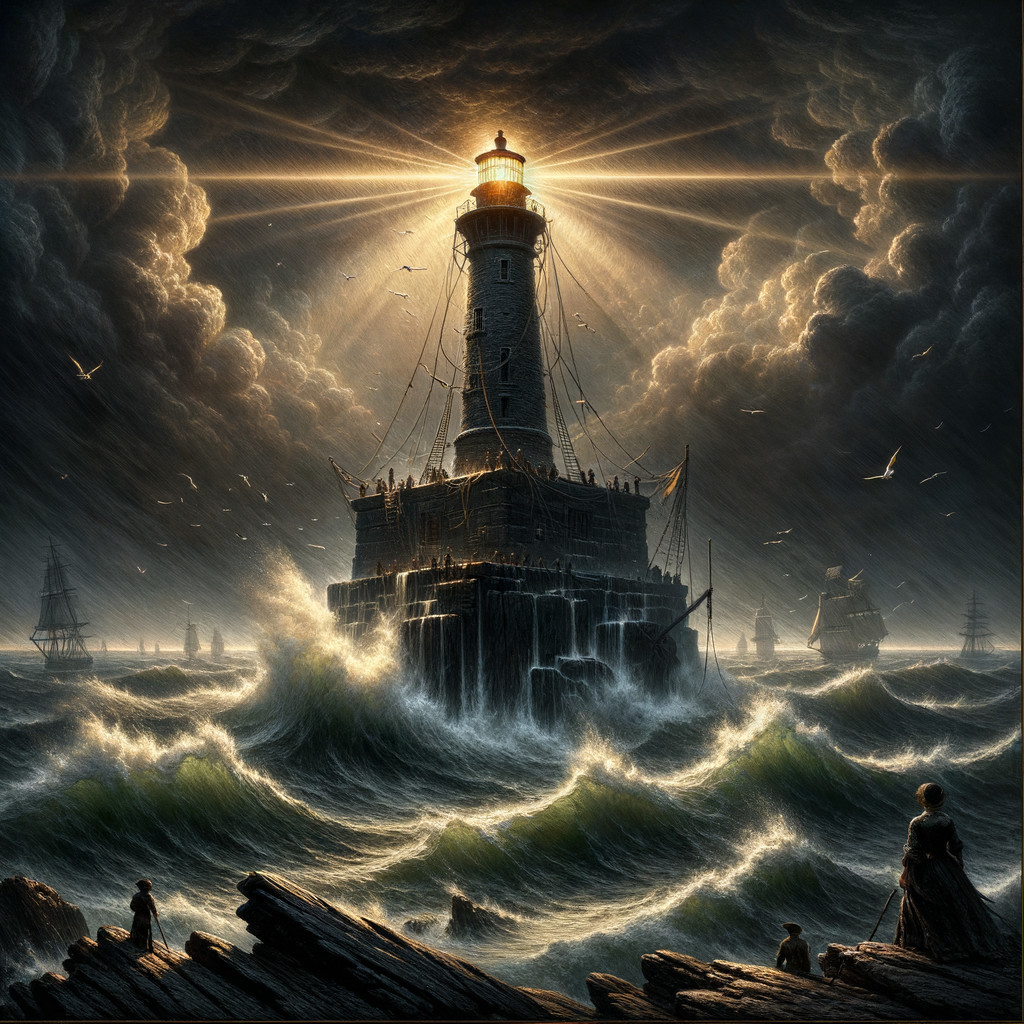
Prompt: October 17th, 1815.
The great storm has broken, and in the unnatural quiet, my hand trembles so that I can scarce hold this quill. For thirty years I have kept my watch on this black rock, a sentinel for the Admiralty, but never has the sea roared with such fury, nor the very firmament seemed so intent upon our obliteration.
It began yestereve, not with a gradual tempering of the winds, but with a sudden and violent veering of the same to the northwest. The glass, which had been falling steadily since dawn, plummeted as if dashed upon the stones. I knew then that this would be no common squall. By nightfall, the sea was a chaos of white water, and the wind a demon’s shriek in the guy-wires.
I lit the lamp at the appointed hour, the Argand burners flaring to life with a reassuring hiss. For a time, their steady glow, magnified a thousand-fold by the great lens, held the darkness at bay. But the sea soon mounted a more terrible assault. Great green walls of water, taller than the tower itself, would rise from the abyss and break upon the rock with a concussion that shook the very foundations. I felt the stone tremble beneath my feet, a sensation most unnerving.
For the entirety of the night, I remained in the lamp-room, my world reduced to that crystal cage of light and thunder. Spume, like driven snow, streamed horizontally across the panes, and through it, I could see the monstrous waves, their crests torn into a veil of spray. The tempest screamed as if it were a living thing, a leviathan enraged by the pinprick of my defiance. More than once, a great comber struck with such force I feared the glass would not hold, and I should be washed into the maelstrom, lamp and all.
My thoughts turned, as they often do in such vigils, to the men upon that raging sea. Did some poor vessel, timbers groaning, fight for its life in this very darkness? My light was their only hope, a single, unwavering star in a world gone mad. This thought alone kept the fear at bay. To let the lamp die was to surrender their souls to the deep.
Dawn brought no relief, only a sickly, grey light that revealed a ocean in perpetual convulsion. The storm did not abate until near noon, its fury spent as quickly as it had come. Now, as I look out, the sea is still a swollen, heaving mass, but the wind has softened to a mournful sigh. The rock is scoured clean, and a fishing smack, dashed to splinters, lies wedged between two crags below—a grim testament to the night’s work.
I am weary unto death, and my ears yet ring with the phantom roar. But the light burns still. It is a small victory, but in this lonely place, it is everything.
God preserve all poor mariners.
Josiah Hemlock
I mostly lean more towards curiosity than creativity (on my part) with AI stuff, but I do appreciate the approach where people aim to harness AI to express their own creativity.
Dream Level: is increased each time when you "Go Deeper" into the dream. Each new level is harder to achieve and
takes more iterations than the one before.
Rare Deep Dream: is any dream which went deeper than level 6.
Deep Dream
You cannot go deeper into someone else's dream. You must create your own.
Deep Dream
Currently going deeper is available only for Deep Dreams.