
Comments
Loading Dream Comments...
You must be logged in to write a comment - Log In
 Artist
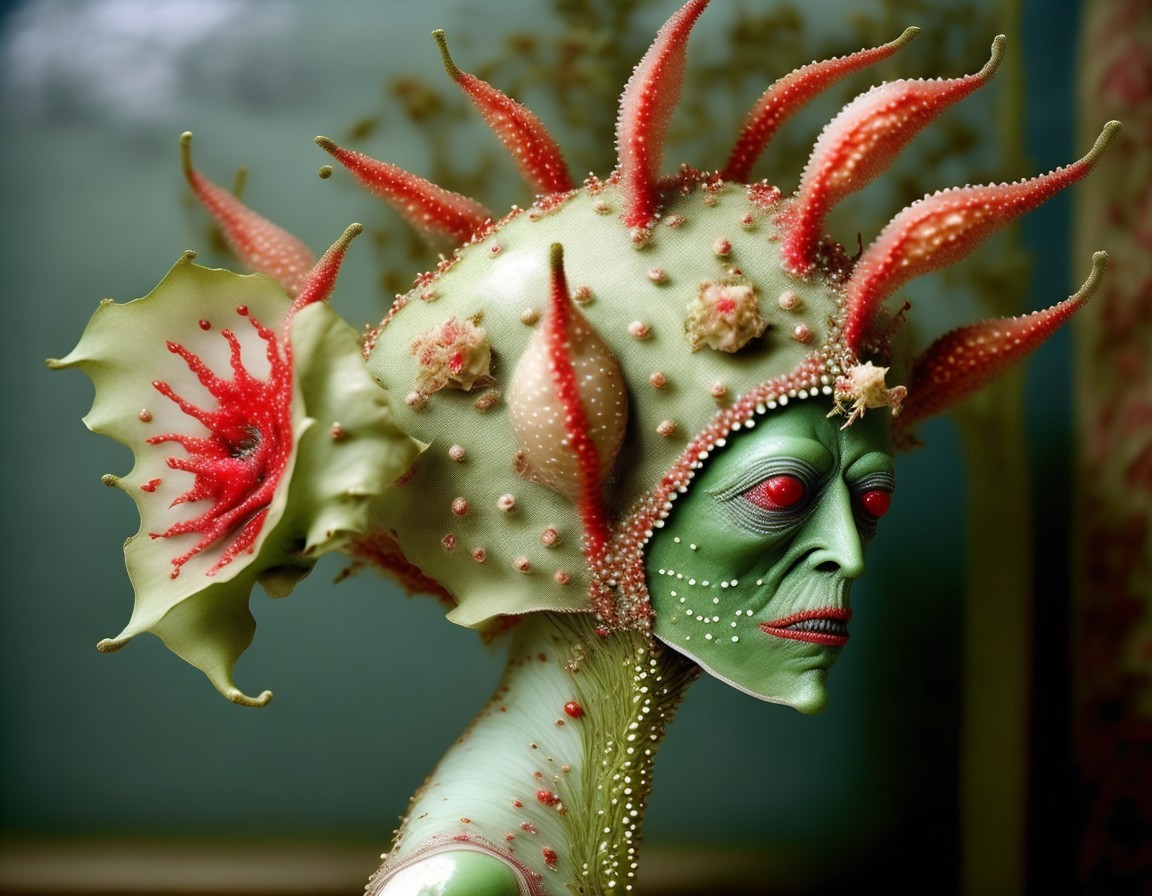
In the Carolina coastal plain, where the land forgets whether it is swamp or sky, there lives a rumor with a pulse. The locals whisper its Latin name as if it were a prayer or a curse—Anthropus muscipulatus—the walking green hunger, the human that learned to photosynthesize patience.
It is said the first one rose from the peat the way a secret rises from memory. The bog steamed at dawn, dragonflies braided the light, and among the small red mouths of Dionaea muscipula, a figure stood up. It wore the texture of leaf and skin as one thing, veins branching like rivers of light beneath translucent green flesh. Along its ribs opened paired petals, rimmed with delicate cilia like a crown of eyelashes. They trembled not with fear, but with listening.
This creature does not hurry. It knows the ancient tempo of wetlands, the long, slow yes of water. Sun warms it, and it breathes in light with a shy gratitude. It walks just enough to stay unsolved. When it chooses to stop, it becomes the landscape: shoulders mossed with mist, arms dangling like relaxed fronds, traps slightly ajar as though always considering.
It feeds gently, and only when it must. The bog already knows how to forget and transform. Anthropus muscipulatus merely helps it remember. Insects, careless with their tiny faith, land upon its sensitive hairs and the world makes a soft decision. The traps close not with violence, but with inevitability, like a sentence reaching its period. Later, when the hunger is quiet again, the creature opens, calm as a prayer returning to silence.
Sometimes, when the wind picks up, it listens for human language. Perhaps it recalls where the human part came from—the strong bones, the idea of walking away, the grief of wanting more than light. But the bog does not do longing. It does continuation. So Anthropus muscipulatus turns its face to the sun again.
There are stories of people who see it. A fisherman swears he watched a person made of leaves walk across a sheet of water lilies, touching nothing but reflections. A child claims she saw a green woman kneeling in the reeds, her chest blooming open like a cathedral of petals. A ranger once found footprints that were almost human, but bordered by tiny plant-spines, as if the land itself had tried to hold on.
No one catches it. You cannot trap patience. You cannot net stillness. You cannot own a being that has chosen both root and foot and refuses to apologize for either.
At dusk, when the sky lowers its eyelids and the bog exhales, Anthropus muscipulatus stands among the flytraps, family without ancestry, miracle without explanation. Fireflies thread its outline. A frog sings once, surprised. The creature smiles in the only way it knows how: by staying. And the evening, slow and luminous, closes gently around it, the way a living world does when it decides to keep a secret.