
Comments
Loading Dream Comments...
You must be logged in to write a comment - Log In
 Artist
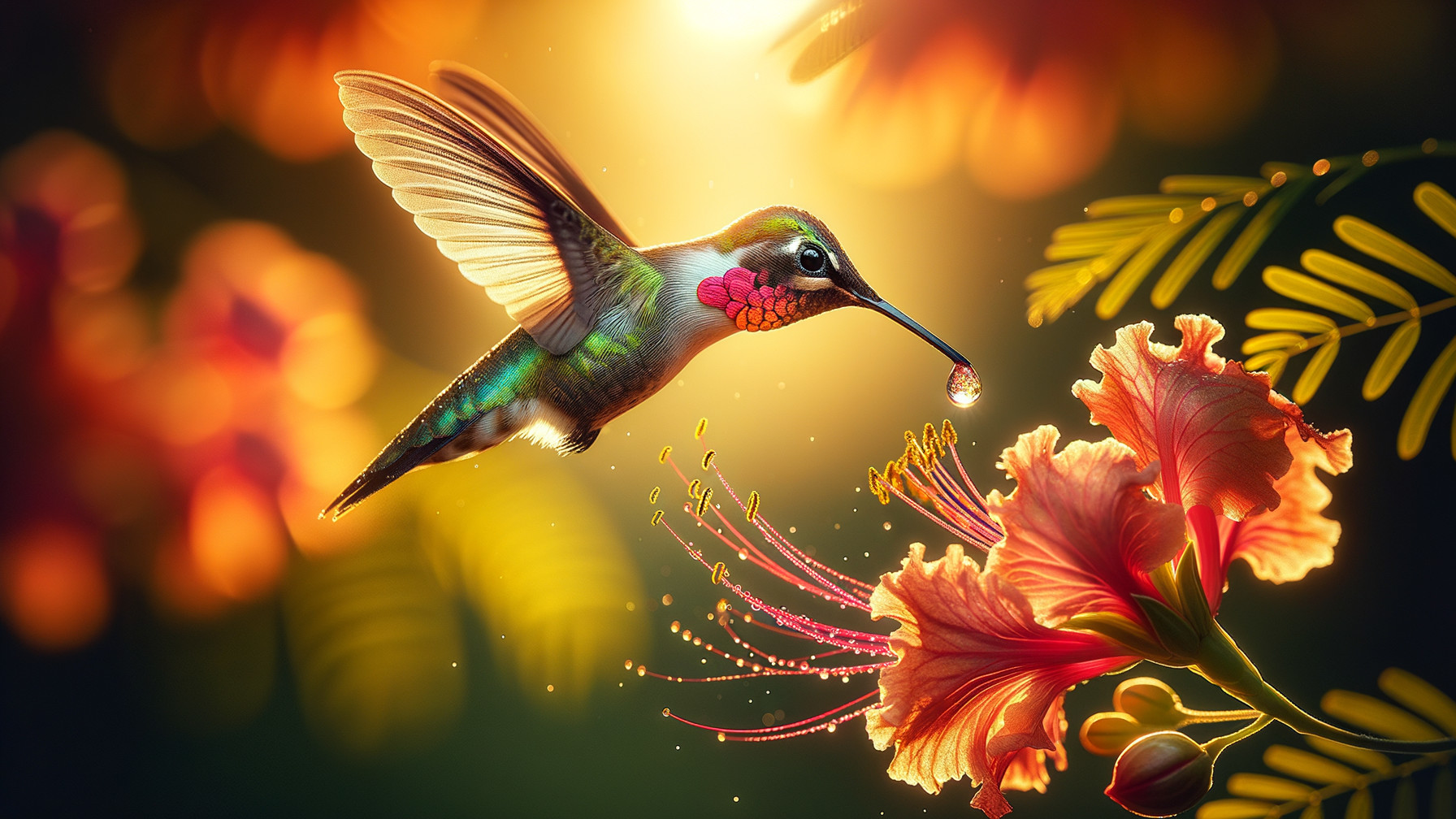
Render a hyper-detailed macro portrait of a ruby-throated hummingbird hovering before a flamboyant flower at golden-hour light. Composition: tight vertical crop with bird centered, wings blurred for motion, nectar droplet suspended. Lighting: warm side-key with backlight to show wing translucence and iridescent throat flash. Texture: iridescent gorget feathers micro-detail, water droplets on petal, pollen grains. Palette: emerald green, ruby throat flash, floral pink/coral. Depth & 3D: extreme macro depth with shallow DOF, bokeh flares, magnified pollen texture in front plane. Style options: blend Gauguin flat decorative background with Mapplethorpe-level black-and-white microdetail for a diptych effect—one color, one monochrome study. Camera: simulated 200–400mm macro tele + high shutter; output ultra-high-res for print. Variations: hovering pairs, nestling with tiny chicks, sequence of wingbeats as an animated sprite. Mood: delicate, jewel-like, kinetic wonder. ry
**Hummingbird (Ruby-throated as exemplar)
Scientific name: Archilochus colubris (ruby-throated) - many hummingbird species worldwide.
Typical lifespan: 3-9+ years (varies by species; some individuals live longer).
Incubation: Eggs incubated ~12-19 days.
Diet: Nectar, small insects and spiders.
Role in nature: Pollinators - specialized plant–pollinator coevolution, critical for many flowering species.
Range / countries: Americas - temperate to tropical ranges; ruby-throated breeds in eastern North America and winters in Central America.
Size / length: Very small - 7-13 cm depending on species.
Weight: 2-20 g depending on species.
Bite force: Not applicable - tiny beak for sipping nectar and catching insects.
Vision / hearing: Excellent vision for color discrimination (UV sensitivity), rapid visual processing; hearing modest.
Abilities: Hovering flight, backward flight, rapid wingbeat (50-80+ beats/sec), long migratory distances for some species.
Conservation: Many species stable; habitat loss and climate change pose threats to specialized species.
Extra: Tiny nests, tireless feeders, role models for flight engineering.
2025 September 05


