
Comments
Loading Dream Comments...
You must be logged in to write a comment - Log In
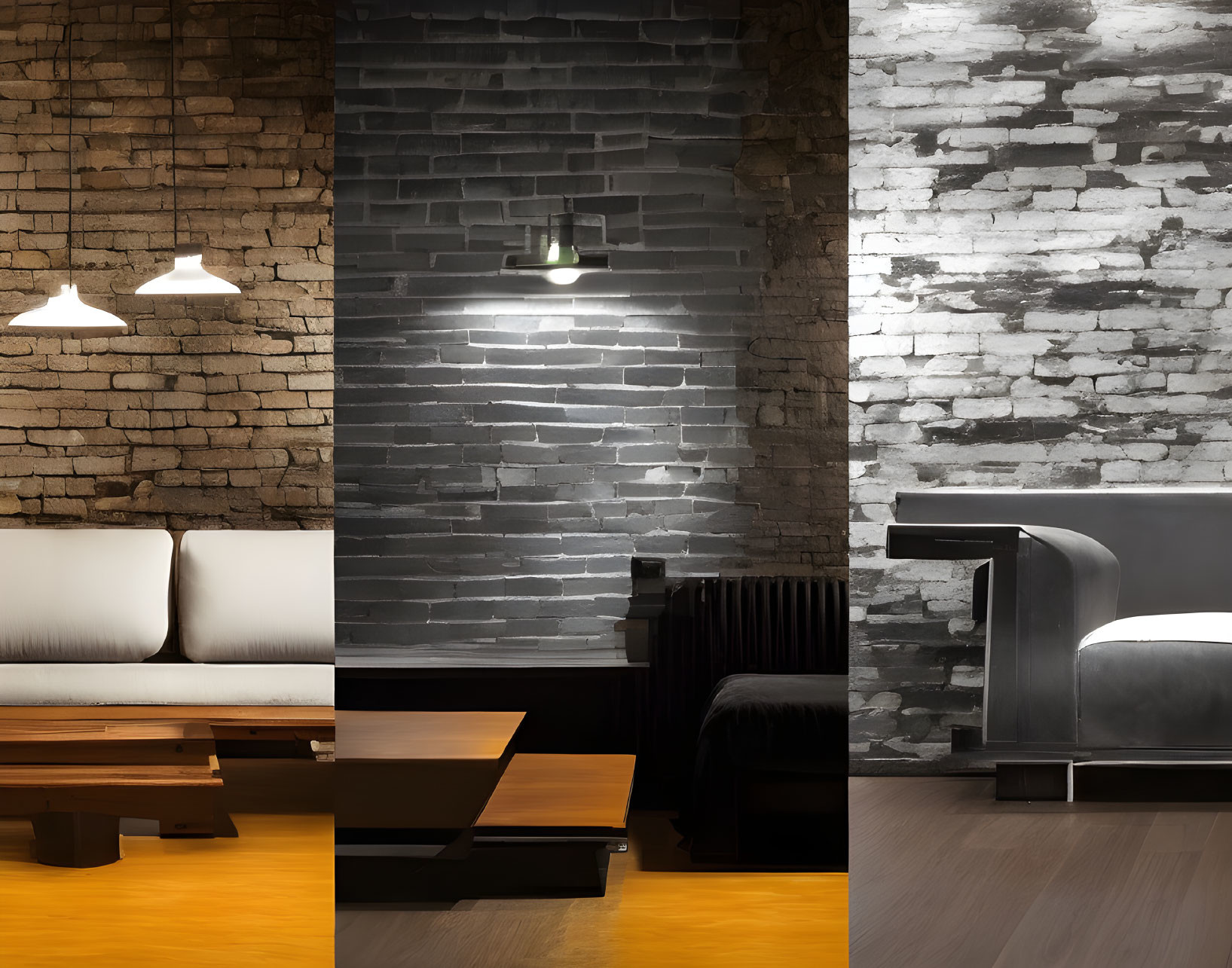
Old Meets New and Side by Side. Luminism and Chiaroscuro styles. Ancient and Modern.
This triptych composition masterfully orchestrates a visual conversation between three distinct temporal and aesthetic zones, each rendered with meticulous attention to material authenticity and atmospheric quality. The left panel presents warm, honey-toned brick with classical simplicity—a space defined by organic materiality and aged patina. The center panel embraces dramatic chiaroscuro, where a solitary pendant light becomes a beacon cutting through deep shadow, creating stark geometry against the weathered dark brick. The right panel shifts to pristine, whitewashed modernity with contemporary furniture that speaks to minimalist restraint. This triptych structure forces the viewer into comparative analysis, creating a visual argument about the passage of time and evolving aesthetic values.
The luministic treatment across all three sections demonstrates exceptional sophistication in how light functions as both unifier and differentiator. On the left, warm incandescent glow bathes materials in nostalgic amber; in the center, that same light becomes almost surgical, emphasizing texture through shadow and reveal; on the right, cool, even illumination strips away romantic associations entirely. The brick itself—that eternal human building material—becomes the anchor point, appearing in three distinct states of presentation: aged and rich, darkened and dramatic, and bleached into near-anonymity. The artist understands that materiality tells a temporal story, and the progression from warm brown through charred black to cold white creates an almost photographic journey through decades.
Yet the spatial logic feels slightly disjointed—the floor transitions from warm amber to cool gray without the convincing continuity that would ground this as a single architectural moment. The furniture placement, while intentionally sparse, occasionally reads as floating rather than inhabiting these spaces with authentic presence. The piece succeeds most powerfully as an abstract meditation on how light and material condition our perception of time, but loses some impact as a cohesive interior vision. Nevertheless, the conceptual ambition is clear: this is work that asks us to reconsider our relationship to the old and the new, the patina and the pristine, through the language of light itself


