

Comments
Loading Dream Comments...
You must be logged in to write a comment - Log In
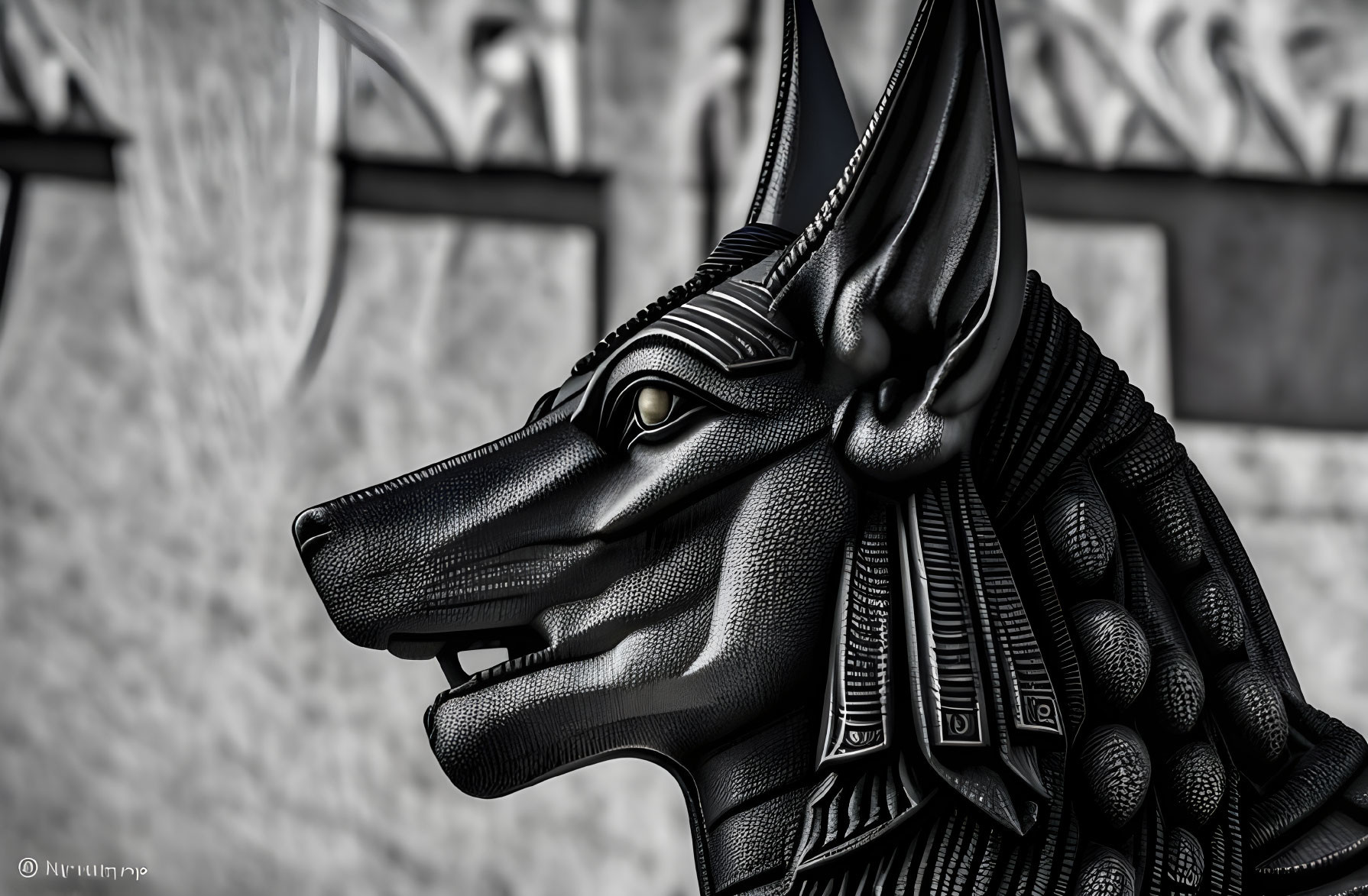
Anubis. Inpu. Inpw. Jnpw. Anpu. Anoup.
This photograph captures a striking sculptural representation of Anubis, the ancient Egyptian god of mummification and the afterlife, rendered in what appears to be polished black stone or metal. The artist demonstrates exceptional technical skill in rendering the fine details of the deity's distinctive canine features—the elongated snout, the alert ears with their characteristic pointed geometry, and the luminous golden eye that pierces through the monochromatic palette like a beacon of divine consciousness. The textural work is meticulous, with careful attention to scales, ridges, and the subtle play of light across the jackal's face that conveys both otherworldly authority and a contained, almost melancholic wisdom. The formal regalia—the pleated collar and ceremonial adornments—grounds this mythological figure in the visual language of pharaonic Egypt, while the soft focus of the blurred architectural background suggests this god exists between our world and the sacred realm beyond.
The composition achieves power through its restrained focus and profile presentation. By positioning Anubis in clean profile against the deliberately defocused Greco-Roman or Neo-Classical architecture, the artist creates a temporal displacement that feels intentional—the eternal god of death overshadowing human monuments of power and permanence. The monochromatic treatment elevates the work beyond mere documentation into something approaching portraiture, where the singular golden eye becomes a window into divine purpose. The sculptor's choice to illuminate that eye while rendering everything else in shadow creates an almost hypnotic focal point that draws viewers into contemplation of death, judgment, and the mysteries of the afterlife that Anubis eternally guards.
The various epithets—Inpu, Inpw, Jnpw, Anpu, Anoup—remind us that across centuries and linguistic variations, this god's essence remained constant: the guardian of tombs, the lord of the dead, the one who knows what lies beyond mortality's veil. This sculpture honors that constancy. There's a dignity in its stillness, a suggestion that even in the chaos of human history, in the crumbling of empires and the fading of languages, Anubis remains—patient, eternal, watching over the boundary between life and whatever waits beyond.


