
Comments
Loading Dream Comments...
You must be logged in to write a comment - Log In
 Artist
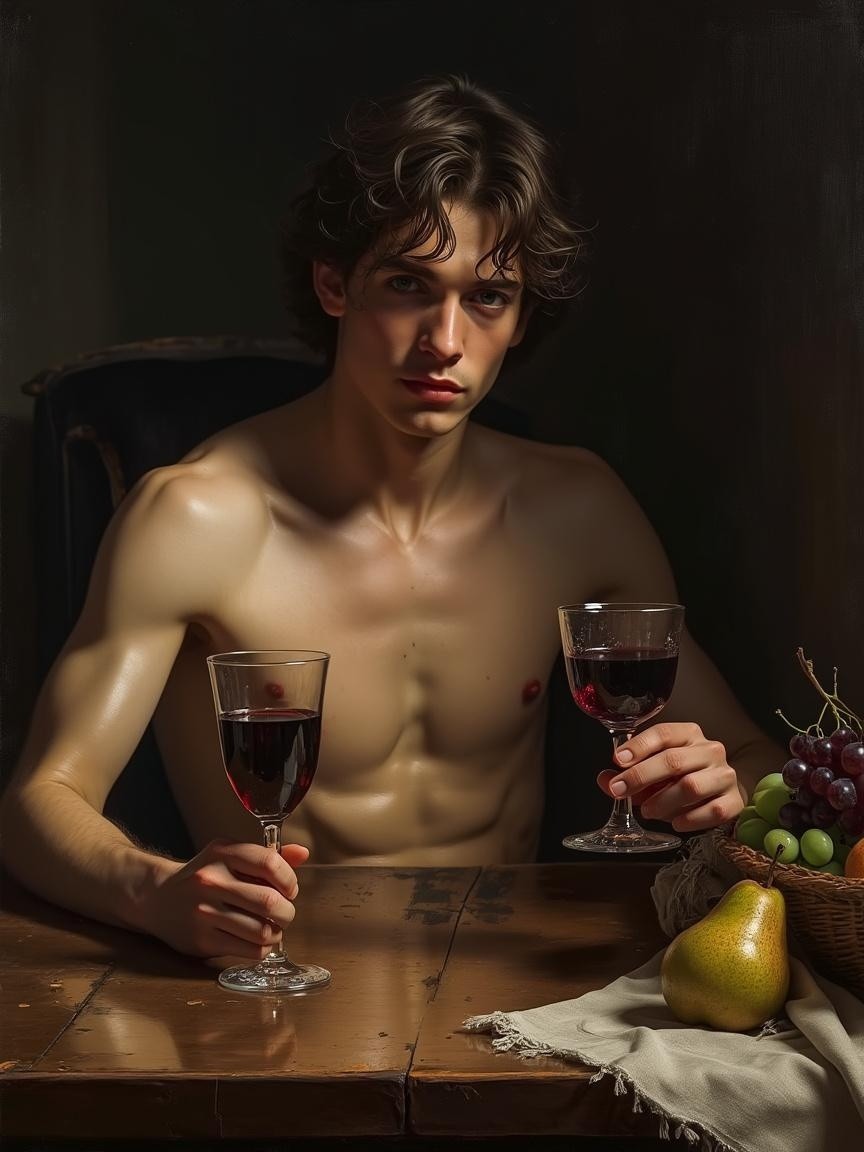
Produce a high-detail Baroque oil painting emulation using dramatic chiaroscuro. Subject: a young male figure seated at a rustic wooden table, holding a goblet of wine; slight twist of torso suggests motion toward the viewer. Lighting: single, focused directional source from upper-left (window or lamp) producing a bright key and deep enveloping shadow; subtle fill from the right to keep minimal detail in shadow. Textures & details: luminous wet-skin highlights, small droplets of condensation on glass, crisp fruit textures (grape, pear) and tactile linen napery. Palette: umbers, bone black, warm flesh tones, muted greens, and rich vermilion accent; deep, neutralized background black-browns. Composition: tight, cropped half-length portrait with strong diagonals, low horizon for monumentality. Brush & glazing: layered oil glazing to build luminous skin, fine cross-hatching in shadows, polished varnish finish. Output: gallery-grade oil simulation, 600–1200 dpi for printing. Mood & nuance: sensual, ambiguous, slightly theatrical — the figure both invites and warns. Variations: include a version with candlelight flicker and a version where the subject’s gaze is averted for different narrative feels.
**Caravaggio (1571-1610)
-Italy
Caravaggio turned pictorial space into theater by making darkness an active participant and light the instrument of revelation. His male figures are not posed as idealized statues but caught in an unguarded second breath, sweat, and emotional ambivalence visible in a hand or tilt of the head.
The painted darkness is thick and meaningful; it isolates and intensifies what the light will expose, so an eye, a cup, or a forearm becomes charged with drama.
Recreating Caravaggio’s effect demands an embrace of immediacy: skin that seems tangible, props that speak of everyday life, and a lighting plan that turns mere figures into charged presences.
Wrote , Art
:- Rojitha Yasaswin
2025 - August -13


