
Comments
Loading Dream Comments...
You must be logged in to write a comment - Log In
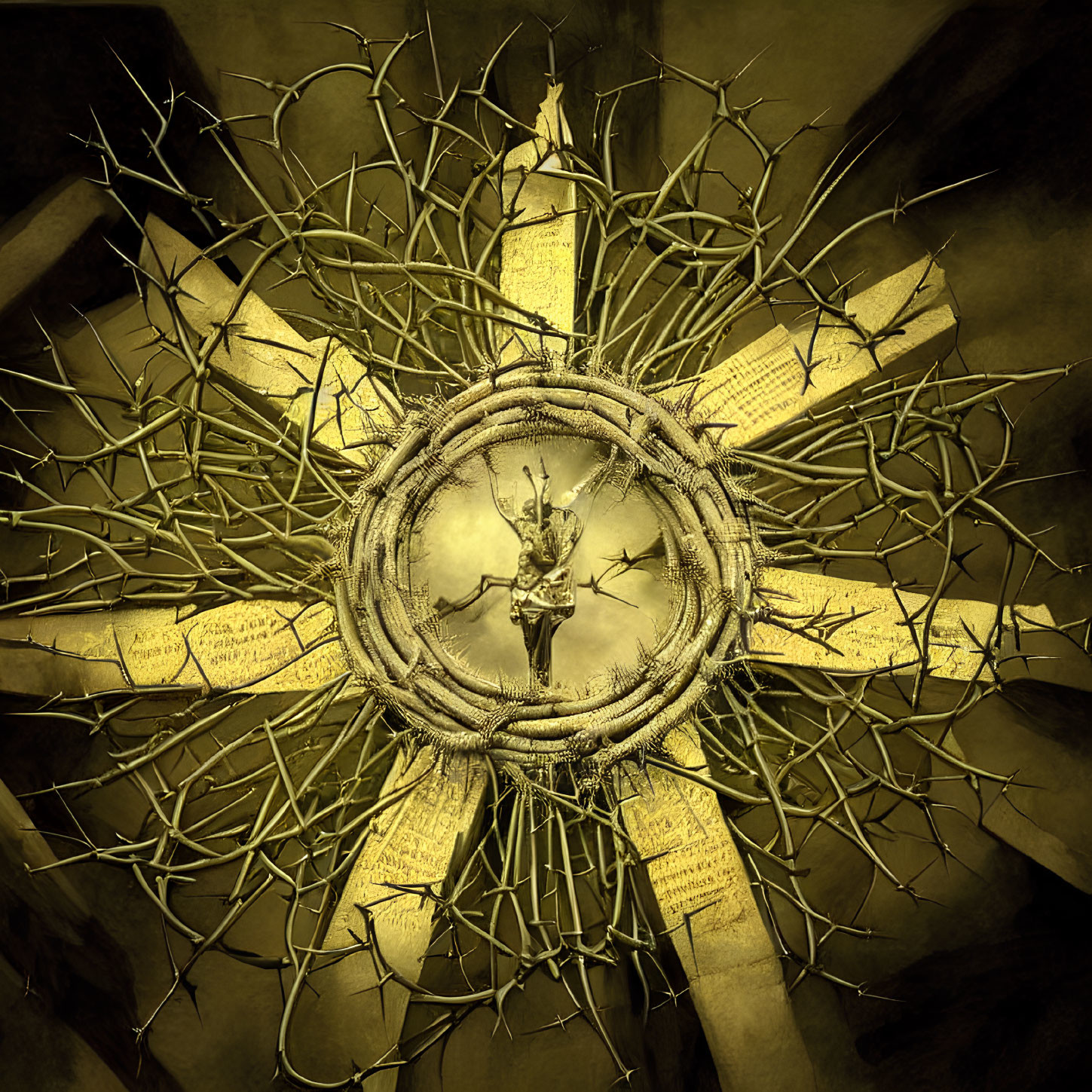
Surreal religous sacrafice. Crown of thorns.
The image evokes a ritual suspended between awe and dread, a crucible of devotion and suffering compressed into a single, surreal emblem. At its center, a figure is encased in the circular grip of a crown of thorns, simultaneously elevated and entangled, a sacred martyr whose agony is both literal and symbolic. The radiating spikes form a halo of menace, suggesting that holiness is inseparable from pain, that the divine is inseparable from the torment it inspires. Shadows deepen the composition, drawing the eye to the intricate textures of the thorns, which appear almost alive, as if they breathe along with the central figure.
The golden hues, reminiscent of ancient iconography, add a paradoxical warmth to the scene, contrasting with the stark brutality of the thorns. The background recedes into shadow, creating a void around the figure, amplifying isolation and solemnity. Each ray of the radial pattern feels deliberate, like scripture written in pain, guiding the gaze outward while compelling inward reflection. There is an almost liturgical cadence to the composition, echoing the rhythm of ritual sacrifice and the weight of centuries of belief, offering a communion of sight and sentiment rather than dogma.
Ultimately, the work thrives in its tension between reverence and horror. It does not simply depict martyrdom; it manifests it, inviting the viewer into an intimate reckoning with suffering, sanctity, and the paradoxical beauty found in both. The crown of thorns becomes a lens through which human devotion and vulnerability are magnified, transforming a familiar religious symbol into a living, almost breathing meditation on transcendence and fragility. Here, pain is not merely endured—it is venerated, codified into form, and made eternal in the haunting geometry of the image.


