


Comments
Loading Dream Comments...
You must be logged in to write a comment - Log In
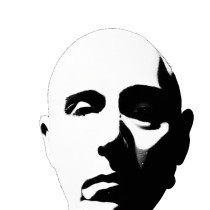 Artist
Inspired by
https://deepdreamgenerator.com/ddream/3wgik82bu30
On the night of November 10, 1619, René Descartes went to bed and accidentally invented the modern world.
Or so the story goes.
He was twenty-three years old, wandering around Germany with the army, sleeping in a heated room while Europe outside was busy sharpening swords and arguing about God.
The stove was roaring.
The room was close and hot.
Descartes lay there in his boots and military clothes, cooking gently in philosophy.
Then the dreams hit.
Not one dream. Three.
THE FIRST DREAM
The first came on like bad ether.
Descartes was walking through the street when an invisible force seized him and spun him around. He could barely stand. The wind drove him toward a church. Somebody called his name. He tried to turn around and nearly fell.
This was no ordinary nightmare.
This was metaphysics with weather.
He woke terrified, convinced some malignant spirit had entered the room. He prayed, rolled over, and immediately went back into the machinery.
THE SECOND DREAM
Then came thunder.
A tremendous crack exploded through the dream and filled the room with sparks.
Descartes woke again and stared into the darkness.
At this point a reasonable man would have gotten dressed, found a tavern, ordered something medicinal, and abandoned philosophy permanently.
Descartes went back to sleep.
THE THIRD DREAM
The third dream was quieter and therefore more dangerous.
There was a book on a table—a dictionary—and another book containing poetry. He opened it and found the Latin question:
Quod vitae sectabor iter?
What road in life shall I follow?
Now the whole lunatic procession suddenly seemed to him like a message.
The wind.
The terror.
The thunder.
The books.
They were pieces of one enormous machine.
Descartes became convinced that the dreams were pointing him toward a universal method of knowledge, some foundation underneath all the shifting furniture of experience.
And that is where the trouble really begins.
THE GREAT DOUBT
Because Descartes eventually decided that nearly everything could be doubted.
The room?
Maybe.
The fire?
Possibly.
The body stretched out on the bed?
Suspicious.
Perhaps some demon was manufacturing the whole show—boots, stove, Germany, mathematics, memory, René Descartes himself.
But there was one thing the bastard couldn’t counterfeit:
the doubting.
If Descartes was being deceived, something had to be there to be deceived.
Thinking was happening.
Therefore—
COGITO, ERGO SUM
I think, therefore I am.
And there he was: one frightened young Frenchman lying beside a stove, stripping reality down until only consciousness remained.
Four centuries later we’re still inside that room, staring at glowing screens and asking essentially the same question:
How do I know this is real?
Descartes never completely escaped the dream.
Neither have we.


