Comments
Loading Dream Comments...
You must be logged in to write a comment - Log In
 Artist
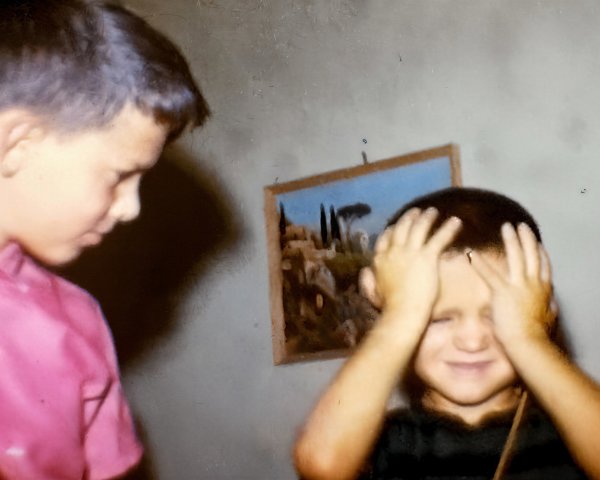
Alois Arnegger died in 1967, which places Midst Cool and Silence firmly inside a world that still relied on donkeys to move goods uphill and downhill, a world operating on muscle, habit, and sunlight. The painting behaves like a device rather than a landscape. It presents itself as neutral, but it quietly programs the viewer. This was the image on the wall of the house where I was raised, and it functioned as a template—an ur-font—from which Rafito el Varado later emerged, fully formed, as if encoded in advance.
The beach was not recreation; it was calibration. You stepped onto the sand and the air adjusted you. Salt, kelp, heat—variables snapping into alignment. The place did not offer transcendence so much as a stable operating system. The idea of living there permanently, scavenging, walking, sleeping in plain sight, struck me as entirely rational. A noble occupation, even. Society prefers to call such figures bums, but that is only because they refuse assigned roles.
Rafito el Varado occupies one of the apartments in Arnegger’s painting. He didn’t rent it; he entered it. Inside was a single object: a portable television from the early 1960s, humming with a blue-gray glow. It was playing The Beachcombers, broadcast through some error or cross-channel interference, dubbed into Italian. Rafito watched for less than a minute. The people on the screen claimed the same title he lived under, but their labor, their rituals, their jokes had nothing to do with his. He turned it off. Categories can overlap without ever touching.
I fed the Arnegger image into image-generating systems, and the systems responded obediently at first, producing elegant Riviera coastlines, plausible continuations. But when I returned to the original and pressed harder, the outputs degraded. Color flattened. Forms exaggerated. The coast transformed into something theatrical, cartoonish, Disney-adjacent. The machine insisted on spectacle.
This resistance felt intentional, as if the image itself enforced limits. Rafito could not be rendered cleanly. Each attempt produced a substitute—decorative, false, smiling too much. Somewhere inside the process, something essential refused translation. Not hidden, not lost—simply incompatible with reproduction.