


Comments
Loading Dream Comments...
You must be logged in to write a comment - Log In
 Artist
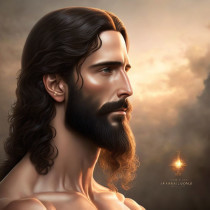
Mystic Jesus Christology In biblical and theological symbolism (rooted in Ezekiel 1 and Revelation 4), the eagle around the throne of God represents divine transcendence, heavenly vision, and omnipotence. It highlights God's ability to see all things and soar above earthly limitations. The nail over the LEFT Eye "of this world" over satan
In religious and biblical traditions, the eagle is a powerful symbol of God’s majesty, representing His divine protection, spiritual renewal, and all-seeing wisdom. It signifies His strength—bearing and guiding His followers—as well as His swift and sovereign judgment.
The eagle’s symbolism points directly to several key aspects of the divine relationship with humanity:
Divine Protection and Care: The Bible often uses the eagle to illustrate how God safely carries and protects His people. As stated in Exodus 19:4, God brought His people out of Egypt and bore them "on eagles' wings." Deuteronomy 32:11 compares God to a mother eagle that flutters over its young, spreading its wings to catch and carry them.
Spiritual Renewal and Strength: The most famous scriptural reference is Isaiah 40:31, which promises that those who wait upon the Lord will "renew their strength" and "mount up with wings like eagles." It symbolizes the endurance, freedom, and transcendent power that God provides to those who trust in Him.
Wisdom and Far-Reaching Vision: Because of the eagle’s ability to soar at great heights and spot prey from afar, it is a metaphor for God’s all-knowing nature, wisdom, and heavenly perspective.
Swift Justice and Power: Because of the eagle's ferocity and speed, God also uses the eagle as a metaphor for the swiftness and inevitability of His judgment against injustice and evil.
Overall, the eagle encapsulates God's transcendence above worldly limits—offering believers a heavenly vantage point while carrying them securely through life's hardships.
The connection between air, the nostrils, and God is rooted in the creation account in Genesis 2:7, where God formed man from dust and "breathed into his nostrils the breath of life". This act transformed humanity from lifeless matter into a living being.
The connection goes much deeper across spiritual, linguistic, and biological lines:The Breath of the Spirit: In ancient Hebrew, the word for breath or spirit is Ruach, and in Greek, it is Pneuma. Both terms represent wind, air, and the very presence of God. Every time we inhale and exhale, we are taking in the natural air that continually sustains the physical life God gave us.The Significance of the Nostrils: Biblical scholars and commentators frequently emphasize that God breathed into the nostrils, not the mouth. It is a highly intimate, face-to-face, or mouth-to-nostril exchange of life.Biological Design: From a physiological perspective, nasal breathing purifies, warms, and humidifies the air we take in. Health experts often view this specific, God-designed entry point as an intentional mechanism to calm the nervous system and optimize oxygen uptake for the body.
The nail over my left eye denotes defeating satan of this world
Spiritually, many traditions view air as an "icon" of God—unseen yet absolutely essential, surrounding us constantly, and providing the invisible.
https://youtu.be/UuKF7SHbNo4?si=pLDmx7VWQfo31Ld9


