Comments
Loading Dream Comments...
You must be logged in to write a comment - Log In
 Artist
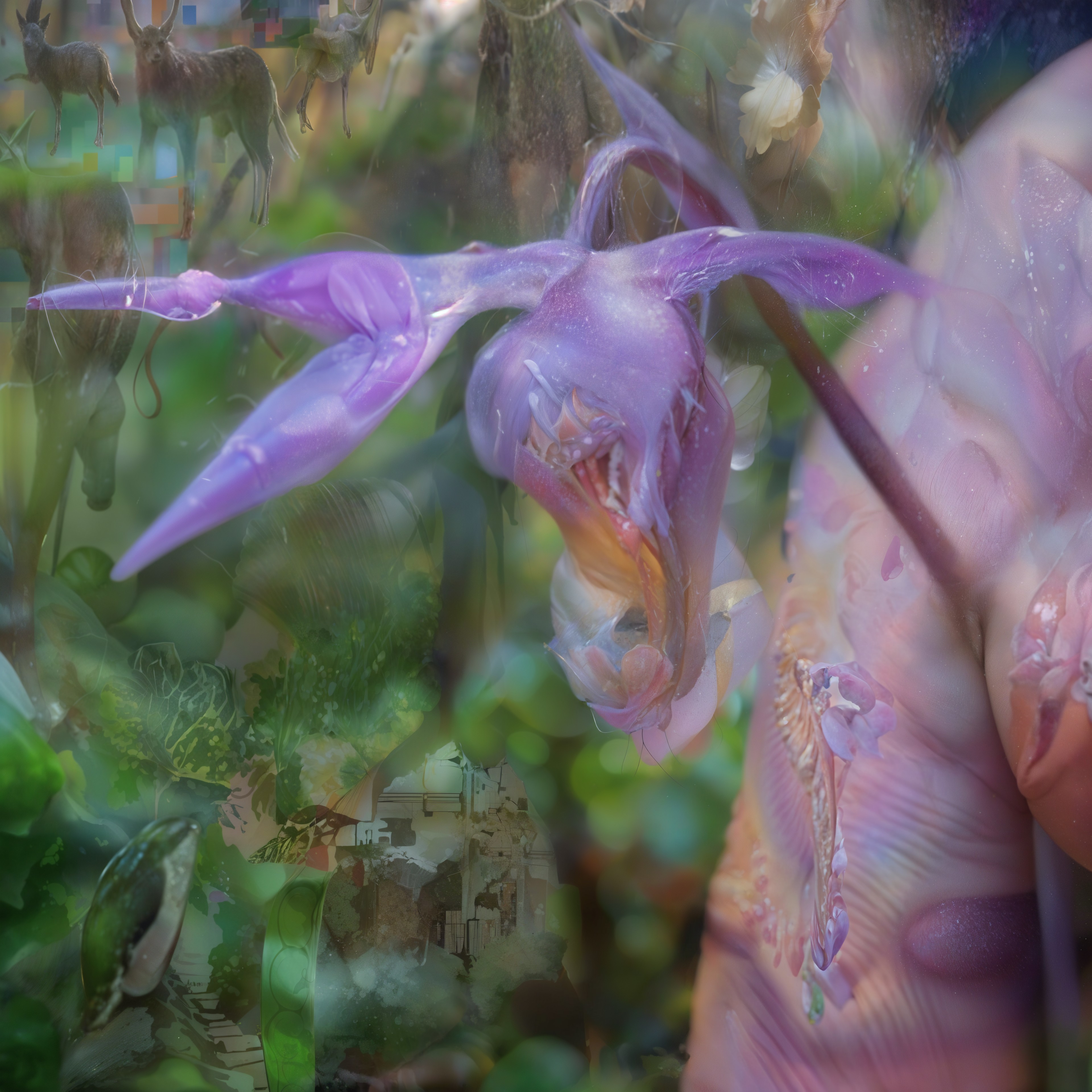
It all began as a reaction to the Cold War. In my child’s mind, survival was a skill I could learn, not a fate I had to fear. While other kids worried about missiles, I bought my first plant book and decided I would identify every edible plant in it—over a hundred species—like a birder checking off a life list. In my small rural high school library I found another book, and in it: the calypso orchid. A rare, impossible flower. The text even mentioned eating its bulbs, which felt almost scandalous, like discovering a sacred food.
One evening I wandered the dark woods at the west edge of town. Nothing grew on the ground; the canopy smothered all light. Only moss survived there, thick and breathing over centuries of leaf mold. And in that dim green hush, glowing like struck glass, were calypso orchids. I knelt before them without thinking. They were real—not pictures, not legends—and suddenly the Cold War seemed smaller. If these fragile things could survive ice ages and fires, maybe I could survive whatever adulthood was afraid of.
Years later I moved back to The Land. Between 1975 and 1983 I planted a million trees by hand—my hoedad swinging in a rhythm my muscles still remember. On the property stood two old yew trees, guardians of a medicinal darkness, and around them grew calypsos in small purple constellations.
Tree planting required a 24-inch scalp: clearing all duff, moss, and plants down to mineral soil. Often this meant removing calypso orchids. I couldn’t leave them to die, so I slipped them into my tree bag, carrying them like contraband sweetness. Whenever I reached a patch already blessed with orchids, I replanted the ones I’d rescued, expanding their hidden colonies.
That was my first true understanding of microsite—the exact, local conditions an organism needs to live: the right shade, the right fungus, the right hum of decay. You can’t force a calypso to grow anywhere but where it chooses. Survival is not merely endurance; it is placement, relationship, context.
Those years taught me that forests are not generic—they are mosaics of tiny, precise worlds. And somewhere in that work, in the quiet exchange between my hands and the soil, the calypso orchid’s old magic entered me: not as a parasite, but as a blueprint. A reminder that even in darkness, life can bloom if placed in the right small patch of earth.