Comments
Loading Dream Comments...
You must be logged in to write a comment - Log In
 Artist
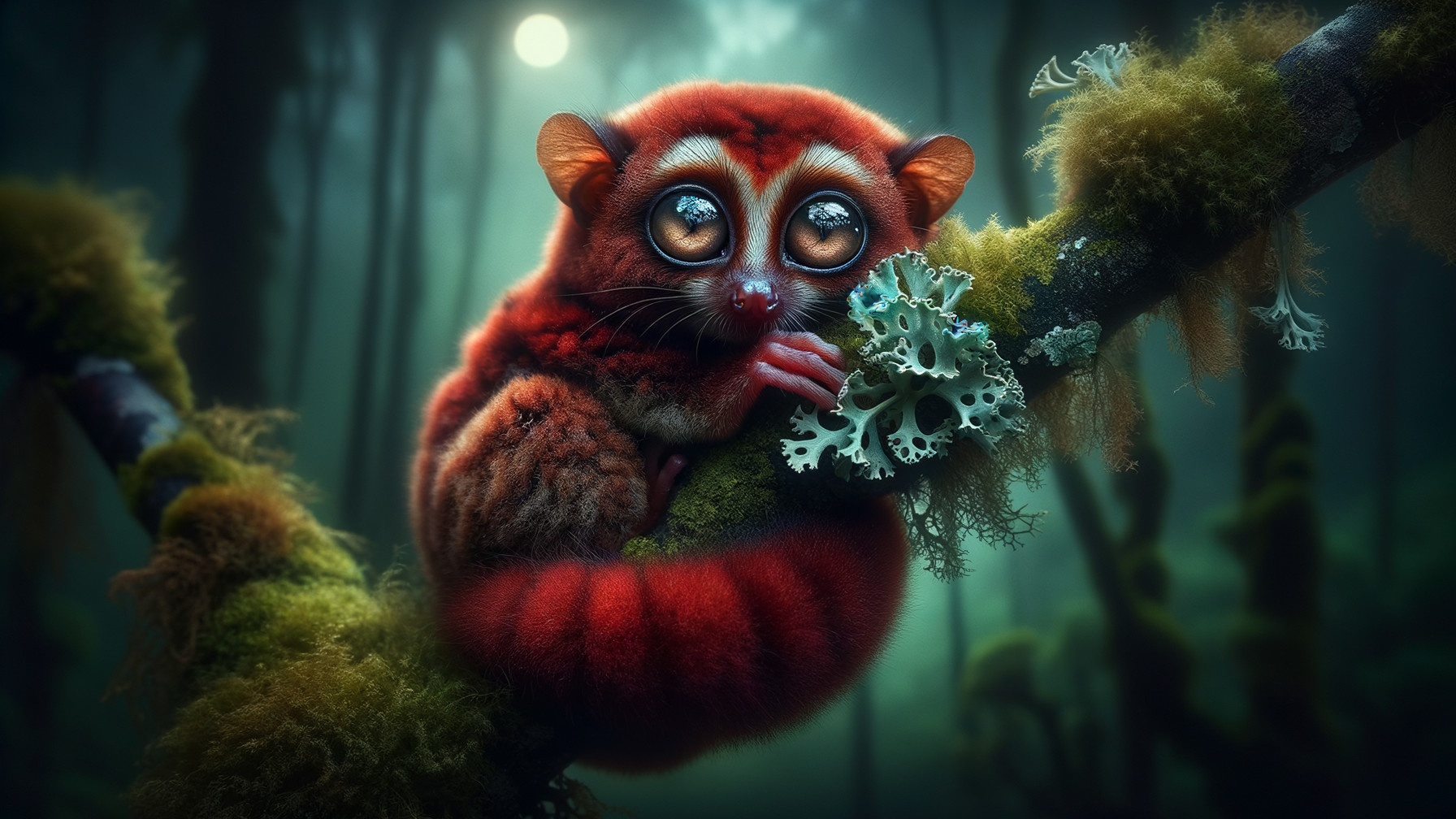
**Sri Lanka Red Slender Loris - Loris tardigradus tardigradus
Short: A wide-eyed nocturnal jewel of Sri Lanka’s rainforests - delicate, secretive, and hauntingly beautiful. Once abundant in the island’s southern wet zone, the Red Slender Loris now clings to life in shrinking patches of forest, threatened by logging and human encroachment.
Facts:
Scientific Name: Loris tardigradus tardigradus
Habitat: Lowland and montane rainforests of Sri Lanka’s wet zone (Sinharaja, Kanneliya, Deniyaya).
Diet: Insects, small lizards, fruits, and tree gum.
Behavior: Strictly nocturnal and arboreal; moves silently among branches using slow, deliberate motions.
Threats: Habitat destruction, illegal pet trade, road kills, and superstition-based killings.
Conservation Status: Critically Endangered (IUCN).
Details:
The Sri Lanka Red Slender Loris, known locally as “Unahapuluwa” (උණාහපුළුවා), is one of the most mysterious primates on Earth. With its enormous eyes glowing like amber lanterns in the moonlight, it glides through the forest canopy, whispering through leaves so silently that few humans ever see it. Its soft reddish-brown fur, fragile fingers, and graceful body make it look like a tiny forest spirit a living echo of an ancient world.
Endemic to Sri Lanka, this species is the oldest surviving primate lineage on the island, a true relic of evolutionary history. It plays a vital ecological role by controlling insect populations and pollinating certain nocturnal flowers. Yet, centuries of deforestation for tea, rubber, and urban development have left its habitat fragmented into isolated “islands” of trees.
Tragically, superstition has also fueled its decline - some locals once believed seeing a loris brings misfortune, leading to unnecessary killings. Additionally, the illegal pet trade captures many, though few survive captivity due to their sensitive nature.
Today, small populations persist in Sinharaja, Kanneliya, and Dombagaskanda - forests that now serve as sanctuaries for this fragile primate. Conservationists are racing to protect canopy corridors, ensuring these gentle night wanderers can still move freely across their ancient treetops.
If you ever walk through a rainforest at night in southern Sri Lanka, you might see two glowing eyes staring back - not in fear, but curiosity - a silent plea from a vanishing world.
2025 November 08