
Comments
Loading Dream Comments...
You must be logged in to write a comment - Log In

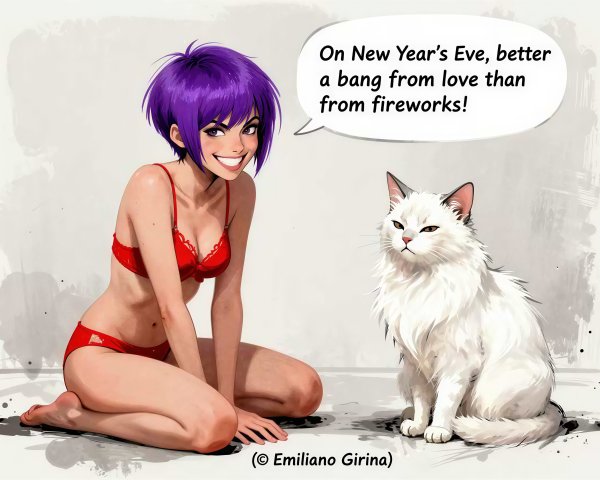
Love Is Louder Than Fireworks, Approved by a Cat, Rejected by Algorithms
Model: Z-Image Turbo
Size: 3307 X 2480 (8.20 MP)
Used settings:
 Split album
 Artist
Fireworks are sold as joy made visible. In reality, they are a brief spectacle powered by injury, fear, and collateral damage.
On the human side, the numbers are blunt. In the United States alone, consumer fireworks cause over 10,000 injuries every year, with peaks around New Year’s Eve and July 4th. About one third of the injured are children, and the most common outcomes are severe burns, hand amputations, and permanent eye damage, according to the U.S. Consumer Product Safety Commission. Similar patterns repeat globally. During recent New Year celebrations in the Philippines, health authorities reported hundreds of firework-related injuries within hours, many requiring hospitalization. In Germany, New Year’s Eve fireworks have led to multiple deaths and over 100 injuries in a single night, alongside injuries to police and emergency workers responding to the chaos.
Animals fare far worse, because for them there is no “celebration,” only an unexplained bombardment. Studies and veterinary surveys consistently show that around 60% of dogs exhibit strong fear responses to fireworks: trembling, panic, escape attempts, self-injury. Cats show similar stress reactions, often hiding for days or fleeing their homes. Horses are particularly vulnerable: UK data collected over 14 years documents more than 1,400 firework-related incidents, including dozens of horse deaths caused by panic-induced accidents.
Wildlife absorbs the shock at scale. Radar studies show that on New Year’s Eve, thousands of birds suddenly take flight simultaneously, an energy-draining response that disrupts roosting, migration, and winter survival. In Germany alone, animal welfare organizations report hundreds of dead or injured animals and thousands missing after a single New Year period, victims of stress, disorientation, and traffic.
This is not an unfortunate side effect of celebration. It is a predictable outcome. Loud explosions injure people, terrorize animals, and strain emergency services every single year — and we know this in advance.
A tradition doesn’t become harmless through repetition. When joy for some reliably translates into injury and fear for others, the problem isn’t bad luck. It’s the ritual itself. Silent fireworks, drone shows, light installations, and shared public events already exist. The technology to celebrate without harm is here.
The real question is no longer whether fireworks are beautiful. It’s whether a few seconds of sparkle are worth the very real, very measurable damage they leave behind.