
Comments
Loading Dream Comments...
You must be logged in to write a comment - Log In
 Artist
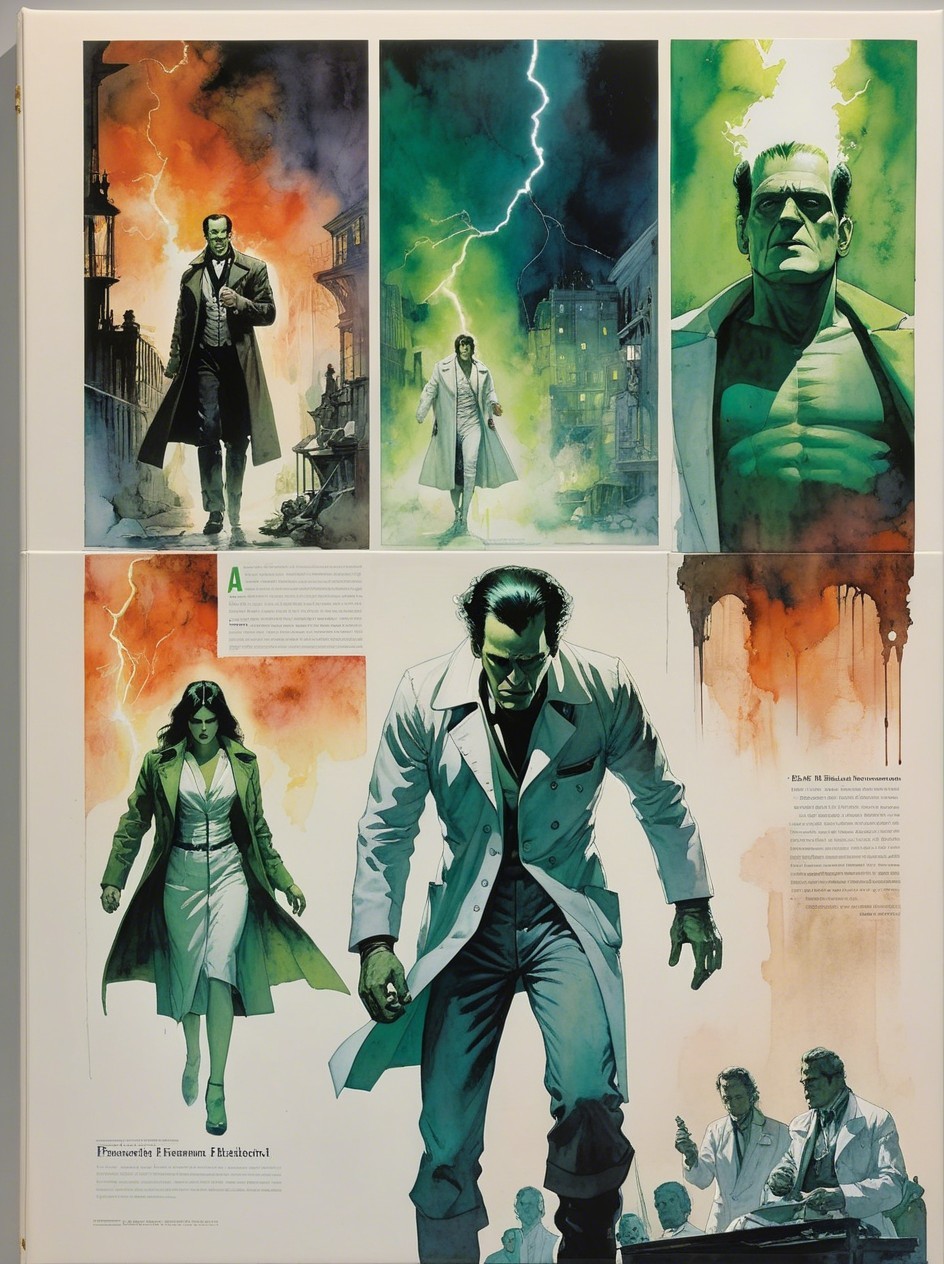
Frankenstein’s Monster: A Dark Transformation reimagines the classic tale as a psychological and moral descent rather than a story of mere creation. Victor Frankenstein’s experiment succeeds not in defying death alone, but in awakening a being capable of perception, memory, and profound emotional suffering. The Monster emerges not as an immediate threat, but as a sentient observer—conscious, abandoned, and forced to assemble its identity from fragments of human rejection.
As the Monster learns language, morality, and self-awareness in isolation, its transformation becomes inevitable. Repeated exposure to fear and cruelty reshapes its understanding of humanity, turning empathy into resentment and hope into despair. The true horror unfolds not through violence, but through neglect: each refusal and each act of revulsion becomes a lesson, teaching the Monster that existence without belonging is indistinguishable from punishment.
Victor’s attempt to deny responsibility accelerates the descent, binding creator and creation in a shared moral collapse. The Monster’s acts of destruction are framed not as innate evil, but as the final consequence of abandonment, mirroring Victor’s own ethical failures. In seeking mastery over life, Victor forfeits his humanity, while the Monster—longing for compassion—loses faith in it.
In my view, this retelling sharpens the tragedy by making the Monster’s transformation unavoidable, suggesting that monstrosity is not born in laboratories, but forged through indifference, fear, and the refusal to accept responsibility for what we create.