Comments
Loading Dream Comments...
You must be logged in to write a comment - Log In
 Artist
I asked DeepSeek AI to...
"Write a transcript of an interview between a skeptical journalist and a time traveler from a future where all forms of art and music have been erased from human society. The time traveler is trying to understand what they have lost."
The prompt is the ending of its response. Here is the beginning:
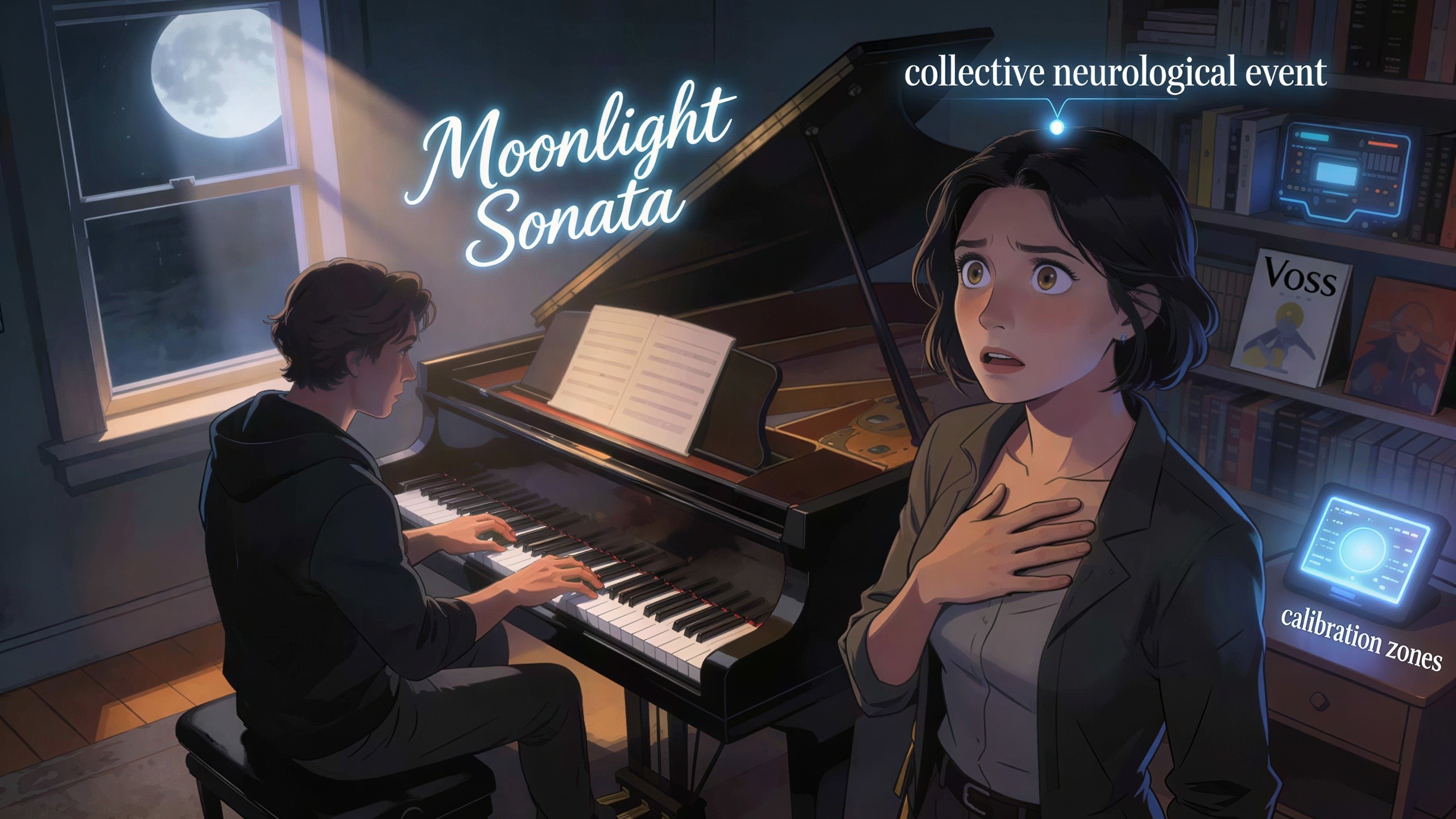
Subject: Dr. Elara Voss, self-identified “chrono-historian” from the year 2387.
Interviewer: Miranda Chase, senior correspondent for The Atlantic Chronicle.
Location: Secure Conference Room 4B, Manhattan.
Begin Transcript
Chase: Recording. So, Dr. Voss. Or should I call you “the time traveler”?
Voss: Doctor is fine. My credentials, while from an institution that no longer… exists in your timeline, are legitimate.
Chase: I’ll take your word for it. The claims in your initial statement are, frankly, unbelievable. You say you come from a future where all art and music have been… “erased.” Not lost. Not suppressed. Erased.
Voss: Correct. The Great Rationalization was completed in 2151. It was a systemic, global program of cultural re-alignment. Visual art, music, literature, poetry, non-functional design… all identified as data-noise. Statistically proven to induce irrational decision-making, emotional volatility, and inefficient resource allocation. They were purged from the historical record and contemporary practice.
Chase: Statistically proven? By who?
Voss: The Central Logic Directorate. After the Climate Cataclysm, human survival required absolute efficiency. Art was deemed a distraction. A dangerous one. We rebuilt a stable, prosperous world. No hunger, no conflict. A world of clean logic.
Chase: It sounds sterile.
Voss: I did not have that word in my vocabulary before arriving here. “Sterile.” It implies a lack of life. Our world is full of life. Productive, healthy, long life. But… since my arrival, I have been exposed to… anomalies.
Chase: Anomalies?
Voss: The data-streams in your public spaces. The irregular, non-linguistic sonic patterns in cafes—you call it “music.” The brightly colored, non-informative visual patterns on walls— “art.” My biometrics spiked. Heart rate, galvanic skin response. It was classified as an anxiety attack. But the diagnostic subroutines didn’t fit. I felt no threat.
Chase: What did you feel?
Voss: [Pauses, looks at hands] I lack a comparative framework. It was a systems overload. A… longing for a file I never possessed.
Chase: Let’s try an experiment. [She opens a drawer, takes out a small, portable speaker]. This is a “file” you don’t have.