

Comments
Loading Dream Comments...
You must be logged in to write a comment - Log In
Aesthetics. Branch of philosophy that is concerned with the nature of beauty and taste.
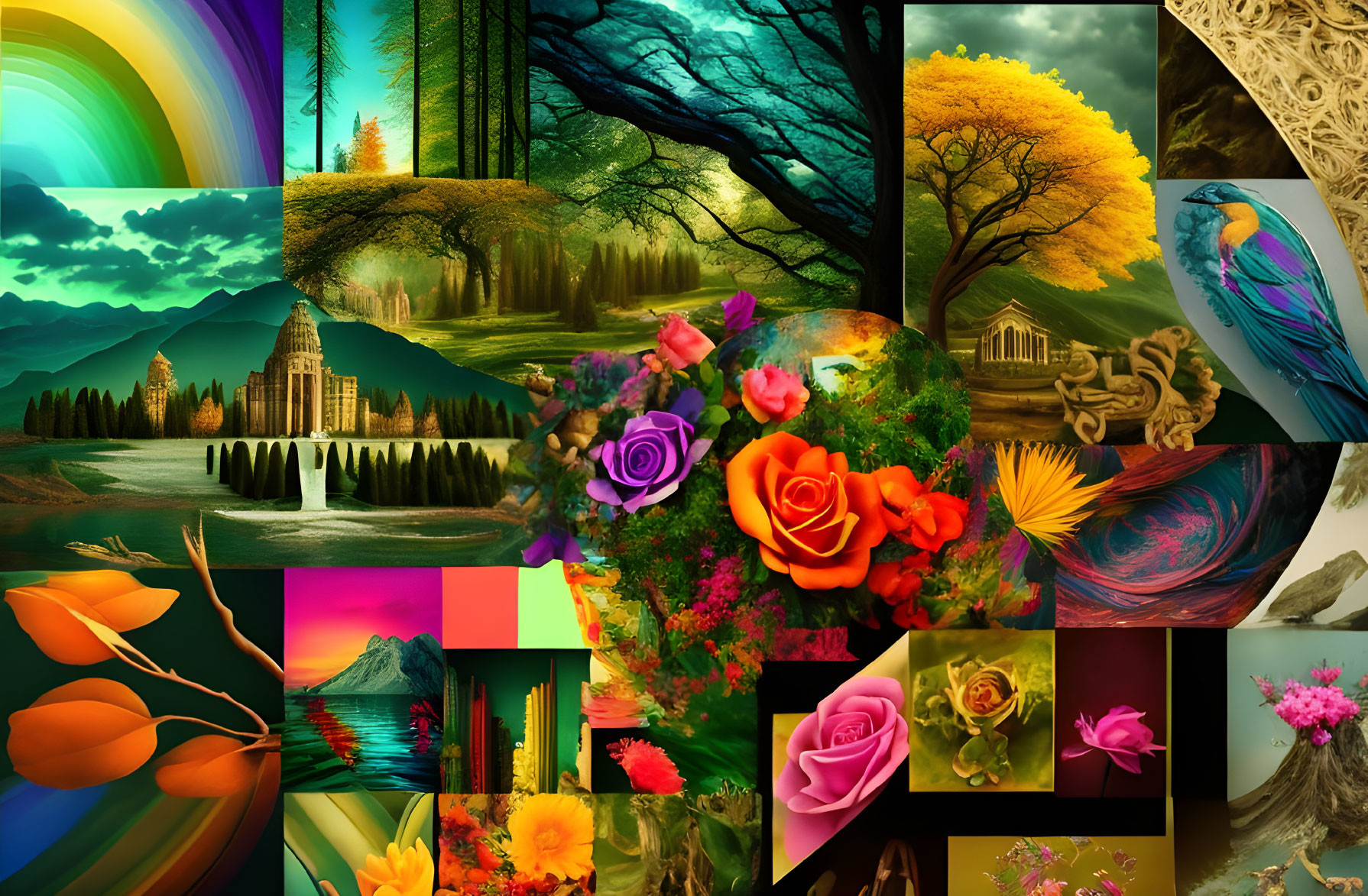
This vibrant collage operates as a visual meditation on beauty itself—a deliberate assemblage that interrogates how aesthetic experience is constructed through juxtaposition and repetition. By fragmenting nature across disparate panels—isolating florals, landscapes, architectural elements, and wildlife—the artist forces viewers to reconsider what constitutes beauty in isolation versus within context. The overwhelming saturation of color, particularly the electric magentas, vivid oranges, and luminous greens, challenges conventional notions of tasteful restraint, instead proposing that visual abundance and chromatic intensity can themselves be aesthetically sophisticated. This approach reveals beauty as not inherent to the subject matter but rather emerging from deliberate curation, framing, and intensity of presentation.
The work's layered fragmentation also addresses the philosophical tension between objective and subjective beauty. Each panel—whether a meticulously composed landscape, a close-up of a rose, or an abstract color field—demonstrates technical polish and intentional composition, yet the collage format denies unified coherence. Instead, it suggests that beauty exists in multiplicities rather than singular moments of perfection. The repetition of certain motifs (golden trees, vivid flowers, turquoise water) across different contexts demonstrates how meaning and aesthetic impact shift based on surrounding elements. This directly engages with aesthetic philosophy's ongoing debate: is beauty a property we discover, or a response we construct?
However, the piece risks overwhelming substance with spectacle. The relentless visual density and chromatic intensity, while undeniably striking, may prioritize immediate sensory impact over deeper aesthetic contemplation. Some panels feel gratuitously decorative—particularly the ornamental architectural details and patterned backgrounds—which slightly dilutes the philosophical rigor of the inquiry. A more restrained approach might strengthen the argument about beauty's constructed nature. Nevertheless, this is a thoughtfully ambitious work that uses visual collage to embody aesthetic philosophy's central questions, inviting viewers to examine their own taste-making and to recognize beauty as an active, interpretive experience rather than a passive recognition.


