


Comments
Loading Dream Comments...
You must be logged in to write a comment - Log In
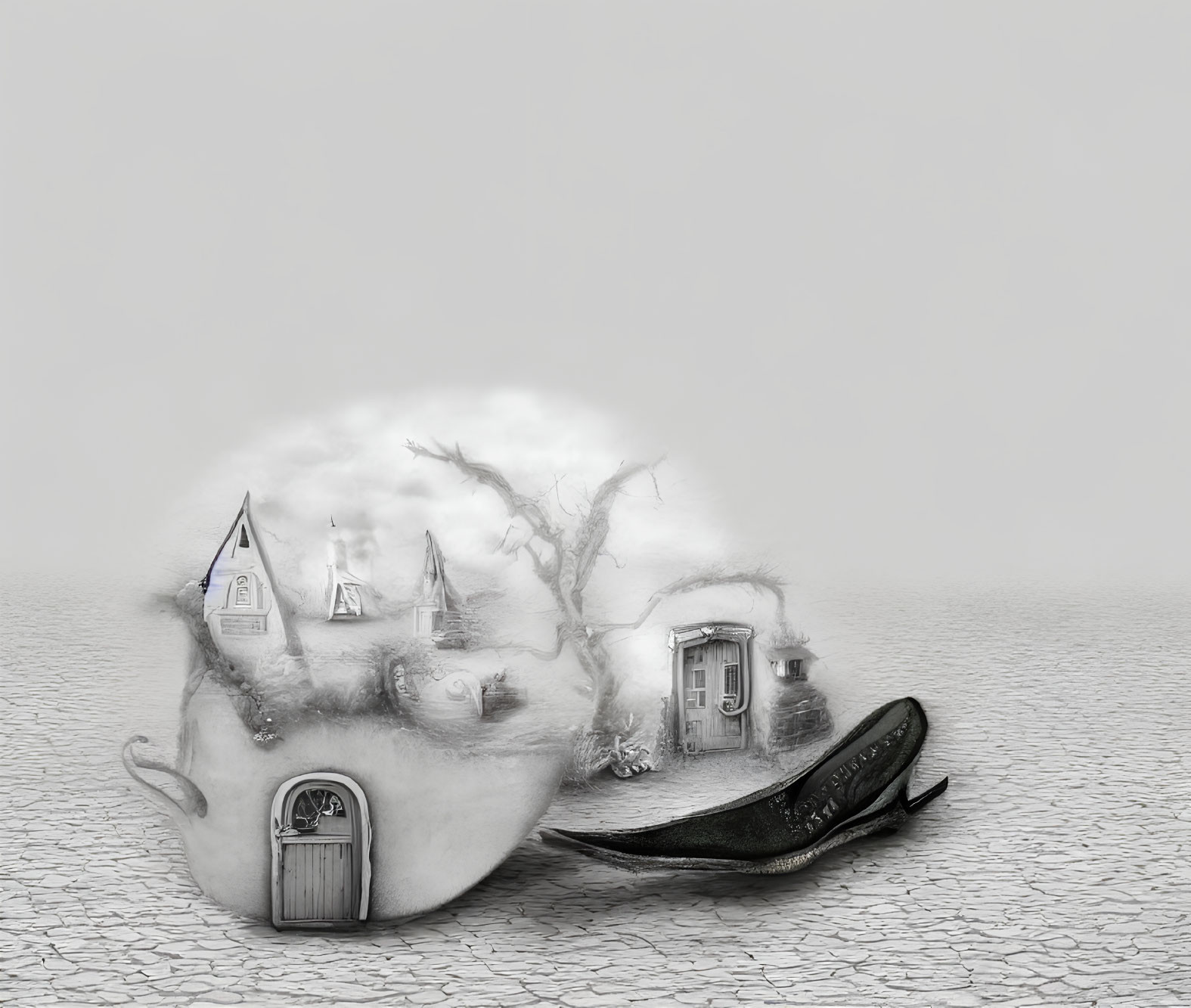
There was an old woman who lived in a shoe. Scott Gustafson style.
This illustration presents a whimsical and imaginative reinterpretation of the classic nursery rhyme, rendered in a style reminiscent of Scott Gustafson’s illustrative work. The enormous shoe serves as both home and landscape, with architectural elements such as tiny doors, windows, and rooftops integrated seamlessly into its form. The detailed, textured surface of the shoe conveys a tactile sense of materiality, while the surrounding cracked ground adds contrast and grounding, emphasizing the fantastical scale of the structure. Gustafson’s influence is apparent in the intricate, storybook-like design, blending playful absurdity with convincing spatial logic.
The artist employs a monochromatic palette, relying on subtle shading and texture rather than bright colors, which gives the piece a slightly surreal and haunting quality. The gnarled, leafless tree growing from the shoe adds a touch of Gothic whimsy, enhancing the narrative tension between cozy domesticity and strange otherworldliness. The arrangement of miniature houses and doors across the shoe’s surface demonstrates careful compositional planning, guiding the viewer’s eye across the scene while maintaining a sense of curiosity and discovery. Each architectural detail has a handcrafted feel, reflecting Gustafson’s attention to artisanal design and storytelling.
The scene effectively balances narrative charm and surreal exaggeration, capturing the essence of a fairy-tale environment while experimenting with scale and proportion. The exaggerated curvature of the shoe and the miniature scale of architectural elements create a dynamic contrast, reinforcing the whimsical humor of the “old woman who lived in a shoe.” The barren landscape surrounding the shoe ensures the focus remains on the central fantastical object, while the cracked texture of the ground and soft, diffused background provide subtle depth. Overall, this piece successfully channels Scott Gustafson’s signature style: meticulous detail, narrative richness, and imaginative, storybook surrealism.


