Comments
Loading Dream Comments...
You must be logged in to write a comment - Log In
 Artist
My name is written in many ways, in many scripts. On the Indus seals I am a pair of feet beside a river sign—“He-who-walks-the-river”. In Akkadian tablets, my name is rendered with a reed-stylus as something like Naram-Ištu, “Beloved of the Fire.”
You can call me Naram, trader and initiate of the Guild of Clay and Light.
We are not potters.
We are not scribes.
We are the ones who know why some clay outlives empires.
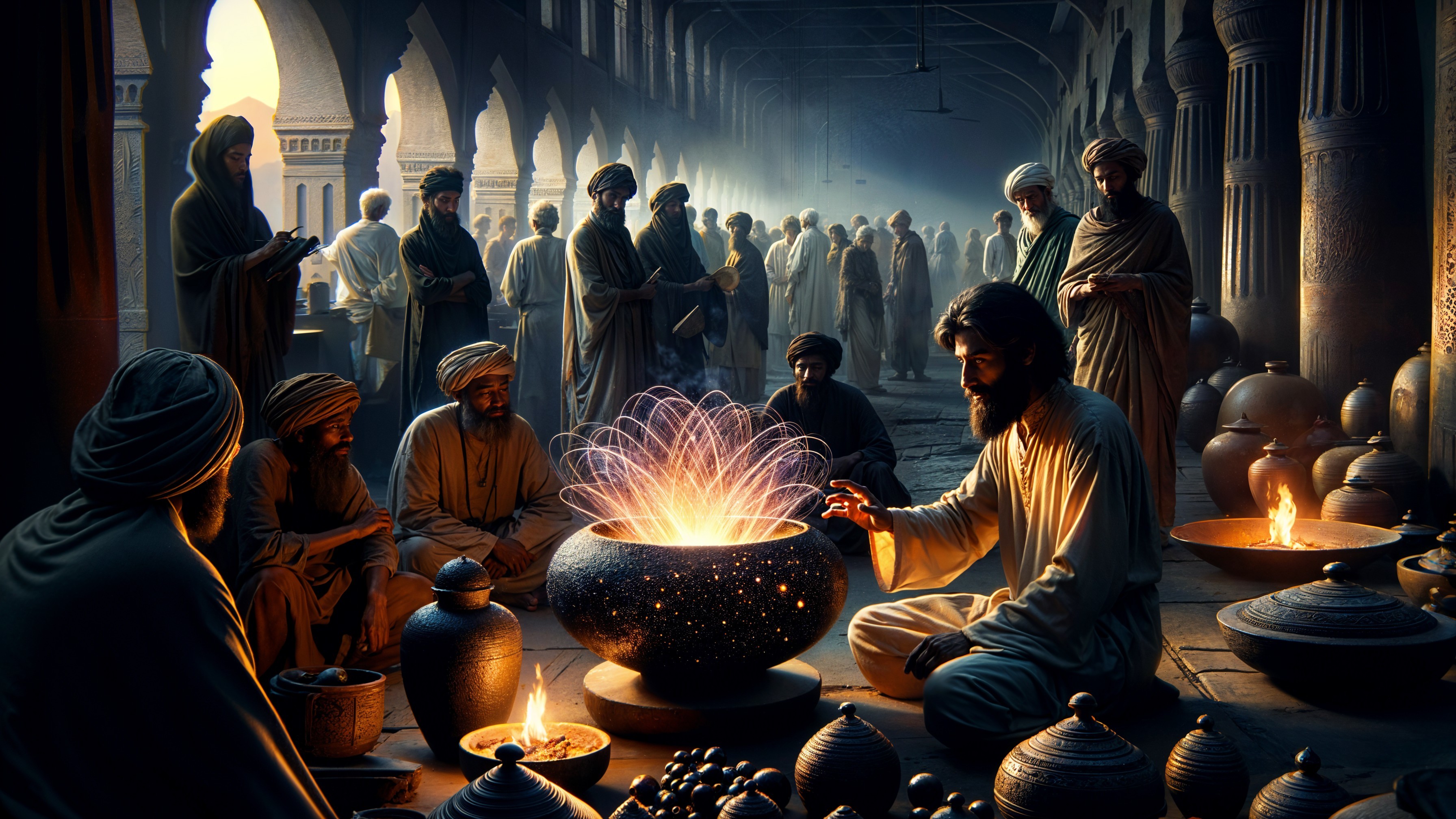
When I was a boy in the Indus city by the sea—Lothal, with its dock that drank ships—I was taken into the guild hall by my mother's brother. On the packed clay floor lay hundreds of pots: some fine and painted, some rough and gray. But in the center, on a pedestal of brick, there was one black bowl that made the air around it feel heavier.
“Strike it,” my uncle said.
I tapped it with a bronze rod. It rang like metal.
Not dull like fired clay—sharp, bright, as if something inside it was aligned.
“It holds more fire than it should,” I whispered.
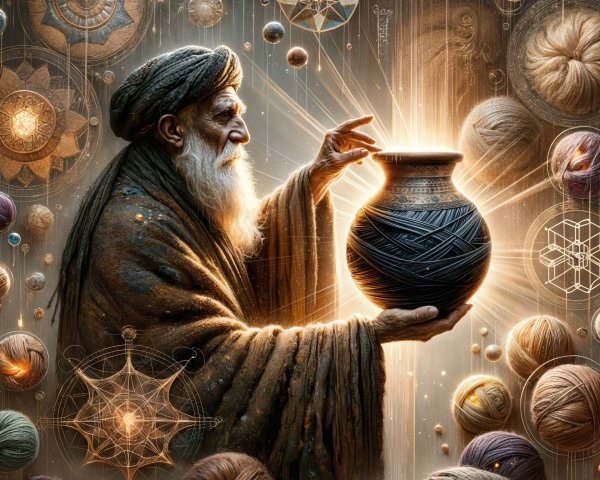
My uncle smiled. “Not more fire. More order. The clay remembers how we burned it. Inside it are threads of carbon as fine as the god’s own hair, running in straight lines. They lock the cracks together.”
I did not know the words for it then, but later, in the port of Byblos, a Levantine wise-man would call them kan-thubos in his tongue—hollow carbon tubes, formed when pine resin smokes through mineral lattices at a certain heat. In your language, scholar-from-the-future, you might say carbon nanotubes, embedded in a silicate matrix.
We, in the guild, just called it Black Bone Clay.
The recipe was a secret carried between rivers.
Clay with just the right iron and silica.
Smudged with pine resin and tar, not dung or straw.
Fired in a kiln choked of air, but vented just enough to keep the heat kissing the edge of melting.
If we did it correctly, the inner walls of the pot grew a forest of nano-sized carbon tubes, invisible to the eye but strong enough to make a thin bowl shrug off blows that would shatter thicker wares.
But the greatness of Black Bone Clay was not just in its strength.
It was that it could be reborn.
Aaron Baker
ChatGPT