Comments
Loading Dream Comments...
You must be logged in to write a comment - Log In
 Artist
In the mid-1600s, when Dutch cities smelled of coal smoke, canals, and the sweetness of market pears, a quiet painter named Matthijs van der Aarden wandered the evening streets searching for scenes no master bothered to paint. While guild painters chased wealthy patrons and grand portraits, Matthijs sought something humbler—the gentle radiance of ordinary life.
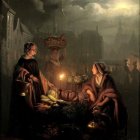
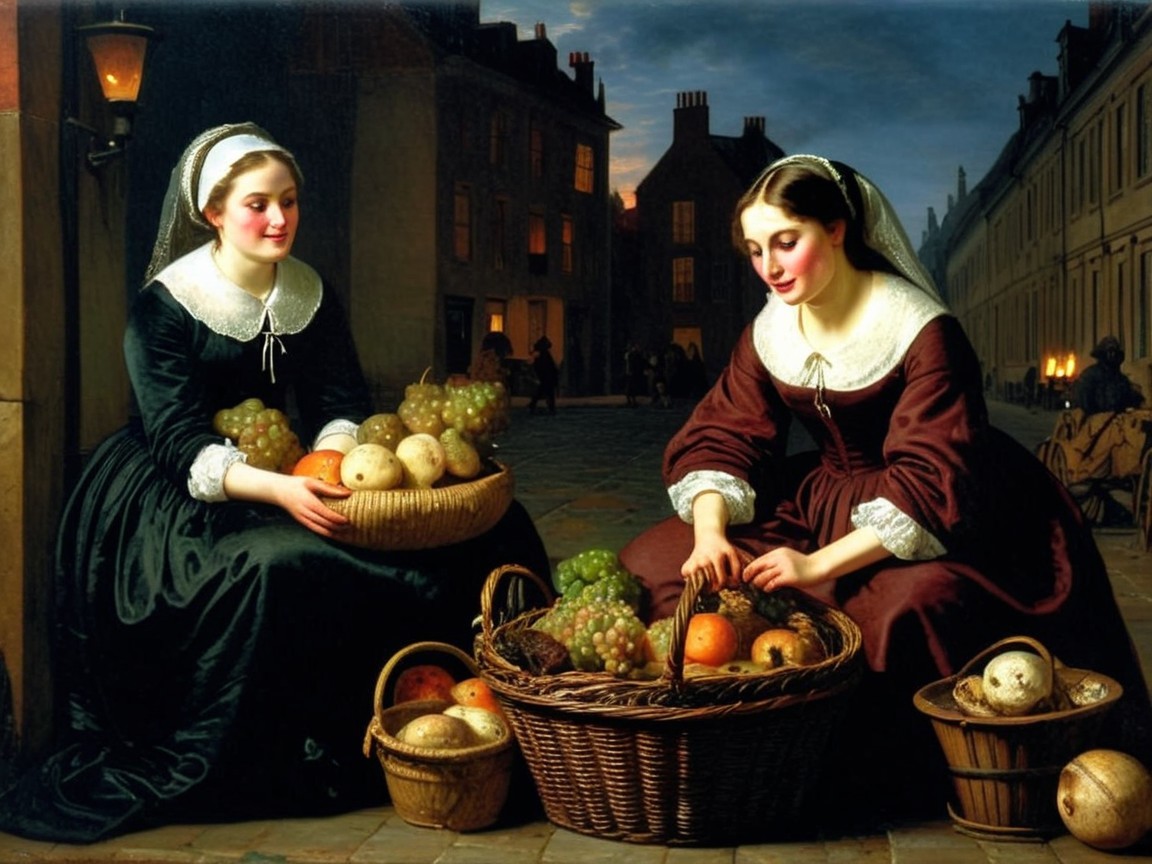
He found it on a narrow street in Leiden, where a lantern cast a warm amber glow over two sisters who sold fruit each night. Annetje, calm and observant, wore dark green wool; Lijsbeth, quicker in movement and temper, wore burgundy. Their baskets overflowed with grapes, melons, and winter apples, glowing softly against the dusk.
It wasn’t their beauty that struck Matthijs, though many paused to admire them. It was the stillness they carried, as if time slowed around their hands. Even the cobblestones seemed quieter around them.
One evening, he approached with uncommon shyness.
“I sketch the evening markets,” he said. “May I draw you as you work?”
Annetje laughed. Lijsbeth, wiping her hands on her apron, replied,
“If you paint us, paint us as we are—not saints, not stories.”
And so he returned night after night, capturing the way the lantern warmed their cheeks, the way they leaned toward one another when the cold crept in, the way the fruit seemed to shine brighter than the street itself.
The painting grew into something more than a market scene. It became a portrait of evening itself—the hour when work softens into companionship, and the city exhales.
When Matthijs finally showed the completed canvas at the local guild hall, the painters murmured. The light looked alive; the sisters’ faces glowed with the quiet dignity of people who earn their silver by the weight of baskets.
A merchant offered a high sum. Matthijs refused.
He brought the painting to the sisters’ small home by the canal.
“It belongs to you,” he said. “All I did was follow the light.”
Years later, after plague seasons and shifting fortunes, the sisters vanished from city records. Their home emptied. But the painting endured—circulating through private auctions, its artist forgotten, its subjects unnamed.
Still, scholars whisper about it: a canvas lit by one lantern, holding two women in the soft cradle of dusk—painted by a man who believed that the ordinary was already divine.